

Purple Jade Meaning: The Color of Spiritual Nobility
Table des matières
Discovering purple jade meaning reveals how this gentle stone nurtures inner peace, spiritual nobility, and emotional balance. Readers will understand geological formations, distinguish authentic Grade A jadeite from dyed minerals, uncover styling suggestions, and master simple cleaning routines. Learn how everyday natural purple jade jewelry enriches your daily life with lasting confidence.
Introduction
Throughout generations, colorful gemstones have mirrored human yearning for harmony, dignity, and quiet personal reflection. Understanding authentic purple jade meaning reveals why this delicate violet mineral captivates jewelry lovers worldwide.
Many everyday shoppers desire accessories that combine visual grace with calming emotional support. Natural purple jade fulfills this need by providing gentle grounding and thoughtful reassurance.
At Zeneuf, we celebrate this rich heritage with handcrafted pieces made solely from natural jade. Exploring this fascinating stone will help you select meaningful accessories. These pieces will inspire peace and confidence in your daily journey.

Historical Lore and Cultural Purple Jade Meaning
Natural purple jade holds a unique and revered place within ancient decorative arts across continents. For centuries, diverse civilizations associated soft violet shades with profound wisdom and elevated character.
Imperial Dynasties and Purple Jade Meaning
During the Tang and Song dynasties, purple gemstones represented supreme court authority and celestial virtue. Historians at the Palace Museum in Beijing document that violet minerals signaled high official rank.
While emerald green stones symbolized sovereign command, purple minerals conveyed philosophical refinement and intellectual mastery. Classical Taoist tradition viewed purple as the sacred color of the dawn sky. It symbolized spiritual awakening, fresh beginnings, and celestial harmony.
Scholars kept small carved stones on reading tables to encourage mental clarity during intense study sessions. They believed that handling smooth stones dispelled petty distractions and strengthened personal resolve. Over centuries, purple jade meaning became synonymous with dignified restraint, high moral standards, and unshakeable inner honor.
Imperial artisans spent years perfecting delicate carving techniques for these violet treasures. They shaped smooth pendants featuring clouds, dragons, and blooming lotus flowers.
Officials wore these items close to their chests during important state councils. The stone reminded them to remain calm, fair, and composed during heated political debates.
Unlike bright red or flashy gold ornaments, violet stones conveyed quiet authority. This subtle dignity earned respect from colleagues and foreign emissaries alike.
Today, this historical legacy continues to inspire modern wearers. It teaches us that true authority begins with self-control and thoughtful reflection.
Mesoamerican Traditions and Purple Jade Meaning
Across ancient Mesoamerica, indigenous artisans worked with diverse geological colors of jadeite recovered from river valleys. Excavations studied by the Peabody Museum of Archaeology and Ethnology show that lilac jadeite held sacred status.
Maya lapidaries associated soft purple tones with major transition phases, such as sunset and seasonal renewal. They carved lilac jade pebbles into sacred beads, animal amulets, and protective ear flares.
These artifacts accompanied tribal leaders during solemn community rites and harvest celebrations. Indigenous shamans believed the stone safeguarded the human spirit during major life transitions and long journeys. Consequently, ancient Mesoamerican customs viewed purple jade meaning as a bridge connecting physical mortality with eternal spiritual realms.
Artisans utilized wet cord saws and crushed quartz powder to slice through tough raw boulders. They polished finished ornaments until the violet surface felt as smooth as cool river water.
These items were buried alongside beloved leaders to ensure safe passage through the underworld. The persistent violet color symbolized eternal life, endurance, and cosmic balance.
Unlike softer clay ornaments, tough jadeite survived centuries beneath jungle soil without crumbling. Modern archaeological discoveries continue to uncover these undamaged purple ornaments.
Their lasting physical condition confirms the ancient belief in the stone's enduring protective power. The stone remains a timeless physical testament to ancestral courage and quiet perseverance.
Modern Perspectives on Purple Jade Meaning
In contemporary culture, violet minerals have moved beyond ancient ceremonial walls to become comforting companions for regular individuals. Modern jewelry wearers embrace violet stones to counter the demanding rush of urban routines.
Contemporary gemological surveys by the Gemmological Association of Great Britain highlight purple jadeite as a beloved stone. People admire the gem not for ostentatious display, but for its gentle, soothing visual presence.
Wearing purple jade reminds busy parents, students, and professionals to pause, breathe, and honor their personal worth. Today, purple jade meaning represents inclusive self-care, compassionate boundary setting, and peaceful self-respect accessible to anyone.
Modern wellness advocates view violet stones as supportive tools for digital detox routines. Placing a smooth polished stone on your computer desk creates a calming focal point during stressful work hours.
Looking at the soft lilac surface helps relax strained eyes and quiets nervous mental chatter. Many individuals touch their purple bracelets when dealing with crowded public transport or difficult phone calls.
This simple physical contact provides immediate emotional comfort and mental grounding. Violet stones no longer belong exclusively to ancient palaces or historic ceremonies.
Instead, they offer dependable emotional support for everyday people navigating modern challenges. This democratic shift has made the stone a popular choice for personal daily jewelry.

Global Folklore and Purple Jade Meaning
Folk traditions throughout Central Asia and the Mediterranean also noted the unique energy of violet minerals. Nomadic merchants traversing the Silk Road often carried small purple talisman stones in their leather pouches.
They believed violet stones dispelled nightmares and protected travelers from sudden emotional despair in foreign lands. Village healers placed polished violet stones into cool drinking water to bless it before wellness rituals.
They associated the color with serene mountain peaks and twilight skies, representing restorative physical rest. Mothers in remote mountain villages tied small lilac beads around children's wrists to foster calm behavior and gentle speech.
These diverse customs demonstrate that purple jade meaning has always centered on quiet protection and emotional nurturing. The stone served as a faithful physical companion through life's unpredictable moments.
Gemological Origins and Scientific Purple Jade Meaning
Appreciating the deeper significance of purple jade requires a clear understanding of its mineral makeup and subterranean formation. Geological conditions determine whether a stone displays pale lilac, vibrant lavender, or deep plum.
Mineral Classification and Purple Jade Meaning
Authentic purple jade almost always belongs to the jadeite mineral group, a sodium-aluminum pyroxene silicate. While nephrite rarely forms in pure purple hues, rare occurrences from Turkey exhibit earthy, brownish-purple plum colors.
In contrast, classic lavender jadeite forms under intense pressure and moderate temperatures deep inside plate subduction zones. Research published by the Geological Society of America explains that jadeite crystallization requires dynamic tectonic forces.
These geological environments produce tightly interlocking granular crystal networks. This unique crystal lattice gives natural purple jadeite superb surface hardness and exceptional resistance against accidental household damage. Understanding this classification clarifies authentic purple jade meaning for conscious consumers seeking dependable jewelry.
Geologists categorize pyroxene minerals by their distinct atomic arrangements and high specific gravity. When hot, mineral-rich fluids circulate through subducting tectonic slabs, jadeite crystals slowly nucleate and grow.
The crystals interlock tightly like pieces of a three-dimensional jigsaw puzzle. This tight interlocking prevents fractures from spreading easily through the stone when struck.
Unlike brittle minerals that possess perfect internal cleavage planes, jadeite absorbs physical shocks remarkably well. This physical resilience makes it significantly more durable than common quartz or glass imitations.
When you choose authentic jadeite, you select a stone forged by immense earth forces over millions of years. Its geological toughness ensures it will endure daily activities without structural failure.

Trace Chemistry and Purple Jade Meaning
The enchanting color of purple jadeite originates from delicate trace elements incorporated during crystal growth. Scientific papers from the Gemological Institute of America confirm that manganese provides the primary violet coloration.
Additionally, trace amounts of iron interacting with manganese create subtle variations ranging from delicate lavender to deep aubergine. When iron concentrations rise slightly, the stone shifts toward cool, bluish-lavender tones.
Conversely, low iron concentrations coupled with pure manganese generate warm, pinkish-lilac hues. These subtle chemical balances produce natural color zoning across the mineral body. Genuine stones feature soft color variations that prove the stone grew naturally over millions of years, confirming authentic purple jade meaning.
Spectroscopic analysis reveals that trivalent manganese ions replace aluminum ions within the pyroxene crystal lattice. This atomic substitution absorbs specific yellow and green wavelengths of visible light.
As a result, our eyes perceive the reflected light as pleasing shades of lavender, violet, and lilac. Because natural fluids flow unevenly through underground rock fissures, the color distribution is rarely perfectly uniform.
A natural stone often displays misty patches of soft violet blended with milky white or pale green areas. These subtle color gradations are visual hallmarks of completely natural origin.
Shoppers should appreciate these gentle variations as authentic proof of untreated geological creation. They give each handcrafted piece a distinctive, one-of-a-kind visual personality.
Physical Durability and Purple Jade Meaning
Everyday jewelry wearers require durable stones that withstand busy daily activities without cracking or dulling. On the Mohs hardness scale, natural purple jadeite rates between 6.5 and 7.0.
This hardness ensures that household dust, which contains hard quartz particles, will not scratch the polished surface easily. Furthermore, the interlocking granular crystal structure provides outstanding structural toughness.
Toughness measures how well a mineral resists fractures, chipping, and catastrophic breaks upon physical impact. Unlike brittle quartz minerals like amethyst, natural purple jadeite absorbs mechanical shocks remarkably well. You can comfortably wear a handcrafted purple jade ring or pendant every single day without fear.
Fracture toughness is the primary reason jade has remained popular across human history for utilitarian purposes. While glass, obsidian, and fluorite shatter into sharp shards when dropped onto tiled floors, jadeite resists catastrophic breaks.
Its internal grains distribute the force of impact across thousands of microscopic crystal boundaries. This microscopic dispersion prevents cracks from traveling in a straight line across the gem.
You can wear your favorite lavender bracelet while doing laundry, preparing meals, or typing at your office desk. The stone handles the incidental knocks of normal domestic life with exceptional resilience.
This carefree durability makes natural jade jewelry a practical companion for busy modern lifestyles. It requires no delicate handling or special anxiety during regular daily routines.
Optical Luster and Purple Jade Meaning
The optical personality of polished purple jadeite sets it apart from ordinary transparent faceted gemstones. When expertly polished using traditional bamboo wheels and natural abrasive pastes, jadeite displays a rich, tactile sheen.
Gemologists classify this surface appearance as sub-vitreous to slightly greasy or waxy. Light does not merely bounce off the exterior surface like a mirror.
Instead, light rays penetrate slightly beneath the boundary, scattering across the microscopic granular boundaries within the stone. This gentle internal scattering creates a soft, misty glow that gemologists call translucency.
The stone seems to hold light within its core, producing an ethereal, velvety appearance. This tactile optical behavior reinforces purple jade meaning as a symbol of soft, comforting, and unpretentious beauty.
When you touch a smooth lavender jadeite cabochon, it offers a gentle, satiny resistance against the skin. It never feels cold and sharp like industrial plastic or artificial glass.
The soft luster complements natural skin tones without creating distracting glare under harsh fluorescent lighting. This subtle beauty makes it suitable for both casual daytime environments and quiet evening gatherings.
Wearers often find themselves rubbing the smooth surface throughout the day as a soothing sensory habit. This tactile interaction deepens your personal connection to the natural geological treasure resting on your wrist or neck.
Spiritual Harmony and Emotional Purple Jade Meaning
Holistic wellness practices value natural gemstones for their steady, soothing sensory properties. Purple jade offers a grounding yet spiritually uplifting resonance that supports balanced emotional health.
Third Eye and Crown Chakras with Purple Jade Meaning
In traditional holistic philosophies, colored gems correspond directly to vital energy centers across the human body. Because of its violet spectrum, purple jade links directly with the third eye chakra and crown chakra.
The third eye chakra, located between the eyebrows, governs intuitive clarity, imaginative insight, and reflective thought. The crown chakra, situated at the top of the head, represents higher wisdom, open-minded perspective, and spiritual connection.
When life creates mental clutter, placing cool purple jade near your brow restores calm clarity. The stone encourages quiet contemplation, helping you distinguish fleeting worries from meaningful truths. This natural alignment elevates purple jade meaning into an everyday symbol of mindful presence and balanced judgment.
A balanced third eye chakra allows you to trust your instincts when making important personal decisions. In our noisy world, external opinions often drown out inner wisdom, causing self-doubt and hesitation.
Meditating with a smooth lavender stone helps quiet external noise, allowing intuitive thoughts to surface naturally. Meanwhile, opening the crown chakra promotes feelings of universal connection and broadens narrow perspectives.
It helps individuals release petty grievances and embrace a more compassionate view of human behavior. Wearing violet jade jewelry keeps these higher energy centers aligned throughout demanding professional workdays.
The stone acts as a gentle energetic compass, guiding you toward wiser, more harmonious choices. This spiritual support nurtures steady, lifelong personal growth.
Calming Anxious Thoughts and Purple Jade Meaning
Modern daily routines often trigger chronic stress, physical restlessness, and emotional exhaustion. Holding a smooth purple jade worry stone provides an immediate tactile anchor during overwhelming moments.
Research summarized by the National Institutes of Health confirms that tactile grounding exercises reduce acute autonomic stress reactions. Touching the polished, cool surface of natural jade slows rapid breathing and relaxes tense muscles.
Purple jade radiates a comforting, maternal energy that dispels irrational fears and quiet insecurities. It helps individuals let go of past resentments while nurturing patience for present difficulties. Everyday wearers discover that this gentle stone fosters deep, enduring emotional stability, enhancing authentic purple jade meaning.
When anxious thoughts spiral, the human brain enters a defensive fight-or-flight state. Sensory grounding interrupts this automatic physiological panic response by focusing attention on immediate physical sensations.
Running your thumb across the cool, waxy surface of a jade bead grounds your awareness in the present. The physical weight of the stone provides a tangible sense of safety and permanence.
This simple practice helps regulate your nervous system without the need for complex breathing exercises or quiet rooms. You can hold your pendant or bracelet discreetly during stressful meetings or crowded family gatherings.
Over time, this calming habit builds lasting emotional resilience against everyday life stressors. The stone becomes a reliable partner in your personal wellness routine.
Spiritual Nobility and Personal Integrity
Historically, nobility implied elevated birth, royal privileges, and commanding social authority over other citizens. Within modern holistic thought, true nobility reflects ethical consistency, humility, kindness, and unwavering personal integrity.
Purple jade reminds the wearer to act with generosity, speak honestly, and treat others with empathy. It helps dissolve self-destructive vanity and competitive jealousy, replacing them with peaceful self-assurance.
Wearing purple jade serves as a personal vow to navigate adversity with composure and kindness. The stone whispers that quiet grace possesses far greater lasting power than aggressive force. Therefore, purple jade meaning embodies the noble art of mastering oneself with quiet dignity.
Practicing spiritual nobility means holding yourself accountable to high personal standards even when no one is watching. It encourages you to respond to harsh criticism with patience rather than angry defensiveness.
When you wear a violet jade pendant, it acts as a silent physical conscience against petty impulses. The stone encourages you to listen actively, forgive mistakes quickly, and offer help without expecting praise.
This internal discipline creates genuine self-respect that external circumstances cannot diminish. True nobility does not seek to dominate others; it seeks to uplift and support the surrounding community.
This timeless virtue makes the stone an inspiring daily emblem for teachers, caregivers, and community volunteers. It celebrates the quiet strength of compassionate human character.
Mindful Dreamwork and Purple Jade Meaning
Many holistic traditions recommend keeping purple stones on your nightstand to encourage restorative sleep and peaceful dreams. Chaotic daytime thoughts often linger in the subconscious mind, causing restless tossing and frequent nighttime awakenings.
Placing a polished lavender jade pebble beneath your pillow creates a peaceful sensory atmosphere for sleep. The stone's gentle, steady weight helps calm an overactive mind as you drift toward sleep.
Wearers report that this nightly presence encourages symbolic, comforting dreams that offer clarity regarding waking dilemmas. Upon waking, handling the cool stone helps you recall dream insights before morning routines begin.
This gentle dream practice transforms your bedroom into a restful sanctuary of nighttime renewal. It strengthens the peaceful psychological association between violet minerals and profound physical restoration.
Wardrobe Styling and Practical Purple Jade Meaning
Incorporating genuine purple jade jewelry into your daily fashion routine is delightful, rewarding, and effortlessly simple. The stone's gentle pastel color pairs beautifully with casual fabrics, professional office attire, and celebratory weekend wear.
Color Coordination and Purple Jade Meaning
Lavender and lilac gemstones provide a refreshing burst of soft color that never overwhelms an ensemble. Purple jade harmonizes effortlessly with neutral wardrobe staples such as crisp white, cream, beige, navy, and charcoal.
A delicate purple jade pendant adds a hint of graceful color to a casual linen blouse. For formal work environments, subtle lavender jade stud earrings convey polished professionalism without drawing excessive attention.
In cooler seasons, purple jade contrasts gorgeously against dark wool coats, knit sweaters, and structured blazers. Its soft luster brightens dull winter tones while maintaining an air of understated elegance, reinforcing practical purple jade meaning.
Pastel violet shades also pair beautifully with soft earthy colors like sage green, olive, and warm taupe. This organic color pairing echoes the natural beauty of blooming wildflowers against forest foliage.
For weekend outings, you can combine a lavender bead bracelet with faded blue denim and a white t-shirt. The subtle violet tone adds a touch of thoughtful polish to an otherwise casual outfit.
You do not need an extensive wardrobe to make this versatile gemstone look stunning and intentional. Its natural neutrality allows it to blend seamlessly into your existing everyday clothing rotation.
This effortless adaptability ensures that your jewelry spends more time on your body than sitting in a box. It provides dependable visual pleasure every single day of the week.
Metal Settings and Purple Jade Meaning
The soft violet hues of purple jade create unique stylistic expressions when mounted in different jewelry metals. Setting lavender jade in cool metals like 925 sterling silver, white gold, or platinum accentuates modern crispness.
The bright white metal highlights the cool bluish undertones of the stone, creating an icy, refined look. In contrast, mounting purple jade in yellow gold or rose gold produces warm, vintage charm.
Warm gold contrasts richly against lilac shades, evoking the classic ambiance of antique jewelry pieces. Every handcrafted setting at Zeneuf is carefully balanced to accentuate the natural beauty of the gemstone.
When selecting a metal setting, consider your personal skin undertone to achieve the most flattering aesthetic result. Cool skin undertones with pink or bluish veins pair exceptionally well with polished sterling silver mounts.
Warm skin undertones with olive or golden hues glow beautifully when framed by yellow gold prongs. Rose gold provides a romantic, neutral middle ground that harmonizes with virtually any complexion.
Because lavender jadeite contains both warm manganese and cool iron trace elements, it bridges different metals effortlessly. You can confidently mix your favorite silver rings with a gold-mounted purple jade pendant.
This versatility gives you total creative freedom when accessorizing your outfits each morning. It eliminates the frustration of clashing metals in your daily jewelry rotation.
Thoughtful Occasions and Purple Jade Meaning
Giving a piece of handcrafted purple jade jewelry communicates deep respect, heartfelt affection, and sincere protective wishes. It represents a wonderful gift for milestone birthdays, academic graduations, personal career advancements, or Mother's Day celebrations.
The stone's association with wisdom and calm makes it particularly meaningful for individuals entering new chapters. When a young adult graduates or embarks on a new career, purple jade encourages confident, composed decisions.
During challenging transitions, presenting a purple jade bracelet offers tangible comfort and steady reassurance. Recipients appreciate both the exquisite natural beauty and the comforting symbolism embedded in the stone.
Gift-giving can often feel impersonal when selecting generic accessories from commercial department store counters. A handcrafted natural jade piece tells an authentic story of ancient geological creation and thoughtful artisanship.
Include a small handwritten note explaining the historical and spiritual meaning of the stone with your present. This personal touch transforms a physical object into a cherished emotional keepsake that will be preserved for decades.
Whether celebrating a wedding anniversary or offering comfort during a bereavement, the stone delivers heartfelt warmth. It conveys a lasting message of steady love, personal resilience, and protective care.
The recipient will think of your kindness every time they glance down at the gentle violet stone. This emotional resonance makes natural jade jewelry an extraordinarily meaningful gift choice.
Seasonal Transitions and Purple Jade Meaning
Natural purple jade transitions effortlessly between changing fashion seasons throughout the calendar year. During bright spring months, pastel lilac tones mirror opening blossoms, fresh green shoots, and sunny morning skies.
Pairing lavender jade with light pastel sundresses creates an airy, cheerful aesthetic perfect for outdoor gatherings. In warm summer weather, the stone feels refreshingly cool against bare skin, providing welcome tactile relief.
As autumn arrives, violet tones offer an unexpected, sophisticated contrast against rich burgundy, mustard yellow, and burnt orange fabrics. The cool lilac tone cuts through heavy fall colors, adding visual lightness and balance.
During dark winter months, wearing a luminous purple jade pendant brings a touch of gentle optimism to gloomy days. This round-the-year versatility maximizes the practical enjoyment of your personal jewelry collection.
Authenticity Verification and Long-Term Purple Jade Meaning
Because genuine purple jadeite is relatively rare, the commercial marketplace contains many synthetic alternatives and dyed stones. Learning to identify natural jade ensures that your jewelry retains its beauty, strength, and integrity permanently.
Identifying Market Simulants and Purple Jade Meaning
Unsuspecting shoppers frequently encounter inexpensive minerals dyed to resemble natural lavender jadeite. Common substitutes include dyed purple quartz, purple chalcedony, dyed marble, tinted fluorite, and colored glass.
Fluorite scratches very easily because it rates merely 4.0 on the Mohs hardness scale. Glass imitations often contain tiny spherical gas bubbles visible under a simple 10x jeweler's loupe.
In contrast, authentic natural jadeite displays a distinctive interlocking granular crystal structure known gemologically as a crystalline weave. Dyed chalcedony shows microscopic banding and uniform color pooling that never occurs in genuine jadeite formations. Knowing these basic physical traits protects you from synthetic factory imitations, preserving true purple jade meaning.
Another common simulant is dyed quartzite, often sold under deceptive trade names like Malaysian jade. Quartzite is a metamorphic quartz rock that lapidaries soak in violet dyes under heat and pressure.
Under magnification, dye concentrations gather visibly along microscopic grain boundaries, resembling webbed purple veins. Authentic natural jadeite displays color that diffuses smoothly throughout the crystalline structure without artificial color puddles.
Furthermore, synthetic resins and plastics feel lightweight and warm almost instantly when held in your hand. Natural jade has high specific gravity and maintains a distinctly cold surface temperature for several moments.
Testing the temperature and examining the grain with a hand loupe prevents costly buying mistakes. These simple physical checks empower you to shop with complete confidence.

Understanding Grade Classifications and Purple Jade Meaning
The international gem trade uses standard classifications to grade natural jadeite based on artificial chemical treatments. Grade A jadeite represents 100% natural, untreated stone that has received only traditional cutting and beeswax polishing.
Grade B jadeite has been soaked in strong industrial acids to remove impurities, then filled with liquid polymers. Grade C jadeite undergoes artificial chemical dyeing to inject bright colors into bleached crystal fractures.
Laboratory studies by the American Gemological Laboratories confirm that polymer filling severely degrades the stone's toughness. Dyed stones fade quickly when exposed to sunlight, body lotions, and normal household heat.
Zeneuf offers exclusively natural, untreated Grade A jade to ensure lifelong physical durability and authentic beauty. Understanding these trade grades guarantees that your jewelry remains an enduring physical treasure.
Acid-bleached Grade B stones lose their natural structural toughness because industrial acids dissolve internal mineral bridges. Over time, the synthetic plastic polymers inside the stone turn yellow, cloudy, and brittle upon sun exposure.
Artificially dyed Grade C stones often bleed purple chemicals onto light-colored clothing when dampened by perspiration. Untreated Grade A jadeite avoids all these disappointing flaws, retaining its fresh satiny polish forever.
Natural Grade A stone requires only basic cleaning to maintain its original luster across decades of wear. Investing in untreated jade protects both your peace of mind and your daily jewelry collection.
It guarantees that you possess an authentic piece of earth's geological history. That physical authenticity is the true foundation of genuine purple jade meaning.
Cleaning and Maintenance for Purple Jade Meaning
Preserving the glowing luster of natural purple jade requires simple, consistent habits that easily fit any schedule. Clean your jewelry gently using warm water, mild fragrance-free soap, and a soft-bristle toothbrush or microfiber cloth.
Carefully wipe away accumulated skin oils, cosmetic residues, hairspray droplets, and environmental dust. Never use harsh chemical cleaners, industrial bleach, acidic vinegar, or abrasive powders on your natural jade.
Furthermore, avoid placing jade jewelry into ultrasonic cleaning tanks, as high-frequency vibrations can expand hidden microscopic fissures. Dry your clean jewelry thoroughly with a soft cloth before storing it safely in a padded box. Keeping pieces separated prevents harder gems, like diamonds or sapphires, from scratching softer settings.
Never expose your jadeite jewelry to extreme thermal shocks, such as boiling water or freezing cold drafts. Sudden temperature swings cause microscopic crystal expansion, which can weaken the stone's internal grain boundaries over time.
When applying hairspray, perfume, or body lotions, put your jewelry on last to avoid chemical buildup. If your jewelry contacts acidic substances like lemon juice or tomato sauce, rinse it promptly with fresh tap water.
Every few months, buff your stone gently with a dry microfiber cloth to restore its natural satiny sheen. You do not need commercial polishes or specialty chemicals to keep your stone glowing beautifully.
These simple, gentle care practices ensure that your jewelry remains as vibrant as the day you acquired it. Regular care honors both the craftsmanship and the natural geological origin of the stone.
Storage and Handling for Purple Jade Meaning
Proper storage habits protect both the gemstone and its surrounding precious metal settings from accidental domestic damage. When you remove your jewelry at night, avoid tossing it carelessly onto hard ceramic or glass dressers.
Instead, place it inside a soft fabric pouch or a designated fabric-lined compartment in your jewelry box. Store each piece separately to prevent metal chains and diamond rings from rubbing against the polished jade surface.
If you travel, use a padded jewelry roll to keep your bracelets and pendants secure during transit. Never store your jewelry in direct sunlight, such as on an open windowsill, as excessive heat dries settings.
When cleaning house or lifting heavy gym weights, consider taking off your rings to avoid crushing impacts. These basic handling habits ensure that your favorite pieces remain pristine companions for a lifetime of daily wear.
Conclusion
Natural purple jade remains an enduring treasure of the mineral kingdom, combining royal heritage with peaceful emotional grounding. From ancient imperial halls to modern everyday wardrobes, this gentle gemstone represents spiritual nobility, thoughtful wisdom, and calming resilience. Handcrafted purple jade jewelry provides an accessible, daily companion that enhances your personal wardrobe while comforting your spirit.
FAQ
How can I test the authenticity of purple jade at home without special tools?
Begin by touching the stone to your cheek; natural purple jade feels distinctly cool and warms slowly. Hold the stone up to natural daylight to inspect its internal structure; genuine jadeite displays subtle variations. You can also evaluate its density; natural jade feels heavy and solid in your palm. Finally, check that the surface resists scratching from an ordinary steel pin or pocketknife blade.
Does the violet color of natural purple jade fade after prolonged sun exposure?
Untreated Grade A purple jade will never fade, alter, or lose its natural color in sunlight. Its delicate lilac hue is chemically locked into the pyroxene crystal structure by stable manganese and iron ions. However, artificially dyed Grade C stones will bleach, discolor, and turn yellowish when exposed to ultraviolet light. Choosing certified untreated stones from trusted sources like Zeneuf guarantees that your jewelry remains vibrant forever.
Can I wear a natural purple jade bangle every day while cooking and cleaning?
Yes, natural purple jadeite is remarkably tough and comfortably withstands the demands of normal daily activities. However, you should remove your bangle before handling harsh cleaning chemicals like bleach, ammonia, or oven cleaners. While the stone itself resists moderate bumps, accidental impacts against hard stone countertops can create internal stress. Rinsing your bangle with clean water after domestic chores easily maintains its gleaming surface polish.
Why does some purple jade look pale gray while other pieces look vibrant lilac?
The color intensity depends entirely on the concentration of trace manganese and iron within the original rock. Low manganese levels produce soft, misty lavender and grayish-lilac tones that appear subtle and understated. Higher manganese concentrations combined with minimal iron produce vivid orchid, magenta, and deep violet shades. Both light and deep variations are completely natural, allowing you to choose the exact hue that complements your taste.
What is the practical difference between purple jade and amethyst in daily wear?
While both gemstones showcase beautiful purple colors, they possess vastly different crystalline structures and physical toughness. Amethyst is a crystalline quartz variety that fractures easily along distinct internal cleavage planes when dropped. Purple jadeite features an interwoven granular matrix that resists chipping and shattering under heavy domestic stress. Consequently, purple jade provides far greater structural durability for everyday rings, bracelets, and daily accessories.
Read more
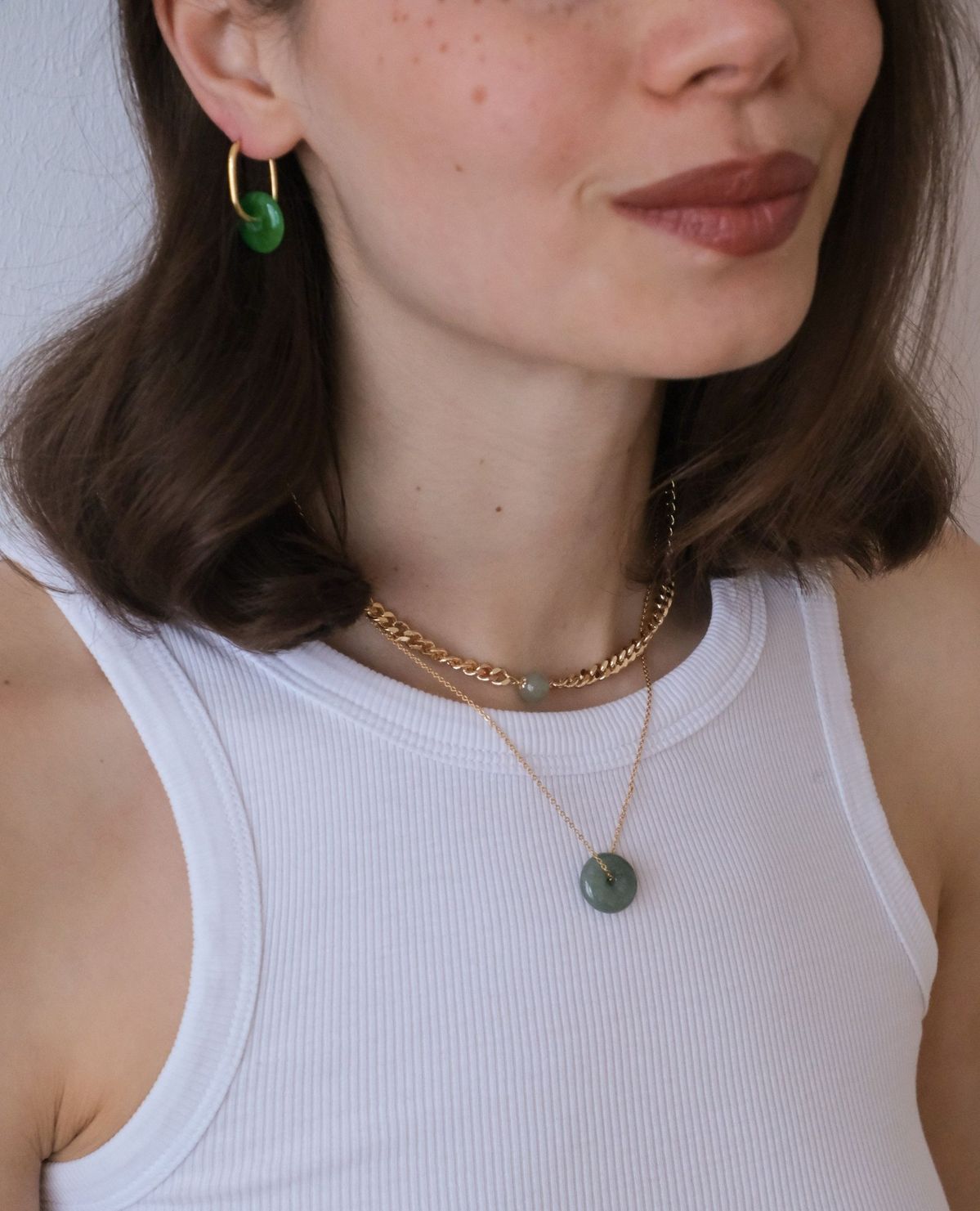
Uncover the transformative power of green jade meaning. From royal Chinese imperial talismans and sacred Mesoamerican agricultural rites to modern fine jewelry, explore how chromium-rich jadeite an...

Uncovering true jade color meanings reveals a mesmerizing spectrum extending far beyond classic green. From soothing white and tranquil lavender to bold red and grounding black, each natural hue ca...