
The Most Expensive Jade Color Ranked: A Gemological Guide
Table des matières
Summary
Understanding the most expensive jade color requires both rigorous gemological science and deep cultural appreciation. This comprehensive guide reveals exactly how modern experts determine jade value by color across varieties. You will learn why Imperial Green remains the undisputed most valuable jade color available globally. We will also explore breathtaking rare jade colors, including stunning lavender and historical white nephrite. Beyond simply identifying the rarest jade color, this article explains the critical interplay of optical factors. These vital factors include pure hue, tone, saturation, and translucency, which dictate true market prices. By understanding these precise grading standards, collectors can make highly informed, confident fine jewelry purchases. You will discover exactly what makes certain natural shades so incredibly valuable to passionate connoisseurs.
Introduction
The profound fascination with the most expensive jade color spans centuries of human history globally. For generations, royalty and luxury collectors have passionately pursued this captivating and highly symbolic gemstone. Today, determining the ultimate jade value by color remains a highly specialized professional gemological skill. The natural world produces an astonishing spectrum of rare jade colors spanning two distinct minerals. These two distinct minerals are nephrite and jadeite, each offering entirely unique optical properties today. Our comprehensive guide will rank these magnificent hues based on strict, objective professional grading criteria. We will confidently help you identify the rarest jade color and understand its true worth.

The Supreme Champion: Understanding the Most Expensive Jade Color
When experts carefully evaluate the most expensive jade color, one specific variety completely dominates markets. This legendary green hue represents the absolute pinnacle of natural gemstone perfection and geological rarity. Collectors worldwide instantly recognize this specific shade as the ultimate symbol of wealth and prestige. We will thoroughly explore why this incredible gemstone commands astronomical prices at global luxury auctions.
The Reign of Imperial Green as the Most Expensive Jade Color
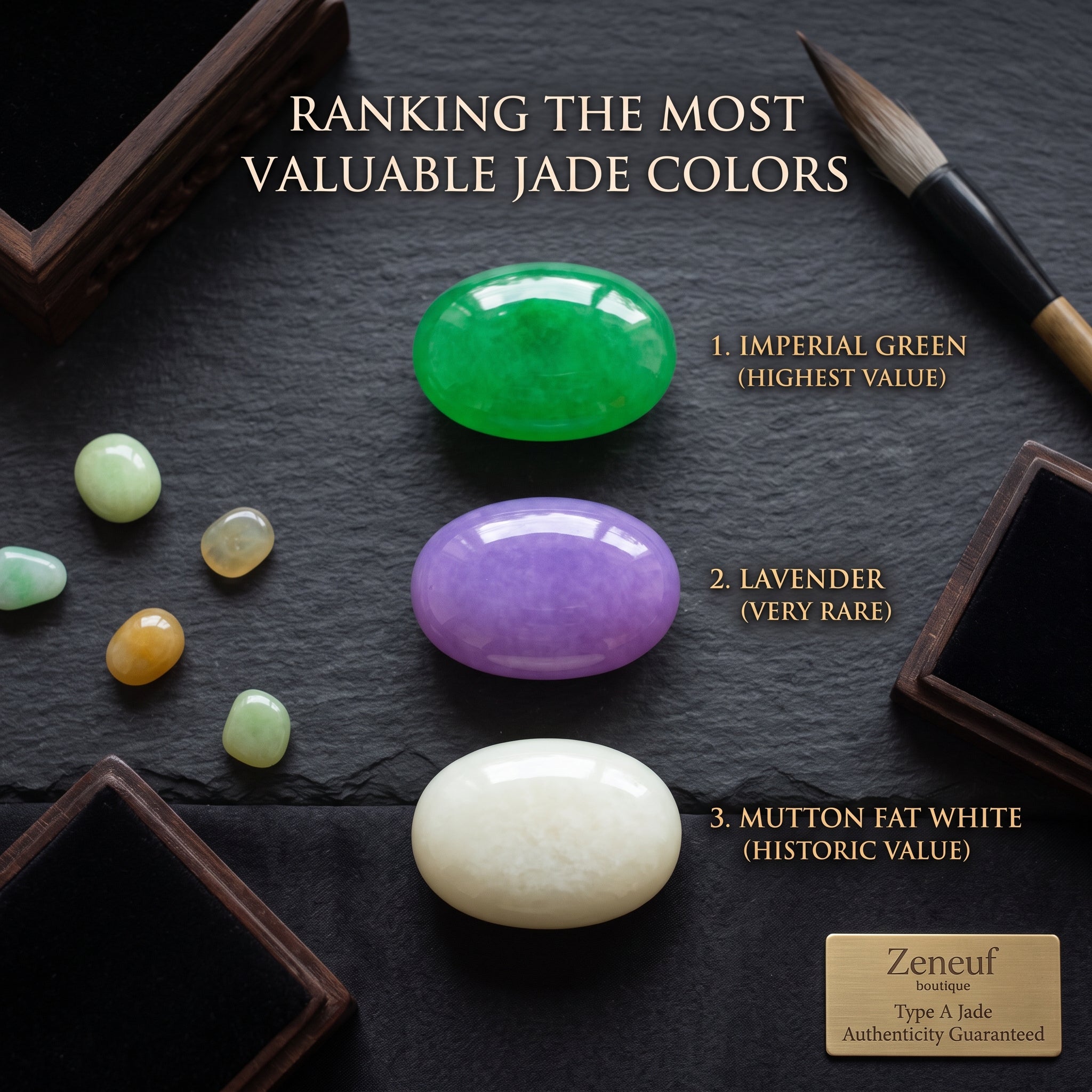
Imperial Green is universally recognized as the absolute most expensive jade color available anywhere today. This breathtaking hue is the most valuable jade color strictly because of intense visual purity. The premium gemstone exhibits a vibrant, penetrating emerald green with absolutely no yellow or gray. This flawless chromatic expression is exceptionally rare in completely natural, untreated Type A jadeite stones. Chemically, this striking natural coloration results from precise trace amounts of chromium deep underground.
The profound historical association with Chinese royalty further cements its status as the most expensive jade color. During the historic Qing Dynasty, this magnificent green shade became strictly reserved for imperial courts. Empress Dowager Cixi famously adored this specific hue, elevating its cultural prestige to mythical levels. This incredible royal endorsement forever changed how gemologists calculate jade value by color globally today. Today, knowledgeable collectors still revere this vivid shade as the ultimate symbol of supreme prosperity.
Top-quality Imperial Green pieces easily command millions of dollars at prestigious international auction houses globally. A simple beaded necklace featuring the most expensive jade color can quickly shatter auction records. This specific green shade perfectly balances maximum color saturation with an incredibly mesmerizing internal glow. Investors actively seek out these exceedingly rare pieces as highly stable, generational alternative financial assets. Ultimately, this legendary natural hue remains the undisputed champion of the modern fine jewelry market.
Translucency's Role in the Most Expensive Jade Color
Finding the absolute most expensive jade color is only one part of the valuation equation. A truly valuable luxury gemstone must also possess exceptional translucency and fine internal crystal texture. Expert gemologists refer to this stunning optical phenomenon as the internal "water" of the stone. Even the most valuable jade color loses significant financial worth if the stone appears opaque. Ambient light must deeply penetrate the smooth surface to illuminate the most expensive jade color.
A tightly interlocking microscopic crystalline structure allows the stone to achieve a glass-like polished finish. This incredible structural perfection heavily elevates the most expensive jade color to true investment status. Coarse internal rock grains within the stone will immediately scatter light and destroy beautiful glows. Therefore, evaluating jade value by color always requires a simultaneous assessment of structural crystal clarity. Without high natural translucency, even a brightly saturated green stone will look entirely flat visually.
The absolute finest examples of the most expensive jade color look like glowing water drops. Professional experts often use small specialty flashlights to carefully examine how light travels through gemstones. This highly intensive optical inspection guarantees that internal structural integrity beautifully matches the outer hue. Only rare stones possessing both top-tier color and exceptional glassy texture achieve record-breaking auction prices. This exceptionally rare combination truly defines the very highest echelon of global fine gemstone collecting.
How Apple Green Ranks Against the Most Expensive Jade Color
While Imperial Green reigns supreme, Apple Green is another highly sought-after and incredibly expensive variety. This lively shade features a slightly lighter tone with subtle, vibrant yellow undertones throughout it. It ranks exceptionally highly when assessing overall jade value by color for modern jewelry designs. Younger contemporary collectors often prefer Apple Green because it feels incredibly fresh, bright, and energetic. Although slightly less expensive, a flawless Apple Green bangle still requires a very substantial investment.
Other notable green varieties include vibrant "Yang" green and much more muted "Oil" green tones. These beautiful subordinate greens are lovely but never reach astronomical prices like the most expensive jade color. The visible presence of muddy gray or brown modifiers always reduces final market valuation significantly. Oil green jewelry pieces often appear slightly darker and lack the luminous brilliance of top-tier stones. However, these more affordable green variations remain incredibly popular for elegant everyday luxury jewelry wear.
Understanding these subtle chromatic differences is utterly essential when learning how to evaluate gemstone investments. A highly translucent Apple Green piece can sometimes outprice an opaque, low-quality Imperial Green stone. Microscopic texture and translucency always interact directly with hue to determine the final retail price. This highly complex visual interplay is exactly why consulting with educated gemological experts is crucial. Gorgeous green will naturally always remain the most iconic and highly demanded gemstone color family.
|
Jadeite Color Category |
Primary Visual Characteristics |
Rarity Level |
Market Value Tier |
|
Imperial Green |
Vivid, pure emerald green without gray undertones. |
Extremely Rare |
The absolute highest global market value. |
|
Lavender |
Soft pinkish to deep bluish purple hues. |
Very Rare |
Exceptionally high, especially with fine texture. |
|
Apple Green |
Bright green featuring subtle, warm yellow undertones. |
Rare |
High value, highly desired by collectors. |
|
Ice (Colorless) |
Highly transparent, lacking any distinct body color. |
Rare |
High value, dependent entirely on clarity. |
|
Red & Yellow |
Earthy reddish-brown to bright honey yellow tones. |
Uncommon |
Moderate to high, depending on saturation. |
|
Black (Ink Jade) |
Appears deep black but glows green illuminated. |
Uncommon |
Moderate to high for specialized collectors. |
Beyond Green: Rare Hues and the Most Expensive Jade Color
While magnificent green dominates the headlines, this amazing gemstone actually forms in spectacular rainbow hues. Exploring these magnificent rare jade colors reveals a fascinating world of complex geological science miracles. Sometimes, the rarest jade color in a specific category can truly rival traditional greens financially. Let us explore these extraordinary natural shades that captivate modern gemologists and dedicated international collectors.
Lavender Jadeite Compared to the Most Expensive Jade Color
Many dedicated collectors consider deep lavender to be the rarest jade color behind Imperial Green. This stunning natural hue ranges from delicate pale pinkish-purple to a much deeper bluish-purple tone. The mesmerizing purple color originates from natural trace amounts of manganese trapped inside dense stones. In recent decades, gorgeous lavender has surged in immense popularity among fashion-forward luxury jewelry buyers. It is now widely considered the second most valuable jade color in the modern market.
Beautiful lavender pieces often struggle with texture, typically presenting a much coarser internal grain structure. Therefore, finding a highly translucent piece of lavender jadeite is an exceptionally rare geological discovery. When exquisite glassy texture beautifully meets intense purple saturation, the resulting gemstone commands astonishing prices. In certain highly competitive auction scenarios, premium lavender can sometimes rival the most expensive jade color. This exceptional market rarity makes fine lavender jewelry a spectacular addition to serious luxury collections.
Experts evaluating jade value by color always carefully check how lavender stones react to lighting. Some lesser lavender stones unfortunately suffer from temporary "color fade" when viewed under bright sunlight. The absolute most valuable purple pieces will completely retain rich saturation regardless of lighting environments. Soft pinkish-purple tones typically command slightly higher market prices than stones exhibiting heavily blue undertones. Regardless of the exact purple shade, high-quality lavender remains an incredibly magnificent jewelry investment option.
Mutton Fat Nephrite: Historically the Most Expensive Jade Color
When thoroughly discussing jade value by color, we must absolutely consider historical nephrite mineral varieties. For thousands of ancient years, pure white nephrite was considered the ultimate, most expensive jade color. Known historically as "Mutton Fat" jade, this legendary stone exhibits a creamy, completely flawless appearance. It possesses an incredibly smooth, deeply greasy visual luster that feels exceptionally soft to touch. Before discovering Burmese jadeite, this pristine white stone was the undisputed absolute highest jewelry standard.
Today, top-quality Mutton Fat nephrite from western China still easily commands exceptionally high premium prices. It proudly represents the profound historical roots of deep Asian gemological appreciation and ancient culture. The absolute finest historical pieces are found in the legendary Yurungkash River as naturally polished stones. These amazing river-tumbled boulders possess a dense microscopic fiber structure creating unmatched physical durability overall. Modern collectors deeply prize this rare jade color for its understated elegance and profound significance.
Unlike highly transparent green jadeite, premium white nephrite is valued specifically for dense, opaque purity. Any slightly visible gray streaks or tiny black mineral inclusions will immediately drastically lower value. The premium stone must literally resemble congealed animal fat, radiating a warm, distinctly oily glow. While completely geologically different from jadeite, Mutton Fat nephrite remains a titan of gemstone luxury. It proudly stands as the absolute rarest jade color within the expansive global nephrite family.
Red, Yellow, and Black vs the Most Expensive Jade Color
The vibrant earth produces several other rare jade colors that continuously fascinate modern jewelry designers. Striking red and yellow jadeite acquire their uniquely warm tones from natural underground iron staining. This lovely rustic staining occurs completely naturally near the outer skin of rough gemstone boulders. The highly valuable yellow pieces exhibit a bright, vibrant honey tone with excellent overall translucency. These beautiful warm hues are highly prized for creating festive, culturally significant, and vibrant jewelry.
Vibrant red jadeite is another incredibly rare jade color symbolizing intense joy and good fortune. Finding a completely natural, chemically untreated red piece with good translucency is exceptionally difficult today. Most commercial red stones are unfortunately heavily heated artificially to chemically enhance dull brownish colors. Therefore, an authentic naturally vibrant red stone ranks very high when assessing jade value by color. These fiery natural stones look absolutely magnificent when beautifully set into rich yellow gold designs.
Black jadeite, often called "Ink Jade," appears entirely dark and opaque under normal ambient lighting. However, when illuminated directly, high-quality authentic black jadeite reveals a stunning hidden dark green glow. This magical optical color transformation makes Ink Jade a highly coveted material for intricate carvings. While obviously not the most expensive jade color, it commands immense respect among specialized collectors. These magnificent rare jade colors provide incredible aesthetic versatility for creating truly unique personalized jewelry.

The Science of Grading the Most Expensive Jade Color
Professional gemologists do not simply look at a luxury gemstone and guess its retail price. They rigidly utilize a highly structured, completely objective scientific system to determine accurate market value. This exact meticulous approach ensures that the most expensive jade color is graded with consistency. Understanding these rigid gemological principles will strongly empower you to make highly educated jewelry purchases.
Evaluating Hue and Tone in the Most Expensive Jade Color
Professionals carefully evaluate the most expensive jade color using strict primary metrics: hue and tone. Hue simply refers to the actual basic color you instantly see, like green or purple. In professional gemology, a pure primary hue without any modifying secondary colors commands higher prices. For example, a brilliantly pure green hue is vastly superior to a dull bluish-green hue. This strict chromatic purity requirement is exactly why Imperial Green is the most expensive jade color.
Saturation closely measures the sheer visual intensity and pure chromatic power of that specific hue. The absolute most valuable jade color always exhibits maximum vivid saturation without appearing overly dark. If the natural saturation is far too weak, the stone will look pale and washed out. High saturation provides the incredible, eye-catching vibrance that luxury collectors demand from premium investment pieces. This intensely deep color depth is the true hallmark of the rarest jade color specimens globally.
Tone directly describes how incredibly light or how incredibly dark the overall gemstone appears visually. The most expensive jade color achieves a perfect medium tone that maximizes brilliant internal light. If a luxury stone is far too dark, it completely loses magical luminosity and beauty. If the overall tone is too light, the gemstone severely lacks necessary visual design impact. Mastering this precise delicate balance defines the ultimate professional gemstone valuation process for fine jewelry.
Color Distribution Within the Most Expensive Jade Color
A critically crucial factor in determining jade value by color is the physical uniformity present. The beautiful most expensive jade color will always be perfectly and completely even throughout stones. Natural jadeite typically forms underground with highly mottled, patchy, or highly irregular color distribution patterns. Finding a natural gemstone with a completely solid, uninterrupted color profile is an extreme rarity. This flawless visual chromatic consistency is exclusively reserved for the highest echelons of fine jewelry.
Random veins, spots, or cloudy patches immediately lower the overall market value of jewelry pieces. Even the most valuable jade color suffers a massive financial price drop if distribution blotches. Complete aesthetic visual harmony and uninterrupted color saturation are absolute requirements for top-tier investment pieces. When a stone is intricately carved, clever artisans intentionally try hiding uneven color distribution within details. However, smooth luxury cabochons and plain bangles leave absolutely nowhere for uneven color patches hiding.
This specific reason is exactly why simple bangles featuring the most expensive jade color cost millions. Creating a wonderfully large bangle requires a massive rough boulder with completely flawless, even coloration. Such utterly pristine geological boulders are practically extinct, making these specific jewelry pieces exceptionally valuable. Carefully evaluating color distribution is a critical skill for anyone seriously studying jade value by color. Absolute uniformity transforms a beautiful rock into a legendary, museum-quality masterpiece of fine jewelry art.
Verifying Type A Authenticity for the Most Expensive Jade Color
When purchasing magnificent rare jade colors, verifying absolute chemical authenticity is the most critical step. The modern market is unfortunately heavily flooded with treated stones attempting to mimic premium hues. Only completely untreated, totally natural "Type A" jadeite holds any true, lasting financial investment value. Official Type A guarantees that the stone has only been expertly cut and traditionally polished. This strictly ensures the most expensive jade color you see was created entirely by nature.
Harmful modern chemical treatments typically involve bleaching raw stones with harsh, structurally damaging industrial acid. Deceptive manufacturers then heavily inject colored synthetic polymers to artificially enhance the gemstone's visual appearance. These highly destructive chemical processes severely compromise structural integrity and completely destroy true investment value. Over time, these artificially injected chemical resin treatments will slowly turn ugly, brittle, and brown. Therefore, purchasing chemically treated stones is a terrible financial decision that wastes your investment money.
You must absolutely always demand recognized gemological certification when investing in the most expensive jade color. Reputable laboratories meticulously use advanced infrared spectroscopy to definitively prove stones lack artificial polymer treatments. At Zeneuf, we are fiercely professionally dedicated to providing exclusively natural, fully certified Type A pieces. Deeply understanding jade value by color is utterly useless if the gemstone itself is fraudulent. Always prioritize verifiable authenticity to ensure your precious rare jade colors endure for future generations.
Conclusion
The incredible world of natural luxury gemstones offers few treasures as deeply fascinating as jade. Truly understanding the most expensive jade color requires a deep appreciation for geology and craftsmanship. While legendary Imperial Green remains the undisputed king, the complete spectrum of rare hues astounds. From mesmerizing vibrant lavender to creamy white nephrite, every authentic shade tells a unique story. We highly hope this comprehensive guide has illuminated exactly how gemologists determine true gemstone value. By mastering these intricate professional concepts, you can confidently appreciate the incredible rarity of masterpieces. We cordially invite you to thoroughly explore the exquisite Zeneuf online boutique today for inspiration. Discover our stunning collections of completely natural, highly certified, and culturally significant fine jewelry pieces. Experience the timeless elegance of genuine jade craftsmanship and find your perfect, vibrant heirloom today.
FAQ
What exactly is the absolute most expensive jade color?
Imperial Green jadeite is universally recognized as the absolute most expensive jade color in the world. This completely natural, untreated hue commands premium astronomical prices at prestigious international jewelry auctions globally.
How do I safely maintain jewelry featuring the most expensive jade color?
Always wipe your precious stone gently with a soft, slightly damp microfiber cloth after wearing. You must completely avoid using harsh chemical solvents or damaging ultrasonic cleaners on fine jadeite.
How should I elegantly style rare jade colors for everyday wear?
Simple, elegant solid yellow gold settings perfectly highlight the natural vibrance of premium colored jadeite. These minimalist jewelry designs ensure the magnificent gemstone remains the absolute focal point worn daily.
How does translucency physically impact the most valuable jade color?
High translucency allows brilliant environmental light to deeply penetrate the stone's internal microscopic crystalline structure. This stunning optical effect dramatically increases visual beauty and the final retail luxury market price.
What is the absolute rarest jade color behind pure green?
Deep, highly saturated lavender jadeite is widely considered the second most valuable jade color globally. Highly translucent purple pieces are exceptionally scarce and incredibly highly desired by specialized luxury collectors.
How do gemological experts accurately evaluate jade value by color?
Trained professionals carefully assess the stone's primary base hue, overall saturation, darkness tone, and clarity. They also strictly evaluate the complete physical evenness of the color distribution across the gemstone.
Are vibrant rare jade colors like red and yellow naturally occurring?
Yes, these magnificent rare jade colors occur completely naturally without any artificial human heating processes. They are beautifully created by ancient iron trace elements oxidizing slowly deep underground over millennia.
Why must I exclusively purchase authentic Type A certified jadeite?
Official Type A certification absolutely guarantees the beautiful stone is completely natural and chemically untreated. This strict scientific verification ensures your gorgeous jewelry retains its true financial and generational value.
Read more
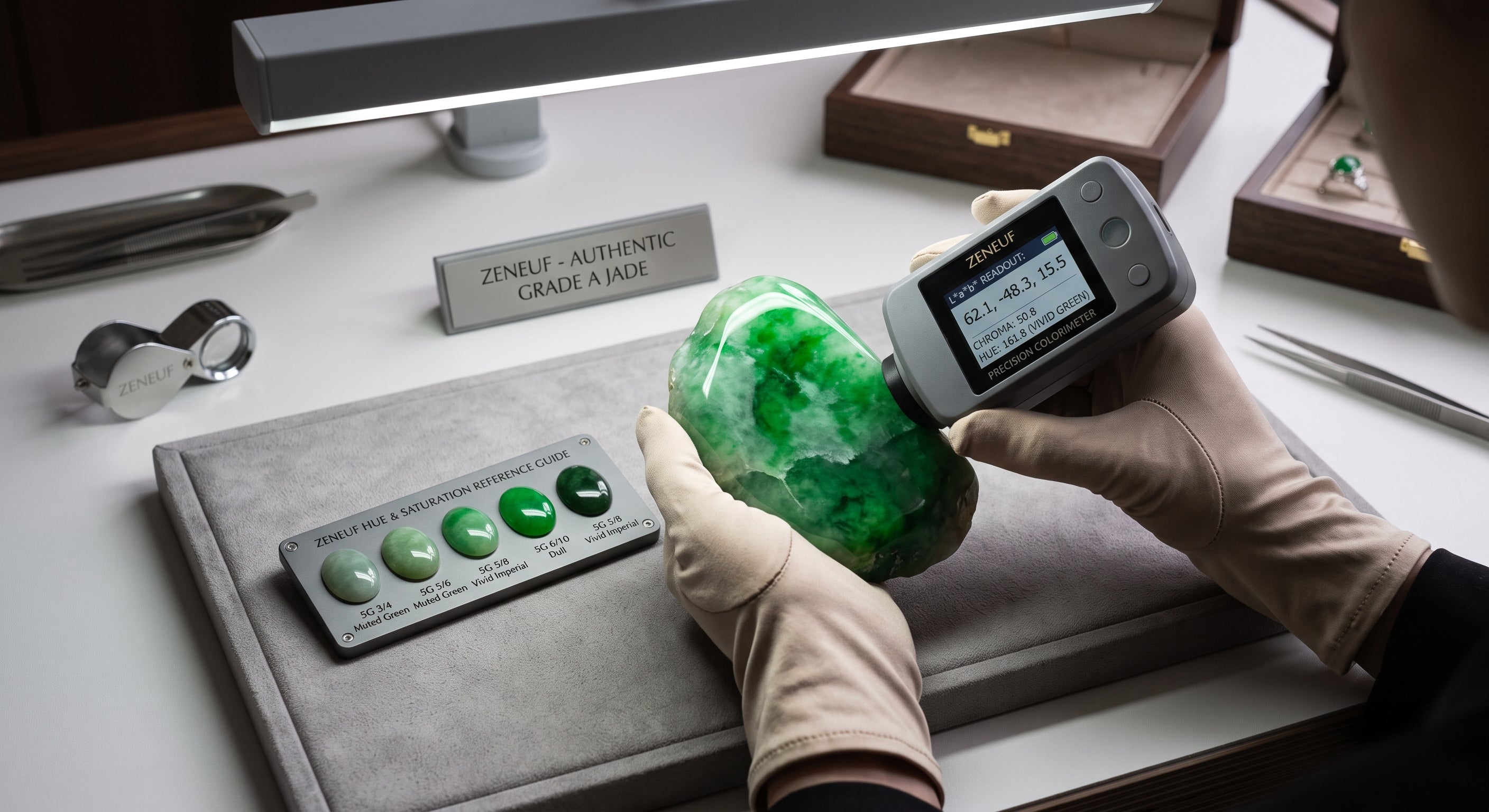
Understanding a true jade color chart is essential for selecting authentic pieces. This guide decodes the gemological principles of tone, saturation, and value. Learn how light impacts natural jade...
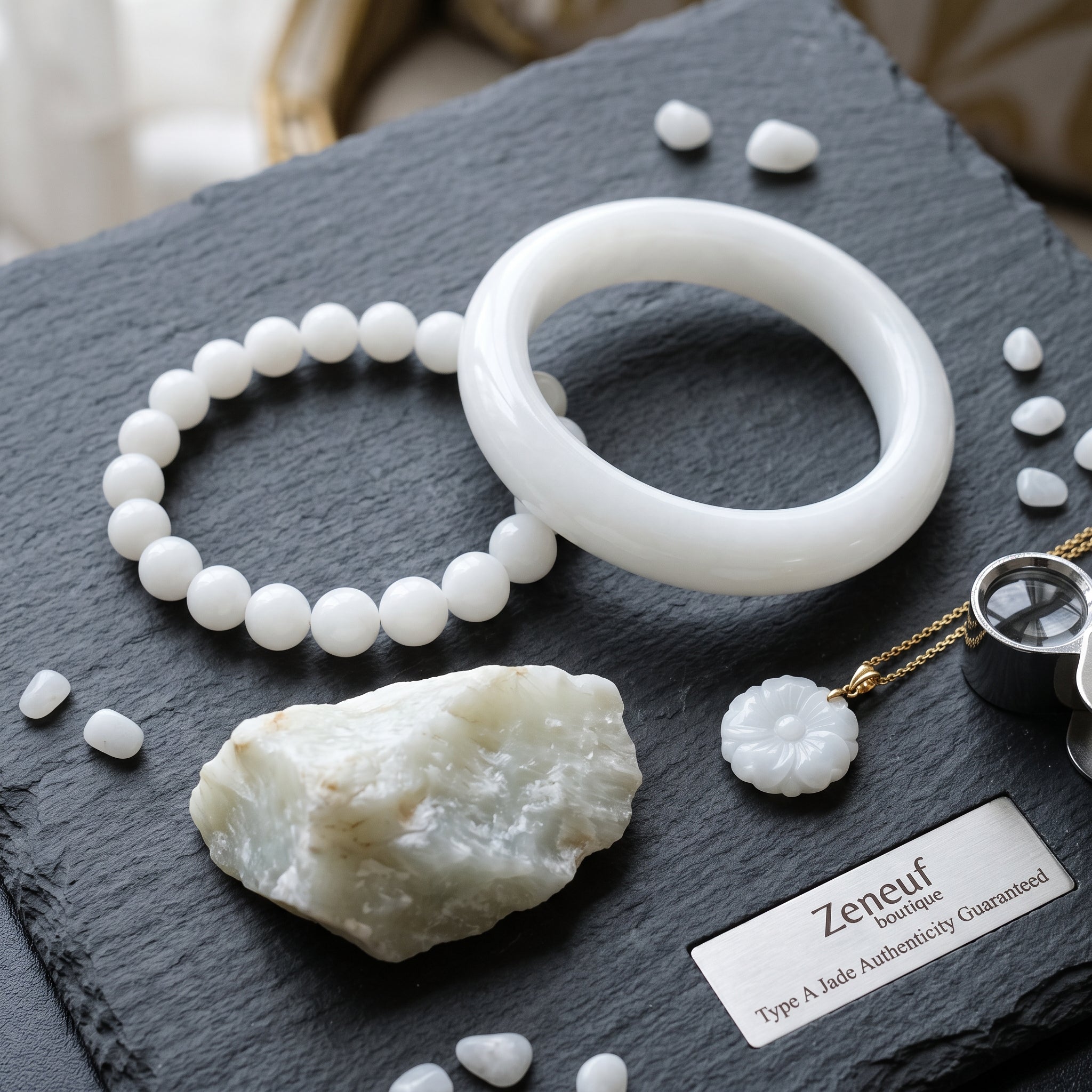
Explore the pristine beauty of white jade. Our gemological guide reveals how to judge the purity and value of this coveted gemstone. From evaluating raw rough to styling elegant jewelry, discover e...