

Black Jade Meaning: Protection and Grounding
Table des matières
Understanding black jade meaning reveals how this natural stone fosters everyday protection, emotional balance, and physical grounding. Readers will explore gemological distinctions between nephrite and jadeite, uncover cross-cultural history, master simple styling tips, and learn authentic care routines. Discover how genuine black jade empowers your daily personal jewelry collection with ease.
Introduction
Throughout history, genuine gemstones have connected human emotion with the quiet stability of the earth. Understanding authentic black jade meaning offers practical insight into why this dark stone remains cherished across diverse traditions.
Many everyday jewelry wearers search for accessories that provide visual elegance and personal reassurance. Natural black jade satisfies that search by delivering an extraordinary sense of calm. It also offers emotional stability and continuous defense against daily stress.
At Zeneuf, we celebrate this remarkable heritage through handcrafted designs made exclusively from natural jade. Exploring this gemstone will help you choose meaningful jewelry that enriches your daily routine with grounded confidence.

Historical Traditions and Cultural Black Jade Meaning
Natural black jade has occupied an honored position within global gemstone lore for thousands of years. Early civilizations recognized its visual presence and physical toughness during both ancient ceremonies and everyday domestic tasks.
Ancient Civilizations and Black Jade Meaning
Ancient cultures recognized that dark gemstones possessed distinct protective qualities. In ancient Mesoamerica, indigenous lapidaries shaped dark nephrite and jadeite into ceremonial amulets, tool blades, and personal ornaments.
Researchers at the Smithsonian National Museum of Natural History document that pre-Columbian societies viewed dark jade as a sacred talisman. They believed it linked earthly life with ancestral realms while warding off negative environmental energies.
The dense weight and dark luster of the stone symbolized fertile soil, deep earth, and enduring physical resilience. Wearers carried these carved stones during long journeys to safeguard against physical harm and sudden illness. Consequently, the cultural foundation of black jade meaning originated as a shield against unpredictable external dangers.
Civilizations throughout Central America also associated deep dark stones with night skies, fertile rain clouds, and protective spirits. Artisans spent months polishing dense mineral slabs using river sand and wooden smoothing tools. They created smooth pendants worn over the heart during community gatherings.
These artifacts survived centuries buried in damp soil without losing their structural integrity or soft sheen. Early tribes understood that this mineral did not degrade like softer decorative rocks. Because it endured harsh seasonal shifts, wearers viewed it as an eternal protector.
This ancient reverence laid the groundwork for how we perceive dark jade today. It remains an enduring emblem of safety, resilience, and personal continuity across changing environments.
Eastern Heritage and Black Jade Meaning
In traditional Chinese culture, jade holds a supreme position above all other decorative minerals. While imperial green jade garnered court prestige, dark varieties fulfilled essential philosophical roles within classical Taoist cosmology.
The British Museum highlights ancient Chinese lapidary collections where dark nephrite represents the tranquil, receptive principle of Yin. Yin embodies darkness, earth, water, stillness, and restorative rest. Classical Chinese scholars kept dark jade carvings on writing desks to steady erratic thoughts during demanding intellectual work.
They observed that touching cool, smooth dark jade rapidly calmed an agitated spirit. Wearing dark jade bracelets close to the skin helped maintain personal equilibrium during social conflicts. Thus, Eastern traditions established black jade meaning as an emblem of inner composure, wisdom, and steadfast composure.
Taoist masters taught that dark stones absorbed turbulent emotional currents from the physical body. By drawing out excessive heat and restless internal energy, the mineral restored natural balance. Families passed polished dark nephrite disks down through successive generations as protective family heirlooms.
These smooth stones served as tactile anchors during meditation, daily study, and evening reflection. Carvers often etched quiet symbols of water and mountain peaks onto flat pendant surfaces. These motifs reinforced the stone's connection to deep earthly stability and flowing balance.
Modern wearers still draw upon this timeless philosophy when seeking calm amid chaotic modern schedules. The stone quietly reminds us that true personal strength emerges from inner peace and steady composure.
Protective Amulets and Black Jade Meaning
Across ancient Mediterranean and Eurasian trade routes, travelers kept polished dark jade pebbles sewn into garments. Merchants traversing challenging desert pathways relied on these natural mineral charms to protect trade goods from highway hazards.
Historic accounts cataloged by the Gemological Institute of America note that early travelers attributed defensive properties to dark nephrite. They trusted the stone to absorb harmful intentions directed toward the wearer. Unlike fragile minerals that fractured easily under strain, dense dark jade survived demanding travel without surface chipping.
This physical resilience reinforced the belief that the mineral possessed an unbreakable protective spirit. Wearers trusted that this protective barrier absorbed negative emotional frequencies before they could disturb internal peace.
Nomadic tribes across Central Asia valued dark nephrite for creating practical tools and defensive pendants alike. Riders fastened smooth dark stones to horse bridles to protect their mounts during long treks. They believed the mineral prevented sudden accidents along steep mountain trails.
In village folklore, mothers placed small polished dark pebbles near cradleboards to protect sleeping infants. The dark color represented a cloaking shield that deflected unwanted attention and spiritual unrest. Because the stone felt cold and solid, people associated it with steady physical defense.
These traditions demonstrate that black jade meaning has always focused on practical, everyday safety. It served as a functional companion for individuals navigating unpredictable circumstances.
Pacific Traditions and Black Jade Meaning
Indigenous traditions across the South Pacific also honor dark nephrite varieties for their strength and spiritual significance. The Māori people of New Zealand refer to local nephrite as pounamu, carving it into revered tools and ornaments.
Darker varieties of this mineral, often showing deep charcoal and olive hues, held deep personal importance. Carvers crafted smooth adzes, chisels, and flat pendants known as hei-tiki. Each carved piece gathered personal spiritual prestige, known as mana, as it passed from generation to generation.
Families believed the stone captured the inner essence and resilience of every ancestor who wore it. Dark stones symbolized unbreakable family bonds, ancestral protection, and enduring land connections.
Māori artisans selected dark nephrite specifically for its unmatched toughness during woodworking and ocean voyaging. An adze made from fibrous nephrite held a sharp edge without chipping against hard timber. This practical durability transformed everyday tools into sacred heirlooms worthy of preservation.
When warriors undertook perilous ocean journeys, they wore polished dark nephrite pendants beneath their clothing. The cool stone against the chest offered reassurance against turbulent waves and stormy winds.
This Pacific legacy enriches our modern understanding of black jade meaning today. It reminds us that real spiritual value stems directly from honest utility, family heritage, and quiet physical endurance.
Gemological Composition and Scientific Black Jade Meaning
Appreciating the deeper significance of any mineral requires a solid understanding of its physical and chemical structure. The visual allure of dark jade stems directly from specific geological processes occurring deep within the earth's crust.
Mineralogical Diversity and Black Jade Meaning
Authentic jade is not a single mineral species; it comprises two distinct geological formations: nephrite and jadeite. Natural black nephrite belongs to the amphibole mineral group, composed primarily of calcium, magnesium, and iron-rich silicate fibers.
Studies published by the Gemological Institute of America confirm that nephrite possesses an interwoven microcrystalline structure. This felted fibrous arrangement makes nephrite one of the toughest natural stones on the planet. Natural black jadeite belongs to the pyroxene mineral group, featuring tightly interlocked granular sodium-aluminum silicate crystals.
Black jadeite forms under exceptionally high pressures within subduction zones deep below oceanic trenches. Both varieties exhibit remarkable physical toughness, meaning they resist scratching, chipping, or shattering during daily domestic activities. Understanding this distinction clarifies authentic black jade meaning for conscious consumers seeking dependable jewelry.
Geologists classify nephrite as an actinolite-tremolite solid solution series. When tremolite dominates, the stone appears creamy white or light green. As actinolite content rises, iron replaces magnesium, creating deeper shades of forest green, charcoal, and midnight black.
Jadeite, on the other hand, forms under colder temperatures and extreme tectonic pressures. Its crystalline grains interlock like three-dimensional jigsaw puzzles, creating immense density. Both stones differ fundamentally from common quartz minerals like onyx.
While onyx shares good surface hardness, it lacks the interwoven structural toughness of genuine jade. This scientific reality makes authentic jade jewelry far more resilient for continuous daily wear.
Geological Coloration and Black Jade Meaning
The deep midnight hue of natural jade develops through precise chemical inclusions during mineral crystallization over millions of years. In black nephrite, elevated concentrations of iron combined with fine microscopic graphite particles produce rich dark tones.
The Smithsonian Institution Department of Mineral Sciences demonstrates that microscopic inclusions of magnetite or graphite create dense opacity. In black jadeite, microscopic organic carbonaceous inclusions or intense concentrations of chromium give the stone its deep charcoal appearance.
When held directly in front of an intense light source, some authentic dark nephrite displays subtle olive undertones. In contrast, fine black jadeite often exhibits an astonishing emerald halo along thin, translucent edges. These natural optical variations confirm that the gemstone formed authentically without artificial chemical treatments or toxic dyes.
These color-causing trace elements enter the mineral lattice while hot fluids circulate through metamorphic rock formations. Over immense geological eras, pressure fuses these elements into a unified, opaque crystalline matrix.
Under natural sunlight, a polished surface displays a satiny sheen rather than a cold, mirror-like reflection. This soft, tactile luster occurs because microscopic surface crystals scatter incoming light rays gently.
Shoppers who appreciate subtle beauty cherish this understated optical glow over artificial, glassy shine. The internal color remains stable throughout your lifetime, never fading from exposure to fresh water or air.
Durability Factors and Black Jade Meaning
For everyday shoppers, gemstone longevity remains a primary consideration when selecting personal accessories. Many dark stones, such as obsidian, fracture easily upon minor impact because of an amorphous, glassy composition.
Black jade behaves entirely differently due to its unique internal grain structure. Nephrite rates between 6.0 and 6.5 on the Mohs hardness scale, while jadeite rates between 6.5 and 7.0. However, hardness measures only resistance to scratching, whereas toughness measures resistance to fracturing or breaking.
Scientific assessments by the Muséum National d'Histoire Naturelle confirm that nephrite displays the highest fracture toughness of any natural gem. You can wear a handcrafted black jade pendant or bracelet daily without constant anxiety about incidental household knocks.
Fracture toughness explains why ancient cultures carved weapon blades and chisels from fibrous nephrite chunks. When dropped onto concrete or struck against furniture, jade absorbs structural shock throughout its microscopic fibrous network.
Brittle gems like amethyst, topaz, or emerald develop internal cracks or chip along cleavage planes under identical force. Jade lacks distinct cleavage planes, preventing clean structural splits under pressure.
This mechanical durability provides practical peace of mind for active jewelry lovers. Your favorite daily piece will withstand desk work, active errands, and accidental drops without losing structural integrity.

Optical Luster and Black Jade Meaning
The visual character of polished dark jade sets it apart from all other dark minerals. When properly polished with natural abrasives, nephrite produces an oily, waxy, or greasy luster that feels soothing.
Jadeite tends to show a slightly brighter, sub-vitreous sheen that catches ambient indoor light cleanly. Gemological laboratories use specialized refractometers to measure how light bends as it enters these distinct crystalline surfaces.
Nephrite displays a refractive index ranging around 1.61, while jadeite measures approximately 1.66 on standard testing equipment. These scientific values explain why dark jade never looks like cheap, painted costume jewelry.
Natural stone collectors often speak of jade's tactile warmth and gentle visual depth. Light penetrates slightly below the polished boundary before bouncing back to the viewer's eye. This minimal light penetration creates a soft, velvety texture rather than a harsh, blinding glare.
When you slide your thumb across the stone, it offers a gentle, pleasant drag. This tactile quality encourages frequent touch, creating a grounding sensory habit throughout stressful workdays. The visual serenity of this optical behavior reinforces black jade meaning as a calming anchor for daily life.
Energetic Grounding and Holistic Black Jade Meaning
Holistic wellness practices around the world emphasize maintaining steady personal balance amidst the relentless sensory overload of modern living. Natural dark jade serves as a tangible anchor, helping everyday individuals cultivate emotional equilibrium.
Root Chakra Harmony and Black Jade Meaning
Holistic traditions associate colored gemstones with specific energy centers located throughout the human body. Because of its dark earthy color, traditional wellness practitioners align black jade directly with the root chakra, or Muladhara.
The root chakra sits at the base of the spine, representing stability, basic survival instincts, and personal security. When your root chakra functions harmoniously, you feel secure, self-assured, and capable of navigating daily professional challenges.
Placing smooth black jade against the body grounds excessive nervous thoughts into steady physical calm. It encourages you to slow your breathing, steady your posture, and focus on immediate physical realities. This intimate chakra alignment makes black jade meaning a reliable symbol of calm perseverance for busy individuals.
A balanced root chakra allows you to handle unexpected domestic stress without feeling overwhelmed or paralyzed. When modern life accelerates, thoughts often scatter, leading to mental fatigue and physical tension.
Wearing a low-hanging pendant or holding smooth beads reconnects your conscious focus with physical ground. Practitioners often place dark jade stones at the base of the spine during restorative yoga sessions.
The weight of the mineral provides physical awareness, reminding the mind to release clenched lower back muscles. This simple, non-invasive practice cultivates a quiet foundation of strength that supports everyday emotional well-being.
Emotional Resilience and Black Jade Meaning
Everyday life presents emotional friction, including demanding work schedules, family obligations, and unpredictable personal challenges. Carrying natural black jade acts as an emotional sponge, absorbing excess nervous energy before it produces intense mental fatigue.
The American Psychological Association notes that tactile sensory grounding objects help diminish symptoms of situational anxiety. When you run your fingers along polished black jade, its cool surface provides an immediate tactile anchor.
This physical sensation interrupts cascading negative thoughts, guiding mental focus back toward rational problem-solving. Black jade does not suppress natural feelings; rather, it provides a stable internal buffer against reactive emotional outbursts. Over time, wearers develop greater patience, emotional self-reliance, and persistent inner serenity.
Emotional resilience requires cultivating a safe mental space between an external stressor and your personal reaction. Holding a cool gemstone creates a momentary pause, allowing rational consideration before speaking or reacting.
Parents, healthcare workers, and customer service professionals often find this tactile pause immensely helpful during difficult interactions. The stone serves as a silent, discreet reminder to maintain personal boundaries and composed speech.
By anchoring your attention in physical sensation, you conserve mental energy for productive daily tasks. This emotional balance embodies the core virtue of modern black jade meaning in our fast-paced society.
Energetic Purification and Black Jade Meaning
In an increasingly connected world, people constantly absorb ambient stress from digital devices, crowded commutes, and noisy environments. Holistic traditions celebrate dark jade as an energetic filter that cleanses accumulated personal fatigue.
Unlike some energetic stones that project intense, stimulating frequencies, black jade emits a slow, comforting, and restorative resonance. It forms a protective energetic boundary, shielding your inner self from negative attitudes encountered in daily social interactions.
Many wellness enthusiasts keep a polished black jade talisman in their workspace to maintain a calm, productive atmosphere. Resting with black jade on your palm after work cleanses residual daytime tension, allowing restorative rest.
Energetic purification does not require complicated ceremonies or esoteric belief systems. Simply placing your stone on a windowsill or washing it with fresh water resets your mental focus.
As you cleanse the physical object, visualize washing away the hurried demands of your workday. This simple mindfulness ritual creates a healthy psychological boundary between professional responsibilities and domestic relaxation.
Many individuals wear dark jade bracelets on their non-dominant wrist specifically to filter incoming social dynamics. By establishing this personal comfort zone, you navigate busy public environments with quiet confidence and protected peace of mind.
Mindful Meditation and Black Jade Meaning
Incorporating natural stones into daily meditation routines deepens mental focus and helps quiet repetitive inner dialogue. Beginners often struggle with racing thoughts, physical restlessness, and difficulty sitting still during silent contemplation.
Holding a polished black jade palm stone provides a steady, weighted point of concentration for restless hands. As you inhale slowly, focus your attention on the smooth, dense surface resting against your skin.
Notice how the mineral gradually absorbs warmth from your hand, creating a comforting sense of reciprocal connection. This tactile anchor keeps attention anchored in the present moment, preventing the mind from drifting toward future chores.
You can also incorporate a repetitive breathing rhythm while holding a string of smooth dark jade prayer beads. Count each bead between thumb and forefinger while taking slow, measured breaths into your lower abdomen.
This simple tactile breathing exercise lowers heart rate, relaxes tight shoulder muscles, and quiets internal noise. Meditating with dark jade anchors your physical body to the floor, encouraging feelings of safety and stability.
Over several weeks of regular practice, this habit builds a mental association between the stone and profound stillness. Whenever you wear your jewelry during the day, touching it instantly summons that meditative calm.
Everyday Styling and Practical Black Jade Meaning
Integrating natural gemstones into your existing personal wardrobe should feel effortless, versatile, and rewarding. Black jade offers an understated aesthetic that complements every style, color palette, and casual or formal occasion.
Wardrobe Versatility and Black Jade Meaning
One primary advantage of natural black jade is its seamless compatibility with diverse wardrobe aesthetics. Unlike vivid gems that clash with bright clothing, deep black jade harmonizes with every color combination.
Pair a minimalist black jade pendant with a crisp white button-down shirt for an elegant, professional office look. For casual weekends, wear a simple black jade bead bracelet alongside relaxed denim and comfortable knitwear.
The natural stone provides an understated tactile polish without appearing flashy or overstated. Its rich, satiny luster transitions smoothly from morning school drop-offs to formal evening dining occasions. Choosing black jade simplifies morning styling decisions while maintaining an air of refined, intentional elegance.
A single dark pendant works equally well against textured winter wool sweaters and airy summer linen shirts. Because the stone possesses a deep charcoal-to-midnight tone, it anchors colorful floral prints or sharp monochrome outfits effortlessly.
You never have to worry about color coordination when getting dressed in a hurry before work. The stone sits quietly against your collarbone, offering subtle texture without drawing unnecessary visual distraction.
This effortless versatility makes genuine black jade jewelry a practical foundation piece for modern capsule wardrobes. It provides lasting value because you can wear it every single day regardless of changing seasonal trends.
Metal Pairings and Black Jade Meaning
The deep charcoal and midnight tones of black jade provide a striking contrast against various precious jewelry metals. Mounting genuine black jade in polished 925 sterling silver creates a sharp, modern, and sculptural aesthetic.
The bright white shine of silver accentuates the dark, glossy surface of the stone, emphasizing clean outlines. Conversely, pairing black jade with warm yellow gold or rose gold evokes an antique, regal character.
The rich warmth of gold softens the stone's dark intensity, producing an inviting, comforting contrast. For a contemporary, minimalist aesthetic, settings made from stainless steel or platinum offer modern, durable options. Whichever metal you select, black jade remains the captivating visual anchor of the finished piece.
When selecting metal settings, consider your existing daily jewelry collection to ensure seamless layering and mixing. Silver settings lend themselves well to casual denim, cool gray fabrics, and contemporary office wear.
Warm gold mountings create a rich pairing with earth tones, camel coats, and deep navy blazers. Rose gold provides a delicate, romantic balance that softens the stone's bold physical presence on the wrist.
Because black jade carries a neutral midnight tone, it pairs harmoniously with mixed metal ring stacks and layered chains. This adaptability ensures your new jade piece integrates immediately with the jewelry you already cherish and wear daily.
Thoughtful Gifting and Black Jade Meaning
Selecting a meaningful gift for a friend, spouse, or child often feels overwhelming amidst generic, disposable gift options. Presenting someone with handcrafted black jade jewelry conveys a sincere message of lifelong support, protection, and emotional grounding.
It represents a lasting wish for their continued safety, sound health, and enduring inner peace through life's unpredictable seasons. Because natural jade is exceptionally tough, your recipient can wear the piece continuously without special preservation routines.
A smooth black jade pendant serves as a protective amulet for students leaving home for college. Likewise, a black jade bead bracelet offers steady encouragement for a friend starting a demanding career transition.
Jewelry gifts often risk feeling too delicate for daily use or too formal for regular casual wear. Black jade solves this dilemma by offering extreme structural resilience paired with an approachable, unpretentious aesthetic appearance.
Recipients appreciate receiving an authentic natural mineral formed deep inside the earth rather than synthetic costume plastic. Accompany your gift with a handwritten card explaining traditional black jade meaning and its protective historical lore.
This thoughtful personal context transforms a beautiful accessory into a cherished personal talisman they will wear for decades. Every time they touch the cool, smooth stone, they will remember your steady support and care.
Unisex Styling and Black Jade Meaning
Many modern jewelry shoppers search for gender-neutral accessories that offer understated sophistication without delicate, overly ornate metalwork. Black jade naturally lends itself to unisex styling due to its bold coloration, organic texture, and clean geometric presence.
Men frequently appreciate matte or satin-finished dark jade bead bracelets paired with leather bands or steel timepieces. The dark, grounded hue complements business suits, rugged denim jackets, and casual athletic wear with equal ease.
Women enjoy styling chunky dark jade rings alongside dainty band stacks, creating an eye-catching contrast of proportions. The mineral offers a grounded alternative to sparkly transparent gems, appealing directly to those who prefer minimalist design.
Designers increasingly craft dark jade into clean architectural shapes, including flat disks, clean cylinders, and geometric signet rings. These streamlined silhouettes highlight the stone's dense, natural mineral texture without superfluous filigree or decorative distractions.
Couples often choose matching dark jade pendants or matching bead bracelets as enduring symbols of mutual loyalty and protection. The shared stone serves as a discreet, physical reminder of shared emotional values and mutual support throughout busy workdays.
This universal appeal confirms that genuine black jade meaning transcends narrow demographic categories, welcoming anyone seeking steady elegance.
Authenticity Verification and Lifelong Black Jade Meaning
Due to jade's enduring popularity, synthetic materials, dyed stones, and simulants frequently appear in the consumer marketplace. Knowing how to verify authentic natural jade protects your investment and ensures you receive a genuine, untreated piece.
Identifying Imitations and Black Jade Meaning
Inexperienced shoppers often encounter treated minerals or clever imitations labeled erroneously as genuine black jade. Common lookalikes include dyed black onyx, black tourmaline, dark serpentine, dyed calcite, and even tinted industrial glass.
Dyed serpentine, sometimes misleadingly marketed as "new jade," is soft enough to scratch easily with a household steel nail. In contrast, authentic nephrite and jadeite easily resist scratches from ordinary steel utility blades.
Glass imitations frequently reveal small, spherical gas bubbles trapped beneath the surface when viewed under a 10x jeweler's loupe. Authentic natural jade never displays round internal bubbles; instead, it reveals an intricate, fibrous, or granular mineral network. Furthermore, synthetic plastic materials warm instantly in your hand, while genuine jade remains noticeably cold to the initial touch.
You can also assess authenticity by checking the specific gravity and heft of the stone in your palm. Natural jade possesses high mineral density, feeling noticeably heavier than plastic, resin, or lightweight glass imitations of identical size.
When you gently tap two authentic unmounted jade beads together, they produce a clear, resonant, musical chime. Plastic and glass simulants produce a dull, hollow, flat clicking sound when struck gently against each other.
Paying close attention to these subtle physical cues protects you from purchasing disappointing counterfeit materials. Understanding these physical properties deepens your connection to the authentic mineral and its true geological significance.

Recognizing Treatments and Black Jade Meaning
In the global gem trade, authentic jadeite is classified into three specific quality grades based on physical intervention. Grade A refers to completely natural, untreated jade that has undergone only mechanical cutting, hand carving, and natural beeswax polishing.
Grade B jade has been soaked in industrial acids to remove impurities, then injected with synthetic polymer resins. Grade C jade has been artificially dyed to alter or deepen its natural color throughout the stone.
The Gemological Institute of America confirms that chemical bleaching and resin impregnation severely compromise the natural toughness of jade. Over time, treated Grade B and Grade C stones become brittle, lose surface shine, and discolor when exposed to sunlight.
Zeneuf works exclusively with certified natural, untreated jade, ensuring that your jewelry retains its beauty and strength forever. Choosing untreated Grade A stone preserves the genuine energetic resonance and physical durability celebrated in traditional lore.
Acid-bleached stones often display tiny, microscopic surface pits resembling an orange peel under magnification where acid etched the crystalline boundaries. Over several months of regular skin contact, the artificial polymer fillings inside Grade B stones break down.
Body oils and environmental warmth cause synthetic resins to turn cloudy, yellow, or chalky white. Artificially dyed Grade C stones often bleed color onto light-colored shirt cuffs when exposed to sweat or rain.
Untreated Grade A jade avoids all these frustrating defects completely, maintaining its deep midnight color across your entire lifetime. Investing in certified natural jade guarantees that your daily jewelry remains a genuine earthly treasure.
Cleansing Rituals and Black Jade Meaning
Caring for your natural black jade jewelry requires minimal effort, making it ideal for busy individuals. Clean your jewelry using a soft microfiber cloth moistened with warm water and a few drops of mild dish soap.
Gently wipe the polished surface to remove accumulated body oils, dust, cosmetic residues, or daily perspiration. Never use harsh chemical cleaners, industrial acetone, household bleach, or commercial steam cleaners on natural jade jewelry.
Additionally, avoid placing natural jade into ultrasonic cleaning tanks, as high-frequency vibrations can aggravate microscopic internal stress fractures. After washing, dry your jewelry thoroughly with a lint-free cotton cloth before storing it in a fabric-lined jewelry box. Storing pieces separately prevents metal clasps from scratching the polished surfaces of your favorite stones.
Natural jade enjoys occasional gentle rehydration because it formed in moist metamorphic environments deep underground. You can apply a tiny drop of pure jojoba oil or natural mineral oil to a soft cotton pad.
Gently buff the oil across the surface of your carved pendant or beads once or twice each year. Wipe away all excess oil until the stone feels smooth, satiny, and completely dry to the touch.
This simple step restores natural surface luster and protects the stone from dry indoor winter heating systems. With this basic, mindful care, your genuine jade jewelry will retain its deep dark beauty for future generations.
Responsible Sourcing and Black Jade Meaning
Understanding where and how your gemstones are mined adds essential ethical peace of mind to your jewelry purchases. Natural nephrite comes from sustainable alluvial deposits and open-cut quarries across British Columbia, Australia, and Wyoming.
In these regions, mining operations adhere to strict environmental protection laws and land restoration protocols after extraction finishes. Natural jadeite primarily originates from historical alluvial gravel beds in upper Myanmar and high-pressure metamorphic belts in Guatemala.
Ethical jewelers work transparently with reputable gem cutters who guarantee fair worker wages, safe workshop ventilation, and child-free labor. Knowing your gemstone was unearthed respectfully preserves the positive, protective intentions associated with ancient black jade meaning.
When you buy jewelry, inquire about the origin of the raw rough mineral and verify independent gemological certification. Responsible sourcing ensures that local mining communities benefit directly from the honest trade of their native mineral resources.
It also guarantees that fragile river ecosystems and mountain watersheds receive proper environmental rehabilitation after mining concludes. Wearing a piece of jewelry that aligns with your ethical values deepens your emotional connection to the stone.
At Zeneuf, we prioritize transparent relationships with trusted lapidary partners who honor both the earth and their craftspeople. This commitment ensures that your protective talisman carries an unblemished story of human dignity and geological wonder.
Conclusion
Natural black jade remains one of the earth's most remarkable treasures, harmonizing ancient protective symbolism with unmatched physical resilience. From ancient Mesoamerican talismans and Chinese scholars to modern busy lifestyles, this gemstone provides steady grounding, emotional security, and refined style. Handcrafted black jade jewelry offers an accessible everyday companion that shields your inner calm while enhancing your wardrobe effortlessly. Explore the curated collections at Zeneuf today to select an authentic, handcrafted natural black jade piece that supports your life journey.
FAQ
How can I tell if my black jade is authentic at home?
Hold the stone in your palm to evaluate its initial temperature. Genuine black jade feels noticeably cool to the touch and takes several moments to warm against your skin. You can also test its heft, as natural jade possesses high mineral density. It feels noticeably heavier than glass or plastic imitations of identical size. Finally, examine the surface under bright, focused illumination with a magnifying loupe. Authentic jade displays a complex fibrous or granular internal texture rather than the empty glass bubbles found in imitations.
Can I wear my black jade bracelet every day while showering or exercising?
Yes, authentic black jade is exceptionally tough and comfortably withstands regular daily wear without chipping or cracking. However, remove your jewelry before entering chlorinated swimming pools, hot tubs, or ocean water. Prolonged chemical exposure dulls the natural beeswax polish on your stone. Similarly, remove bracelets before heavy workouts to prevent the elastic cords from stretching prematurely. Cleaning your stone with fresh tap water after accidental cosmetic or sweat exposure preserves its natural, satiny sheen indefinitely.
What is the primary spiritual difference between black jade and green jade?
While both stones share identical mineral toughness and cultural heritage, their energetic associations emphasize different human experiences. Traditional green jade resonates primarily with the heart chakra, symbolizing abundance, gentle compassion, emotional healing, and renewal. In contrast, black jade connects directly with the root chakra, focusing on physical grounding, defensive protection, and stress relief. Wearing both stones simultaneously creates an empowering balance between heart-centered personal growth and unwavering energetic security during demanding days.
Which wrist should I wear a black jade bracelet on for grounding?
In traditional holistic philosophies, the left side of the human body represents the receptive energetic pathway. The right side governs outward action and personal projection. Wearing a black jade bracelet on your left wrist allows its calming, protective energies to enter your personal aura directly. This placement shields your thoughts from ambient environmental stress during difficult social interactions. Conversely, wearing it on your right wrist projects grounded strength, emotional stability, and clear personal boundaries toward the outside world.
Does black jade scratch or break easily during regular domestic activities?
Black jade is renowned among gemologists for having the highest fracture toughness of any natural mineral on Earth. Its tightly interwoven microscopic fibers resist structural breakage far better than quartz, obsidian, or modern glass materials. While rough impacts against hard granite countertops can produce superficial surface scuffs, the stone will rarely shatter completely. This unique geological resilience makes natural black jade one of the most practical and worry-free gemstones for daily personal jewelry wear.
Read more

Examine the intersection of ancient lore and empirical physics in jade healing properties. This comprehensive analysis evaluates Traditional Chinese Medicine, Mesoamerican kidney remedies, thermal ...
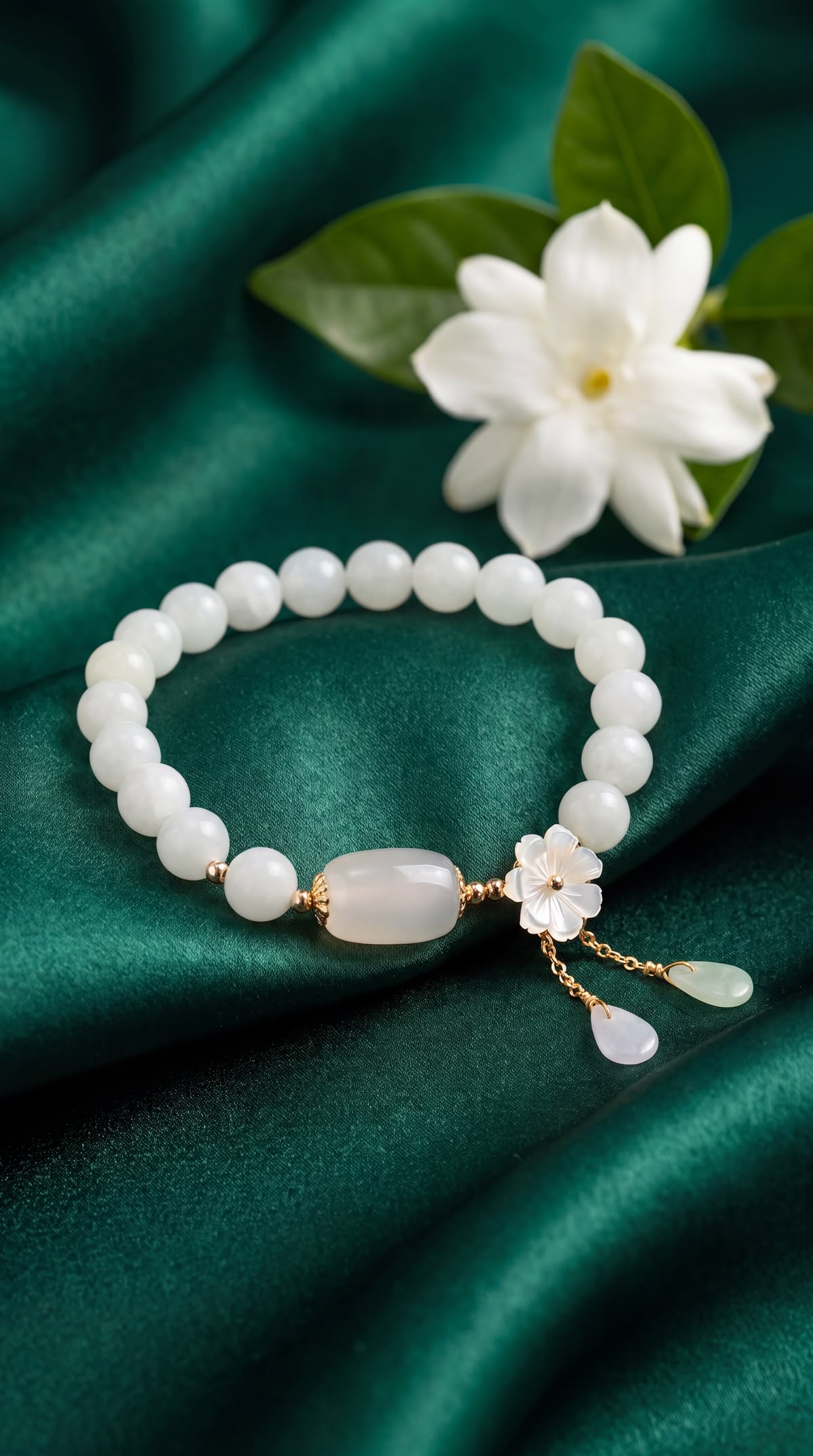
Delve into the serene world of white jade meaning. From ancient imperial Chinese Hetian nephrite treasures to modern minimalist jewelry, uncover how this pure tremolite stone represents mental clar...