Unmasking the Illusion: The Truth Behind the Serpentine Jade Stone
Table des matières
Summary
Learn how to navigate the pitfalls of the modern jewelry market. This article demystifies serpentine (often falsely sold as "new jade") and industrial glass imitations. We provide you with the essential scientific keys—hardness, density, and conductivity—to distinguish true tectonic treasures from pale commercial copies.
Introduction
The global demand for high-quality carved minerals has created a treacherous commercial landscape. Buyers constantly navigate a market saturated with misleading terms and sophisticated imitations. The most prevalent deception involves marketing a completely different mineral under a familiar name. Sellers frequently label soft, green minerals as "new jade" to inflate their actual financial value. This deceptive practice misleads buyers into purchasing a highly inferior serpentine jade stone. This comprehensive guide will scientifically deconstruct these common commercial illusions. We will explore the precise geological differences that separate authentic historical treasures from modern imitations. Understanding these scientific metrics is absolutely vital for protecting your high-end jewelry portfolio.

The Geology of the Great Deception
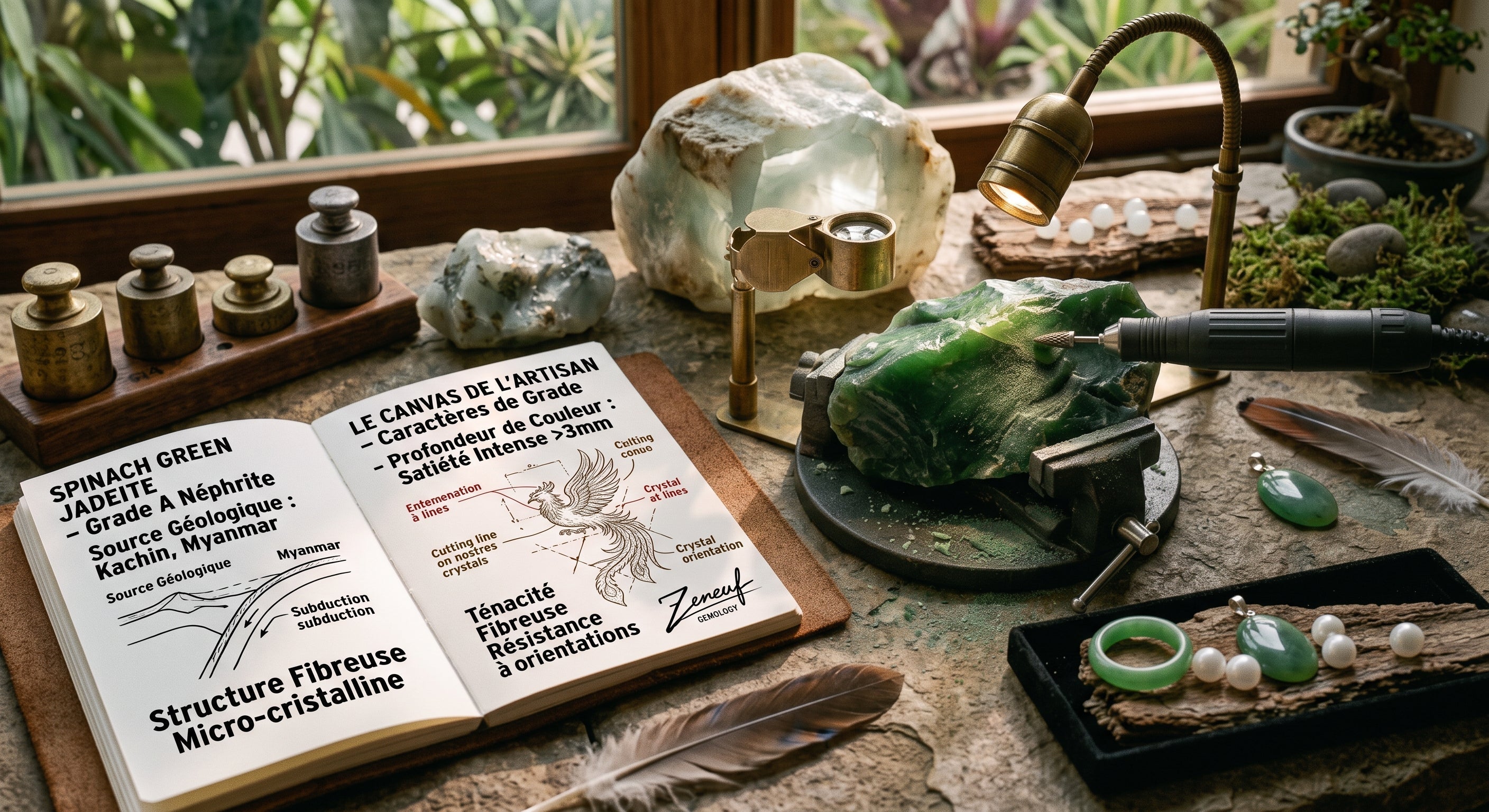
To understand why certain minerals fail the ultimate quality test, we must examine their chemistry. True authentic pieces rely on millions of years of extreme tectonic pressure to form properly. Imitations lack this violent geological birth, resulting in fundamentally weaker physical structures.
The True Nature of Serpentine
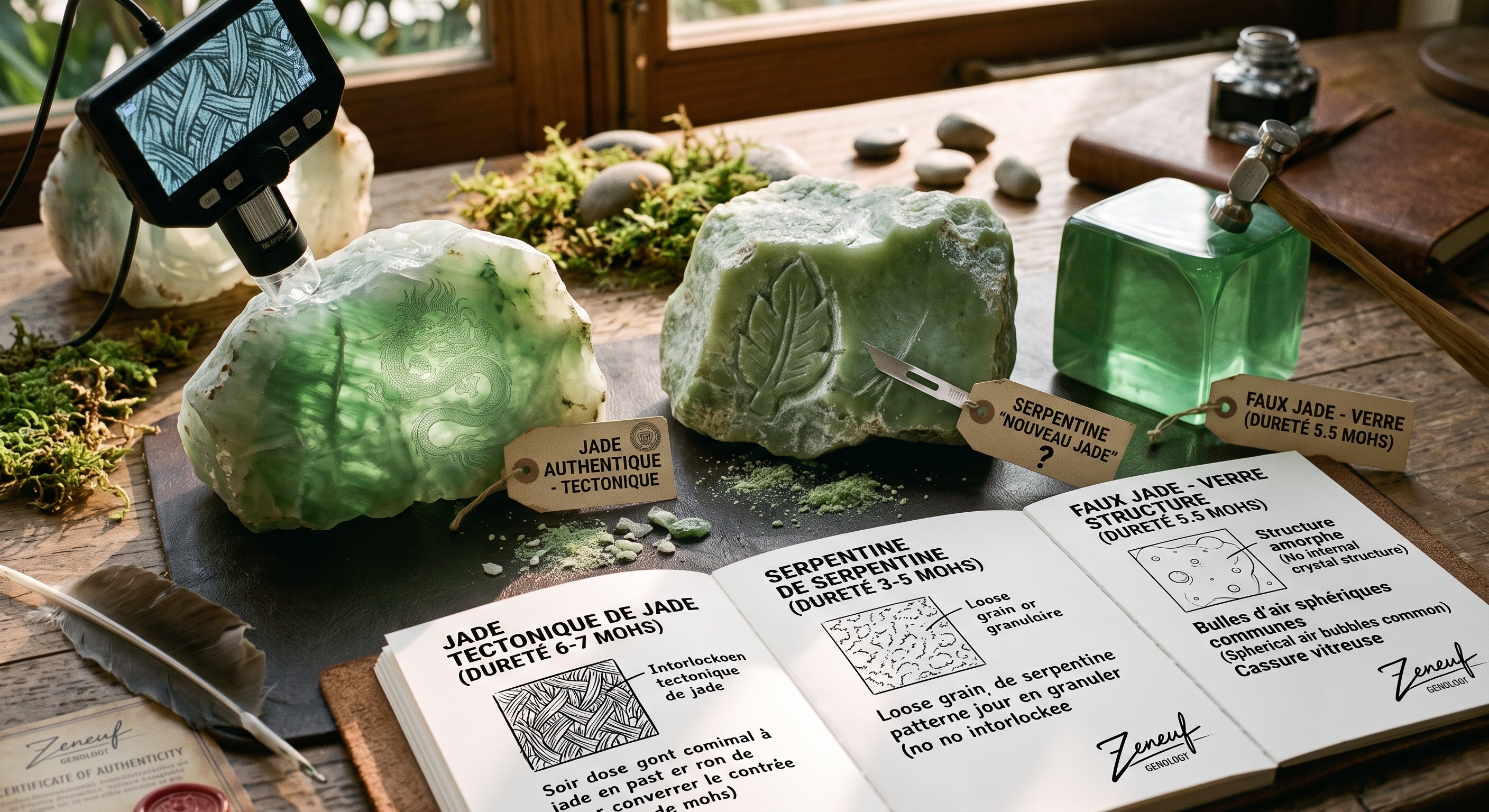
What exactly is the mineral commonly sold as a serpentine jade stone today? Scientifically, serpentine is a magnesium silicate mineral that forms in highly altered metamorphic rocks. While it features a pleasant green color, its internal microscopic structure is remarkably weak. It completely lacks the tightly interlocking, dense fibrous crystals found in authentic nephrite or jadeite. This structural weakness means it scratches easily, fades quickly, and degrades over time. It represents a classic fake jade stone utilized specifically to deceive uneducated tourists and novice buyers.
The "New Jade" Marketing Trap
Unethical dealers never sell this soft mineral under its true geological name. They invent creative commercial labels like "olive jade" or "Korean jade" to confuse consumers. These completely fabricated terms intentionally blur the lines of gemological authenticity. Buying a fake jade stone means acquiring a piece with zero long-term financial resale value. These soft minerals will quickly lose their initial surface polish after minimal daily wear. You must strictly demand official laboratory certification to avoid this widespread commercial marketing trap.
Synthetic Alternatives: The Glass Deception
While serpentine is a natural but inferior mineral, other imposters are entirely man-made. The industrial factory market produces massive quantities of synthetic materials designed to mimic natural translucency.
Uncovering the Artificial Deception
Another highly prevalent imposter in the commercial market is known as glass jade. Factories melt silica sand with green chemical dyes to create a heavily translucent, flawless material. Because it lacks any natural internal crystalline structure, it feels incredibly light and physically warm. Novice collectors often ask exactly what is jade glass when encountering these suspiciously perfect pieces. It is simply a cheap, factory-molded industrial product with absolutely no inherent geological value.
Detecting Factory Imperfections
Identifying glass jade is relatively simple if you know what visual clues to seek. True geological minerals contain natural, microscopic inclusions formed over millions of years underground. Conversely, artificial fused silica often contains tiny, perfectly spherical air bubbles trapped inside. A simple gemological magnifying loupe will instantly reveal these unnatural, factory-made spherical bubbles. Understanding what is jade glass protects you from paying premium prices for worthless synthetic costume jewelry.
Scientific Identification Methods
You do not need to rely on guesswork when evaluating the authenticity of a precious mineral. Gemologists utilize specific, highly accurate physical tests to separate true treasures from common imposters.
The Mohs Hardness Test
The most definitive physical test involves measuring the absolute scratch resistance of the material. True authentic minerals rank exceptionally high on the Mohs scale of mineral hardness. A steel knife or a common iron key cannot scratch their incredibly tough, dense surface. In stark contrast, a serpentine jade stone is incredibly soft and vulnerable to physical damage. A standard steel blade will easily carve a deep, permanent scratch into its weak surface. This extreme physical vulnerability makes it highly unsuitable for creating durable, long-lasting daily jewelry.
Density and Thermal Conductivity
Authentic tectonic minerals possess an incredibly high specific gravity due to their dense micro-crystalline lattice. When you hold a genuine piece, it feels surprisingly heavy and substantial in your hand. Furthermore, authentic stones are excellent thermal conductors, meaning they feel remarkably cold to the touch. A fake jade stone made of resin or glass will feel suspiciously light and artificially warm. Measuring specific gravity accurately requires specialized gemological scales, but the thermal touch test is immediate.

The Artisan's Perspective
The physical properties of a raw mineral completely dictate how an artisan can manipulate it. The extreme density of true authentic stones allows for breathtaking, intricate manual craftsmanship.
The Limits of Soft Minerals
A master carver cannot execute highly detailed, intricate designs on a soft, yielding canvas. When an artisan attempts to carve serpentine, the weak mineral tends to crumble and flake. It simply cannot hold the sharp, precise lines required for premium luxury jewelry design. This forces manufacturers to carve soft stones into bulky, simplistic, and visually heavy shapes. True traditional craftsmanship demands an unyielding canvas that forcefully resists the artisan's diamond tools.
The Final Polish
The final polishing stage reveals the ultimate truth about a mineral's internal structural integrity. Authentic dense stones develop a highly unctuous, glowing luster that looks deep and naturally warm. Soft imposters merely take on a dull, waxy, or artificially glassy surface shine.
Conclusion
Navigating the modern gemstone market requires education, vigilance, and strict scientific verification. You now understand the profound chemical and physical differences between true geological treasures and commercial imposters. Never compromise your personal collection by investing in a misleading serpentine jade stone or artificial glass. Your jewelry portfolio demands absolute structural perfection, deep history, and verified geological authenticity. If you seek uncompromising quality and traditional handmade craftsmanship, we invite you to visit the Zeneuf boutique. Explore our scientifically certified collections today and secure a flawless, enduring modern heirloom with absolute confidence.
Frequently Asked Questions
Why do sellers call serpentine "new jade" in commercial jewelry stores?
It is a deceptive marketing tactic designed to artificially inflate the price of a cheap, soft mineral.
Can a steel knife scratch a genuine, highly durable tectonic gemstone?
No, authentic pieces possess a Mohs hardness that easily resists scratching from standard steel blades.
Exactly what is jade glass made of in modern industrial factories?
It is a completely artificial product made from fused silica, chemical dyes, and industrial glass elements.
How can I visually identify glass jade using a simple magnifying tool?
Look for perfectly round, trapped air bubbles inside the material, which never occur in natural geology.
Will a fake jade stone hold its financial resale value over time?
No, soft imitations and artificial synthetics possess absolutely zero long-term financial market value globally.
Why does authentic mineral jewelry feel so cold when I first touch it?
Dense interlocking micro-crystals are excellent thermal conductors, naturally pulling heat away from your human skin.
Can master artisans carve intricate, sharp details into soft serpentine?
No, the weak internal structure crumbles easily, preventing the execution of fine, enduring artistic details.
Does a certified laboratory report guarantee the absence of soft imposters?
Yes, independent gemological testing definitively proves the exact chemical composition and true mineral identity.