
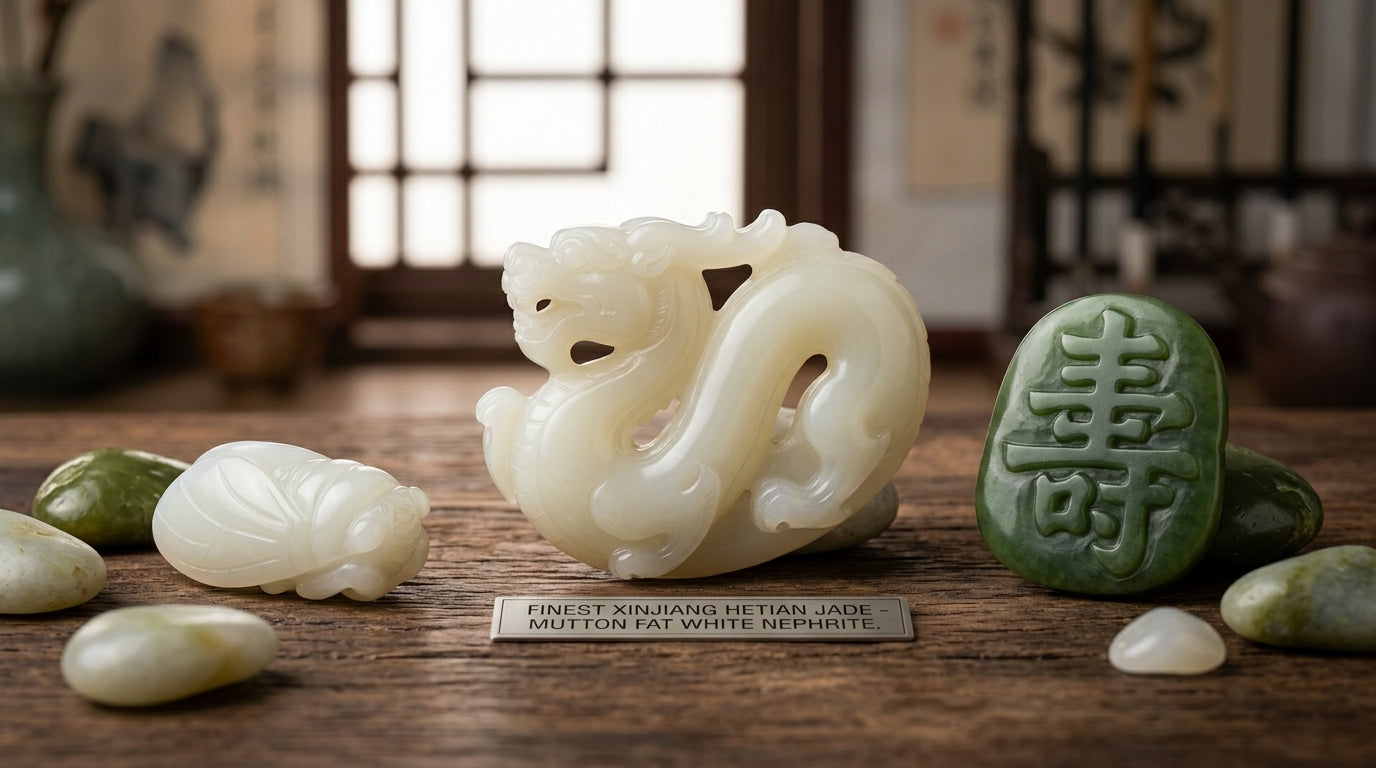
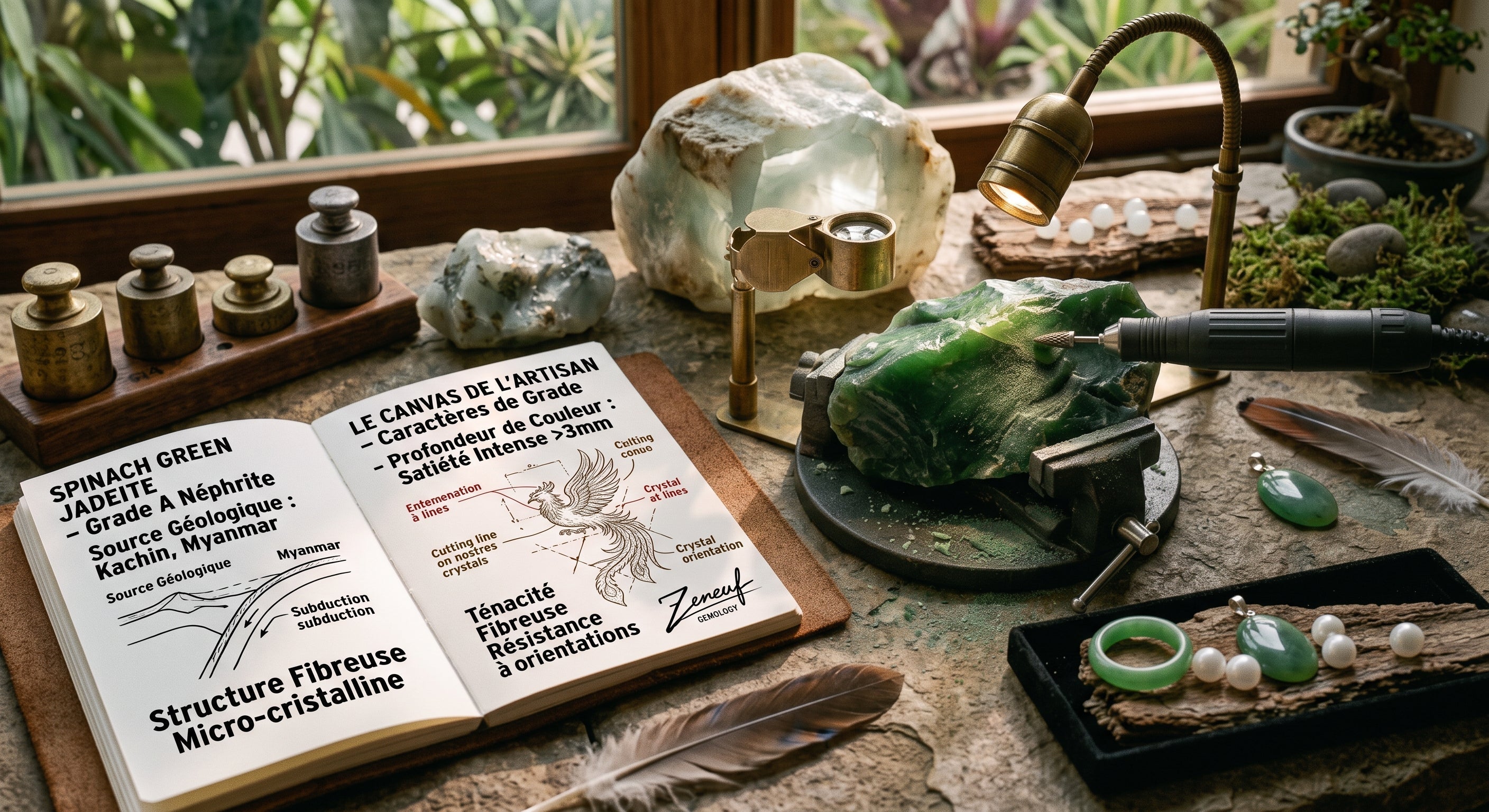
Spinach Green Nephrite: The Rich History of the Deep Green Jade Stone
Table des matières
Summary
Far from translucent brilliance, this article celebrates the quiet strength of spinach green nephrite. Discover how its incredibly dense fibrous structure makes it one of the most resilient materials in the world for artisan carving. An in-depth exploration of a stone that offers an earthy, tactile, and timeless elegance.
Introduction
Nature possesses an incredible palette, but its quietest, deepest tones often hold the most profound strength. For millennia, traditional cultures bypassed flashy translucency to seek out a dense, dark green mineral that felt heavy in the hand and smooth to the touch. This stone, characterized by its deep leafy hue, represents a distinct branch of gemology that values structural endurance and physical warmth. Today, we explore the science and artistry behind this fascinating mineral. Discover how tectonic pressure and trace minerals combine to create one of the most resilient carving mediums in human history. We will analyze the microscopic features that separate genuine ancient treasures from modern industrial imitations.

The Tectonic Birth of Dark Nephrite
Unlike light translucent varieties, this specific mineral belongs to the nephrite family, which has a completely unique geological birth story. Millions of years ago, intense metamorphic reactions occurred deep within the Earth's crust under immense subduction pressure. These subterranean environments locked calcium, magnesium, and silicate elements together into an incredibly dense crystalline lattice. The magnificent dark color of the classic green jade stone is determined entirely by the presence of iron trace elements during its millions of years of formation.
Tracing the Fibrous Microstructure
What makes a green jade stone physically different from other gemstones? The secret lies in its microscopic fibrous network. Under a microscope, the mineral reveals millions of tightly interlocking actinolite and tremolite fibers. This complex physical structure makes the green jade exceptionally tough. It resists fractures and physical impacts far better than diamonds or standard crystalline minerals. Traditional carvers historically preferred this extreme toughness because it allowed them to sculpt intricate, enduring shapes that would easily crumble in other mediums. It remains a legendary material for traditional handmade craftsmanship globally.
The Origin of Spinach Jade
In historical texts, this specific dark green mineral is often referred to as spinach jade because of its rich, saturated leafy tone. The iron content within the silicate lattice must reach a very specific percentage to produce this deep forest color. If the iron concentration is too low, the stone remains a pale green or gray. If it is too high, the mineral turns completely black and opaque. Finding a raw boulder with a perfectly uniform distribution of this deep green hue is an exceptional geological event. Traditional lapidaries spend months analyzing raw boulders to find the most vibrant veins.
Decoding the Visual Spectrum
The natural color variations of a genuine green jade stone are incredibly vast and highly fascinating to study. Understanding these visual differences is crucial for anyone interested in traditional lapidary arts.
The Allure of the Green Spectrum
Many modern buyers are initially drawn to the highly vibrant, translucent emerald green jade varieties, which belong to the jadeite family. They desire the intense, glowing saturation that resembles a precious green jade emerald. However, the deep nephrite variety offers a completely different aesthetic experience. It provides a rich, dark green tone with very subtle black mineral flecks scattered throughout the structure. These tiny black inclusions are actually graphite or chromite minerals. They are completely natural and serve as geological birthmarks that prove the stone is untreated and authentic.
Identifying Authentic Minerals
Because of the global demand for rich green colors, the commercial market contains many chemically dyed stones. Unethical manufacturers often take cheap, pale stones and inject them with green polymers or dyes. However, these artificial treatments destroy the natural structure of the mineral and eventually fade under sunlight. Authentic, untreated green jade possesses a unique physical property known as greasy or unctuous luster. When polished, the dense fibrous surface does not reflect light like glassy synthetic materials. Instead, it develops a warm, soft glow that actually improves over time as it absorbs natural oils.
Traditional Craftsmanship and the Carver's Art
Shaping a dense, tough mineral requires immense patience and specialized manual skills that cannot be replicated by automated factory machines.
The Meticulous Carving Process
Because of its extreme toughness, the green jade stone cannot be cut with standard steel tools. Traditional artisans must use diamond-coated saws and grinding wheels combined with constant water cooling. The carving process is slow and entirely guided by human intuition. The carver must carefully study the natural grain of the green jade to avoid creating internal tension. This slow, deliberate process represents a deep respect for the raw natural material. Each finished piece is a unique testimony to the physical labor and dedication of the carver.
The Tactile Luster
The final stage of traditional crafting is polishing, which is often done using natural beeswax. This traditional method enhances the natural, warm texture of the spinach jade without sealing the stone with artificial lacquers. A finely polished piece feels remarkably heavy, smooth, and warm to the touch. This tactile quality is one of the most celebrated features of the mineral. Unlike cold, glassy synthetics, authentic nephrite has high thermal inertia, meaning it retains warmth beautifully when held against the skin.

A Timeless Legacy in Modern Styling
The understated elegance of a deep green mineral offers a beautiful alternative to flashy modern jewelry trends.
Minimalist and Earthy Elegance
Modern fashion is increasingly embracing minimalist and organic designs. A deep green jade stone provides a perfect grounding element for any contemporary wardrobe. It does not rely on flashy brilliance to command attention; its strength lies in its deep color and tactile texture. The rich forest green of spinach jade pairs beautifully with natural gold and bronze settings, creating a striking contrast between the warm metal and the cool, dark stone. Whether carved into a simple ring, a classic pendant, or a bold bangle, it represents an enduring symbol of natural elegance.
Preserving a Precious Heirloom
Because of its exceptional toughness, jewelry made from this mineral is incredibly durable and safe for daily wear. Unlike delicate emerald green jade varieties, it is highly resistant to accidental chipping. This physical resilience makes it the perfect material for creating meaningful family heirlooms that can be passed down through generations. To maintain its pristine appearance, one should simply clean it with lukewarm water and a soft cloth, avoiding harsh industrial chemicals. Over time, normal wear actually enhances its beautiful glowing surface, making it even more personal and precious.
Conclusion
The world of natural gemstones offers many treasures, but few possess the quiet strength and timeless elegance of dark nephrite. Its journey from violent tectonic origins to the hands of skilled carvers is a testament to the enduring beauty of our natural world. If you are captivated by this rich, earthy elegance and wish to explore authentic, handcrafted creations, we invite you to experience the exquisite collections at Zeneuf. Visit the Zeneuf online boutique today to discover your own unique signature heirloom piece, crafted with absolute respect for nature's purest materials.
Frequently Asked Questions
What makes the spinach variety physically tougher than other standard gemstones?
Its internal structure consists of millions of tightly interlocking microscopic mineral fibers.
Are the tiny black flecks in a handcrafted pendant considered flaws?
No, these natural graphite inclusions prove that the green jade stone is authentic and untreated.
Why does this dark green mineral seem slightly greasy rather than glassy?
This type of fibrous green jade naturally develops a highly coveted unctuous surface luster.
How should I properly clean my handmade artisan jewelry safely at home?
Only use lukewarm water, a very mild soap, and a soft microfiber cloth.
Will an authentic untreated mineral change its physical color over many years?
It slowly absorbs natural skin oils, slightly deepening the rich luster of spinach jade over decades.
How does this dark variety differ from a vibrant green jade emerald chemically?
This dark variety contains much higher concentrations of iron trace elements.
Read more
The modern gemstone market is unfortunately flooded with misleading commercial terminology. Unethical sellers often market soft serpentine as "new jade" to confuse novice buyers. This educational g...
This comprehensive guide explores all different types of jade stone. We reveal precise gemological distinctions between Nephrite and Grade A Jadeite. Learn how interlocking crystalline structures a...