

Chinese Jade Pendant Symbols: A Visual Guide
Table des matières
Exploring authentic Chinese jade pendant symbols unlocks thousands of years of profound cultural wisdom, protection, and joyful blessings. Each carved animal, botanical motif, and auspicious figure carries an intentional wish for good health, peace, and longevity. This comprehensive visual dictionary explains popular traditional carvings, gemological science, modern styling ideas, and daily care tips for everyone.
Introduction
Learning the rich language of Chinese jade pendant symbols transforms an ordinary piece of jewelry into a personal talisman. For centuries, lapidary artisans carved intricate emblems into natural stones to convey heartfelt wishes without speaking words. Every curve, petal, and animal silhouette in a carved pendant represents a specific blessing, proverb, or protective ward. Many everyday wearers love these pendants because they combine sculptural beauty with encouraging personal meaning. At Zeneuf, we celebrate this heritage by offering accessible pendants handcrafted from genuine nephrite and Grade A jadeite. This visual dictionary helps everyday jewelry lovers decode the meanings behind history's most beloved carved designs.

Mythological Animals and Chinese Jade Pendant Symbols
Carved animals represent some of the most dynamic Chinese jade pendant symbols found in museum collections worldwide. Traditional artists observed nature closely, combining wild animal traits with folklore to create protective personal emblems.
The Dragon and Chinese Jade Pendant Symbols
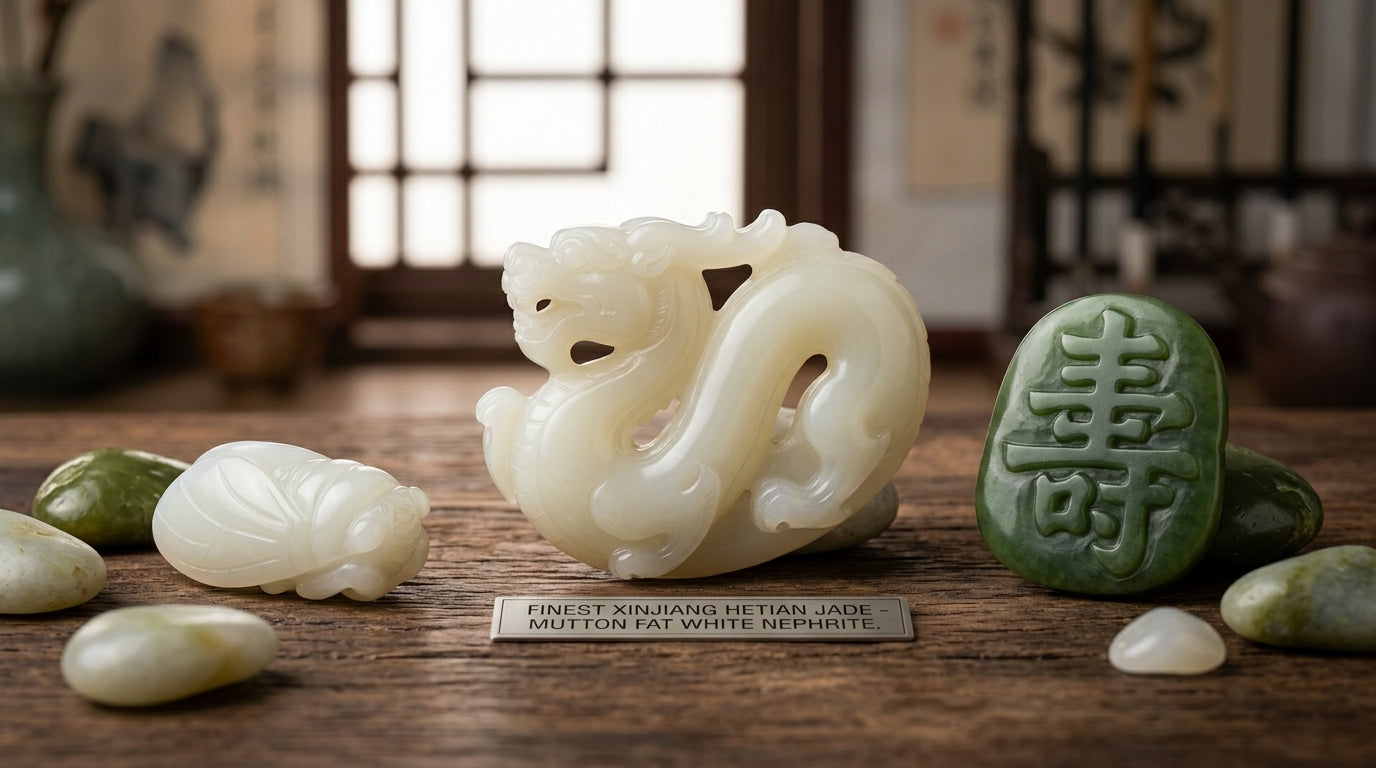
Mythological creatures represent leadership and cosmic balance among classical Chinese jade pendant symbols. The National Museum of Asian Art exhibits ancient carvings portraying the celestial dragon soaring across clouds. The dragon symbolizes strength, noble leadership, creative energy, and protection against wandering negative forces. Carvers depict the dragon with serpentine curves, dynamic claws, and flowing whiskers. Wearers often select dragon pendants to boost their self-confidence before major career milestones or exams. Placing a carved dragon close to your chest provides a daily sense of courageous focus. This legendary creature remains a timeless symbol of righteous ambition and inner personal power.
The Phoenix and Chinese Jade Pendant Symbols
The majestic phoenix introduces feminine grace and enduring renewal to Chinese jade pendant symbols. Classical mythology describes the phoenix as a gentle creature that appears only during eras of peace. The phoenix symbolizes perseverance, refined elegance, and triumphant rebirth after navigating difficult life trials. When artisans carve the dragon and phoenix together on a single pendant, they signify perfect balance. This paired design represents the harmonious union of yin and yang energies within a relationship. Couples frequently choose dragon and phoenix carvings to celebrate weddings, anniversaries, and shared life commitments. The smooth stone curves remind partners to treat each other with patience and mutual respect.
The Bat and Chinese Jade Pendant Symbols
Unexpected creatures often reveal delightful linguistic wordplay within traditional Chinese jade pendant symbols. In Chinese, the spoken word for bat sounds identical to the spoken word for good fortune. The Metropolitan Museum of Art displays historical pendants featuring five bats arranged around a central circular disc. This beloved motif represents the five blessings: longevity, wealth, health, love of virtue, and a peaceful life. Modern jewelry lovers appreciate the bat motif for its lighthearted, uplifting message of daily happiness. Suspended from a silk cord, a carved jade bat serves as a cheerful reminder of everyday joy. It reframes a nocturnal creature into a celebrated herald of continuous good luck.
The Pixiu and Chinese Jade Pendant Symbols
Fierce protective guardians occupy an important place among dynamic Chinese jade pendant symbols. The mythical Pixiu features the muscular body of a winged lion and a formidable, loyal expression. Folklore recounts that the Pixiu consumes gold and silver without ever releasing its accumulated treasure. Consequently, artisans carve Pixiu pendants as supreme emblems of wealth retention and personal asset protection. Everyday professionals and entrepreneurs wear carved Pixiu pendants to attract financial stability and guard their resources. Carvers usually fashion the Pixiu with rounded paws and alert ears resting upon a smooth coin base. Touching the polished contours during stressful negotiations provides tactile comfort and focused composure.
Botanical Motifs and Chinese Jade Pendant Symbols
Plant carvings provide soft, elegant designs that represent virtuous character within Chinese jade pendant symbols. Lapidary artists draw inspiration from peaceful gardens, orchards, and riverbanks to craft soothing jewelry for daily wear.
The Lotus Flower and Chinese Jade Pendant Symbols
Delicate floral carvings celebrate moral character, quiet resilience, and spiritual clarity through Chinese jade pendant symbols. The lotus flower represents absolute purity of heart, emotional tranquility, and spiritual peace across classical traditions. Because the lotus grows from muddy lake beds yet blossoms into spotless petals, it inspires personal virtue. The Asian Art Museum preserves numerous antique lotus pendants featuring finely carved open petals and seed pods. Wearing a lotus pendant encourages individuals to remain gentle and sincere despite turbulent surrounding environments. Its smooth, rounded petals feel pleasing against fingertips, offering a calming sensory anchor during hectic afternoons.
Hollow Bamboo and Chinese Jade Pendant Symbols
Hollow bamboo stalks demonstrate how physical plant characteristics shape inspiring Chinese jade pendant symbols. Bamboo bends gracefully with winter gales without snapping, serving as an encouraging model for overcoming hardships. In traditional culture, the segmented, hollow stem symbolizes humble integrity, continuous personal development, and open-minded learning. Artisans carve bamboo pendants with distinct segmented nodes, slender leaves, and straight, smooth vertical stalks. Everyday wearers select bamboo jewelry when starting new professional careers, moving homes, or facing personal obstacles. The design serves as a wearable reminder to remain flexible, patient, and grounded during life's unexpected transitions.
The Bottle Gourd and Chinese Jade Pendant Symbols
Carved harvest vessels add practical wellness symbolism to the colorful realm of Chinese jade pendant symbols. The double-chambered bottle gourd, known culturally as the wu lou, represents good health and longevity. Ancient healers carried herbal medicines and pure drinking water inside dried gourds tied to traveling belts. Folklore suggests that the gourd's narrow neck allows it to trap illness and wandering negative energy inside. Today, families gift carved jade gourds to loved ones recovering from illness or embarking on long journeys. The rounded, hourglass silhouette looks balanced and charming when worn against casual or workplace attire.
The Garden Cabbage and Chinese Jade Pendant Symbols
Everyday vegetables inspire cheerful prosperity blessings among the most celebrated Chinese jade pendant symbols. The famous Jadeite Cabbage, displayed at the National Palace Museum, illustrates how garden produce inspires carvers. In Chinese, the spoken name for cabbage sounds identical to the phrase meaning hundredfold wealth. Peas or beans carved in an open pod symbolize abundant harvests, physical vitality, and successful family endeavors. Students often wear small three-bean jade pendants to wish for scholastic success and continuous academic growth. These humble garden designs prove that authentic carvings celebrate the nourishing blessings of ordinary daily life.
Gemological Insights into Chinese Jade Pendant Symbols
The fine sculptural details seen on these pendants require exceptional mineral properties to hold sharp relief lines. Gemological science classifies authentic jade into two distinct minerals: fibrous nephrite and crystalline jadeite.
Nephrite Toughness and Chinese Jade Pendant Symbols
The extraordinary durability of nephrite enables carvers to execute microscopic details on Chinese jade pendant symbols. Nephrite consists of calcium magnesium silicate crystals organized in dense, felted microscopic fibrous networks. The Field Museum of Natural History showcases historic nephrite carvings with paper-thin openwork and interconnected links. Because nephrite lacks cleavage planes, an artisan can shape delicate dragon whiskers without causing brittle stone fractures. Nephrite displays a warm, waxy surface luster that softens ambient light like smooth river pebbles. Everyday jewelry wearers appreciate nephrite pendants because their detailed edges resist chipping when bumped against rough daily clothing.
Grade A Jadeite and Chinese Jade Pendant Symbols
Examining vivid, translucent mineral specimens highlights another breathtaking dimension of Chinese jade pendant symbols. Jadeite belongs to the pyroxene mineral group and forms under intense geological pressures in deep subduction zones. Research from the Gemological Institute of America confirms that natural jadeite achieves a Mohs hardness of 6.5 to 7.0. This hardness gives jadeite a vitreous, glass-like luster that reflects brilliant, crisp light highlights across carved contours. Grade A jadeite indicates that the stone was sculpted completely naturally without chemical bleaching or polymer resin fills. Chemically treated stones degrade over time, losing crisp lines as artificial plastic fillers oxidize and turn yellow. Natural Grade A jadeite guarantees that intricate carvings maintain their structural crispness and authentic color permanently.
Lapidary Craft and Chinese Jade Pendant Symbols
The tooling applied to the stone adds an essential human element to Chinese jade pendant symbols. Authentic jade cannot be carved with steel knives because the raw stone is harder than carbon steel. Historically, lapidary artisans used foot-powered treadle lathes to spin metal discs coated with wet abrasive garnet sand. Modern carvers use water-cooled diamond-coated rotary burs to shape three-dimensional figures with precision and care. After preliminary carving, artisans polish each piece for days using fine diamond paste and soft wooden wheels. This time-tested process infuses every pendant with a level of patience worthy of the symbols it portrays.
Acoustic Resonance and Chinese Jade Pendant Symbols
The acoustic properties of carved stones provide a fascinating sensory dimension to Chinese jade pendant symbols. Untreated natural jade possesses an internal crystal structure that resonates with a clear tone when tapped gently. Gemologists use light wooden rods or suspended threads to observe how sound travels through a carved specimen. Authentic nephrite and jadeite produce a prolonged, bell-like chime that sounds remarkably pure to the human ear. Imitation quartz, poured glass, and synthetic resin produce dull, muffled clicks under identical testing conditions. This musical resonance has symbolized truth, clarity, and harmony across thousands of years of lapidary appreciation.

Styling and Maintenance of Chinese Jade Pendant Symbols
Wearing and caring for an intricately carved pendant requires thoughtful styling choices and regular, gentle maintenance habits. Detailed carvings feature fine crevices that collect skin oils, requiring mindful care to keep the stone luminous.
Cord Selection and Chinese Jade Pendant Symbols
Selecting the right suspension material enhances the visual presentation of traditional Chinese jade pendant symbols. Intricate sculptural carvings look striking when suspended on hand-braided silk cords accented with natural stone beads. Crimson cords symbolize joyful celebration and vitality, while deep brown or charcoal cords offer an understated modern aesthetic. If you prefer metal chains, choose a sturdy bail crafted from hypoallergenic sterling silver or gold-filled wire. Carved relief pendants often carry more physical weight than flat discs, requiring durable chains to prevent accidental breakage. Ensure your chain length allows the pendant to rest smoothly against your sternum without catching on clothing buttons.
Wardrobe Pairings and Chinese Jade Pendant Symbols
Thoughtful outfit choices highlight the tactile craftsmanship found within classical Chinese jade pendant symbols. A green nephrite lotus or bamboo pendant looks elegant when paired with neutral linen shirts or knitwear. For formal evening events, a vivid jadeite dragon or phoenix pendant adds organic contrast against darker dresses. The timeless simplicity of carved jade complements both modern minimalist tailoring and casual weekend denim effortlessly. Avoid wearing detailed openwork pendants against loose knit crochet tops where delicate prongs or whiskers might snag. Let your carved pendant serve as the central visual anchor of your daily jewelry arrangement.
Gentle Washing and Chinese Jade Pendant Symbols
Because carved relief designs feature grooves, regular gentle cleaning preserves the beauty of Chinese jade pendant symbols. Natural sweat, cosmetic powders, and environmental dust easily settle inside tiny crevices behind animal scales and petals. Wash your carved pendant once every month in a bowl of lukewarm water mixed with mild dish soap. Clean the carved contours using an ultra-soft makeup brush or a baby toothbrush dipped in soapy water. Never push stiff bristles into delicate pierced openwork, as forceful leverage can crack thin stone bridges. Rinse the piece thoroughly under clear running water to remove all remaining slippery soap film residue. Dry the pendant gently using a clean microfiber cloth, allowing it to dry completely before storage.
Safe Storage and Chinese Jade Pendant Symbols
Mindful storage habits protect delicate relief edges and sustain the lasting beauty of Chinese jade pendant symbols. Never toss carved gemstone pendants loosely into crowded jewelry drawers where harder metal clasps can scratch them. Store your carved pendant flat inside an individual padded fabric pouch or a dedicated velvet jewelry box compartment. Keep your jewelry box placed in a temperate room away from direct heating vents, radiators, and sunny windowsills. Sharp temperature swings can trigger internal thermal stress that compromises natural mineral structures over extended periods. Consistent, gentle care guarantees that your carved stone talisman remains pristine and ready for daily wear.
Conclusion
The multifaceted realm of Chinese jade pendant symbols demonstrates that jewelry can be both visually captivating and emotionally supportive. Whether you wear a soaring dragon for courage, a lotus for serenity, or a gourd for health, each design provides quiet daily encouragement. Anyone can appreciate these ancient blessings and enjoy the comforting touch of genuine nephrite and Grade A jadeite jewelry. By choosing an authentic piece and maintaining it with gentle care, your pendant becomes a meaningful personal companion for years to come. If you are ready to find a carved talisman that resonates with your personal aspirations, explore the handcrafted collection at the Zeneuf online boutique today.
FAQ
What does a carved jade cabbage pendant symbolize in traditional culture?
A carved jade cabbage symbolizes abundance, continuous prosperity, and hundredfold wealth arriving in your household. This meaning comes from a linguistic pun, as the spoken word for cabbage sounds identical to hundredfold wealth. It also represents wholesome purity and fertile harvest blessings for families.
Can I wear a carved Chinese jade pendant if I am not of Asian descent?
Yes, anyone can wear and appreciate authentic carved jade jewelry with joy and respect. The themes represented by these carvings, including good health, personal resilience, and peace, are universal human virtues. Wearing a carved jade pendant shows appreciation for master lapidary craftsmanship and timeless cultural wisdom.
How should I clean dust and oils trapped inside the small holes of a carved pendant?
Soak your carved pendant for ten minutes in lukewarm water mixed with a few drops of mild dish soap. Use an ultra-soft baby toothbrush or a soft cloth-wrapped wooden toothpick to dislodge trapped debris gently. Rinse the piece under clear lukewarm running water and dry it thoroughly with a clean microfiber towel.
Are intricately pierced jade carvings delicate during everyday physical activities?
While nephrite and jadeite are remarkably tough stones, paper-thin pierced sections can chip if struck against hard surfaces. Wear pierced carvings mindfully over soft clothing and remove them during vigorous sports or heavy manual labor. For active daily routines, choose low-relief carvings without sharp, open pierced edges.
What is the practical difference between Grade A jadeite and treated stones in carved pendants?
Grade A jadeite is completely natural, untreated stone that has only been cut and polished using safe physical methods. Grade B stones are soaked in chemical acids to bleach inclusions and then injected with artificial polymer resins. Treated stones become structurally brittle over time, losing their polish and turning yellow when exposed to sunlight.
Read more

Understanding the genuine jade ring meaning reveals deep traditions of personal strength, commitment, and self-expression. From ancient archers to modern wedding bands, natural jade rings provide p...
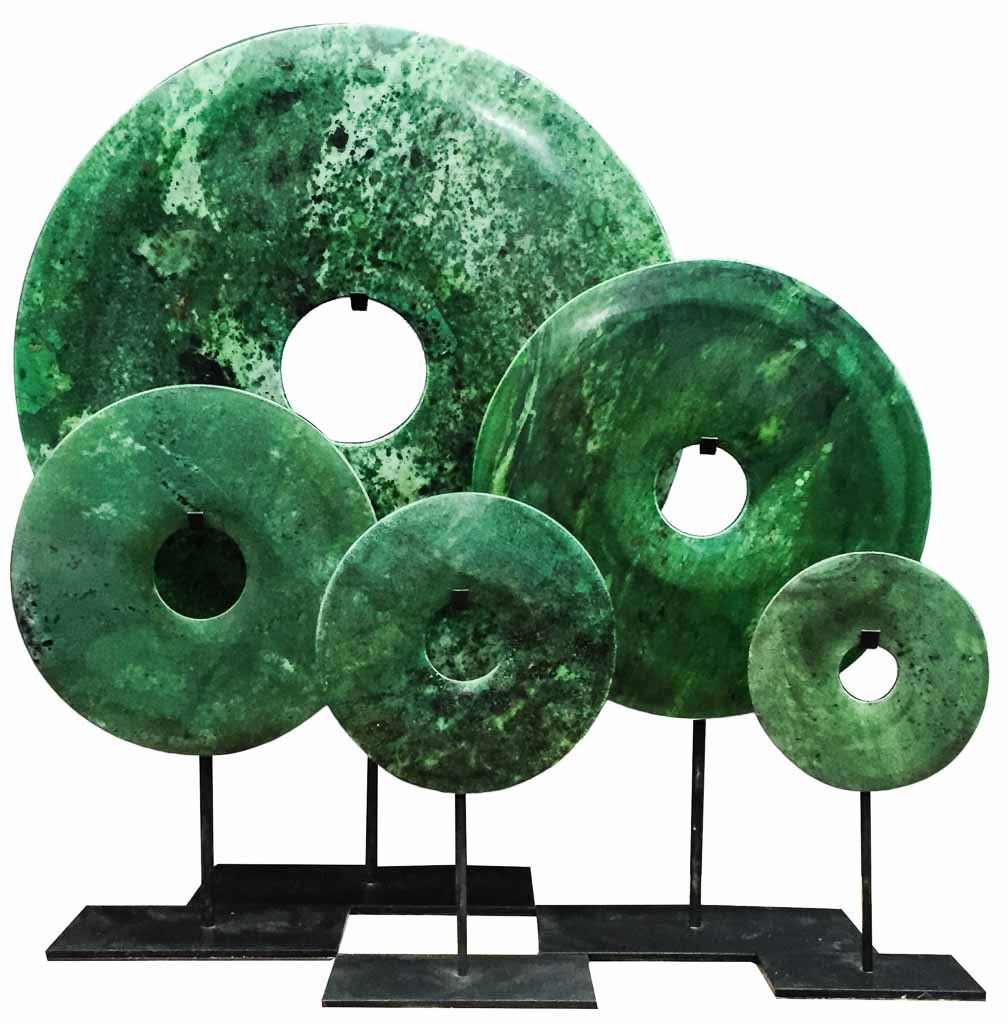
The sacred bi disc represents one of humanity's oldest and most powerful jewelry designs. Symbolizing the infinite expanse of heaven and life cycles, this circular jade pendant brings balance to mo...