
Green Jade Meaning: Growth, Harmony and Luck
Table des matières
The authentic green jade meaning represents renewal, emotional harmony, abundance, and continuous good luck. Revered by Chinese emperors and Mayan kings, this iconic green gemstone connects earthly vitality with celestial fortune. This educational guide explores chromophore chemistry, imperial history, Grade A identification standards, and contemporary fine jewelry styling for collectors.
Introduction
Nothing captures the imagination quite like the rich, vibrant world of green jade meaning. For millennia, the emerald glow of this precious mineral has symbolized wealth, physical vitality, and cosmic good fortune. Ancient rulers chose green amulets to celebrate new beginnings and safeguard their empires. Today, green remains the definitive, most coveted hue in both ancient lore and modern fine jewelry auctions. This educational guide explores the science, history, and styling of this magnificent stone.

Historical Lore and the Transcultural Green Jade Meaning
Green is universally recognized as the color of life, nature, and rebirth. Ancient societies across the globe independently revered green stones as divine talismans of agricultural fertility and cosmic favor.
Imperial Chinese Dynasty and Green Jade Meaning
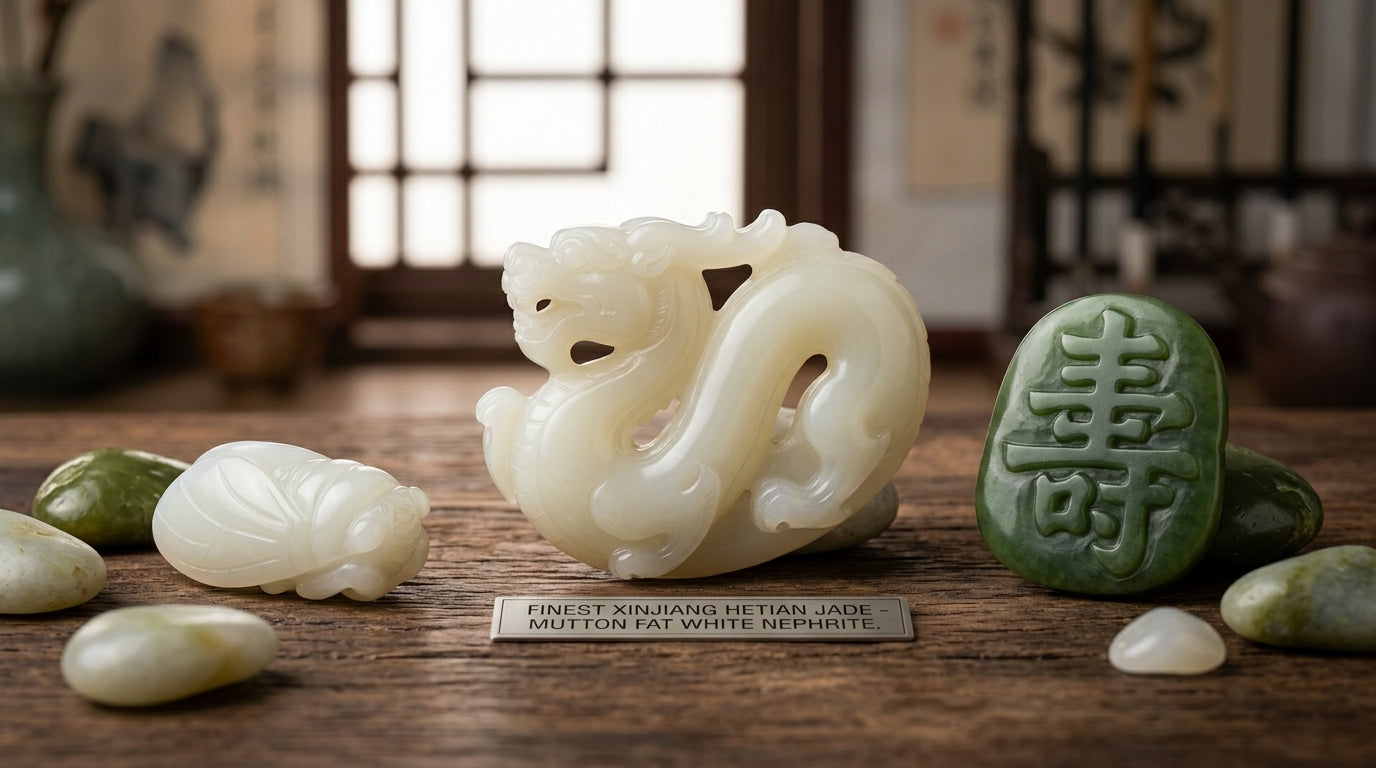
While early Chinese dynasties favored white nephrite for state rites, the eighteenth century witnessed a revolution in lapidary taste. During the Qing dynasty, vibrant emerald-green jadeite imported from northern Burma captivated the imperial court. Known as Imperial Jade, this intense emerald-green variety became the ultimate status symbol of royal affluence.
The Empress Dowager Cixi amassed the world's most breathtaking collection of vivid green carvings, rings, and hair ornaments. Court officials wore strands of polished green beads to project sovereign authority and ensure the ongoing prosperity of the dynasty. Green stones were believed to attract auspicious energy (chi), blessing families with wealth, harmony, and healthy descendants. To this day, gifting a green pendant remains the ultimate expression of familial goodwill and prosperity.
Mesoamerican Cosmology and Sacred Green Jade Meaning
Across the Atlantic, Olmec and Maya civilizations revered green stone far above gold. In the tropical lowlands of Central America, green mirrored emerging corn shoots, fresh forest foliage, and life-sustaining rainfall. Agricultural abundance determined life or death, making green the ultimate symbol of biological vitality and rebirth.
Archaeological excavations at the ancient city of Palenque revealed King K'inich Janaab' Pakal buried in an elaborate green death mask. Crafted from hundreds of polished jadeite tesserae, the mask ensured the sovereign's soul would resurrect like the Sacred Maize God. Mayan nobles wore cylindrical green ear flares that channeled divine breath and cosmic life force. The green stone was not mere jewelry. It was an essential ritual vessel that sustained life and cosmic order.
Maori Pounamu Traditions and Green Jade Meaning
In the South Pacific, the Maori developed a deep cultural veneration for indigenous green nephrite, known locally as pounamu. Found in swift alpine rivers on the South Island, distinct color varieties carried specific cultural and spiritual meanings. The rich, spinach-green variety, named kawakawa after the native pepper tree, was prized for crafting sacred talismans and adzes.
Maori leaders wore carved hei-tiki pendants against their skin, passing them down through generations. These green heirlooms accumulated ancestral spiritual energy (mana), becoming living family heirlooms. The vibrant green stone linked the living wearer directly to their ancestors and the natural spirits of forest and river. Even today, pounamu remains a protected national treasure in New Zealand, celebrating honor, bravery, and deep environmental connection.
Gemological Science Behind the Natural Green Jade Meaning
The mesmerizing spectrum of green in natural gems is dictated by trace elements within the crystalline matrix. Gemological science reveals how distinct geological conditions produce different shades of green.
Chromophore Chemistry and Vivid Green Jade Meaning
The vibrant green seen in high-grade jadeite is caused by trace chromium ($Cr^{3+}$) substituting for aluminum within the pyroxene crystal structure. Just a fraction of a percent of chromium produces the electric, glowing green of Imperial Jade. When iron ($Fe^{2+}$ or $Fe^{3+}$) is also present, the color shifts toward deeper forest or olive-green hues.
In nephrite, green coloration results from iron within the tremolite-actinolite amphibole mineral series. As iron content increases, the mineral transitions from pale celadon to rich spinach green. Advanced spectroscopic testing performed by gemological laboratories confirms that chromium-rich stones display distinct absorption bands in the red end of the spectrum. This unique atomic absorption allows fine green stones to glow with remarkable internal luminescence.
Optical Translucency and the Emerald Green Jade Meaning
In the gemological appraisal of green gems, optical translucency plays an equally vital role alongside color saturation. The finest stones are not merely green; they permit light to pass through their crystalline matrix without scattering. Gemologists evaluate translucency using the Chinese concept of water content (shuifen).
Stones with exceptional water content appear internally liquid, as though a drop of clear morning dew was permanently preserved in stone. When light hits a translucent green cabochon, it illuminates the entire gem, creating an internal glow. Lower-grade stones appear dry, opaque, and lifeless, even when their green color is naturally intense. For collectors, the pairing of vibrant green color and watery translucency represents the absolute pinnacle of gemstone beauty.
Contemporary Styling and Everyday Green Jade Meaning
Green stone jewelry brings a vibrant, sophisticated splash of color to modern wardrobes. Its versatile earthy elegance complements casual everyday wear as seamlessly as it elevates formal evening attire.
Modern Fine Jewelry Design and Green Jade Meaning
Contemporary jewelry designers artfully blend traditional symbolism with minimalist modern settings. A vivid green cabochon set in 18-karat yellow gold creates a timeless, warm aesthetic. When paired with platinum or brilliant diamonds, the green gemstone exudes contemporary glamour and refined elegance.
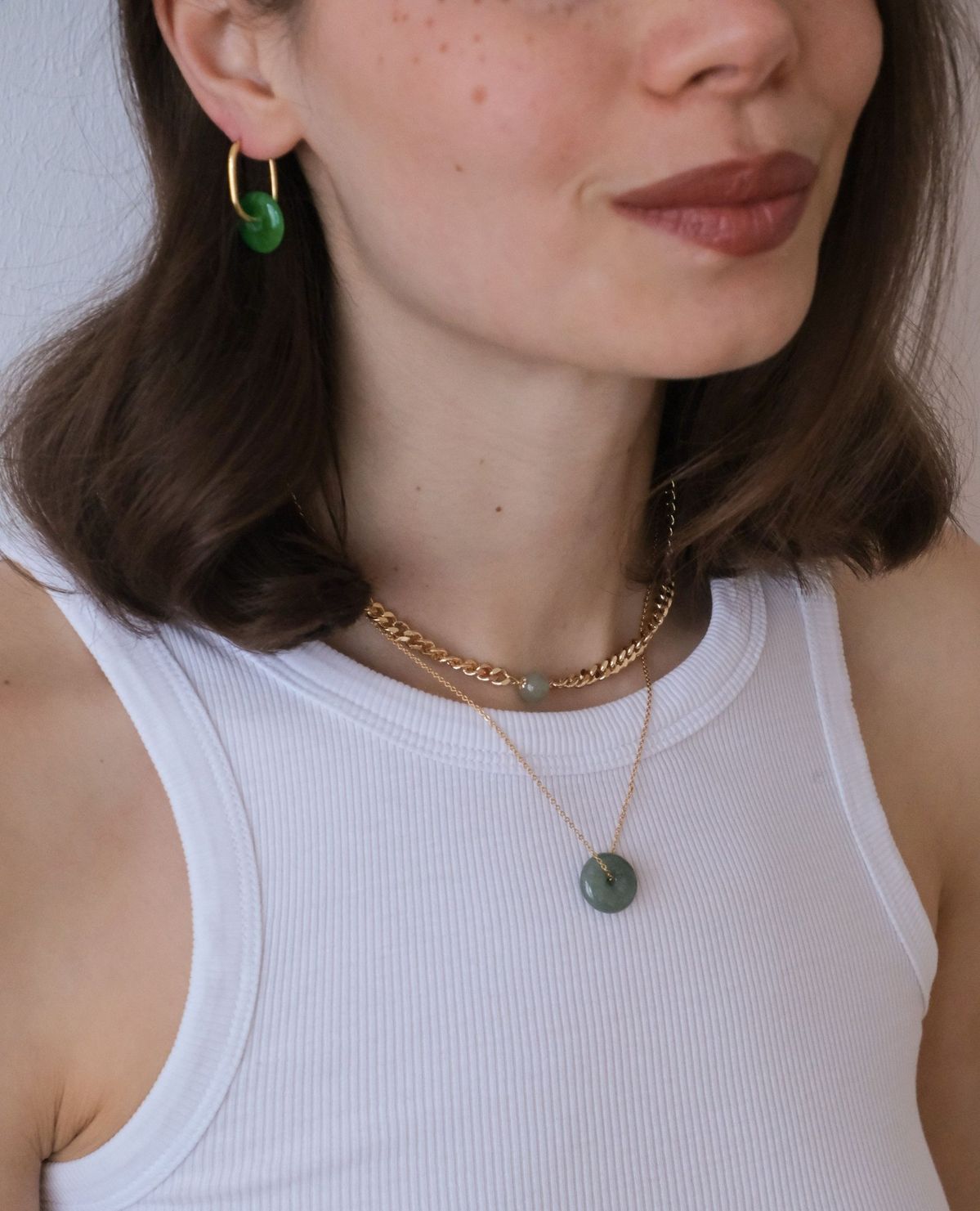
A delicate beaded green bracelet worn alongside a luxury metal timepiece adds an artistic, organic touch to professional business wear. For evening events, a pair of long drop earrings featuring green carved discs frames the face with graceful movement. The rich green color complements neutral palettes like ivory, navy, and charcoal, serving as a captivating signature statement piece. It allows the wearer to showcase both refined style and cultural appreciation.
Personal Prosperity Talismans and Green Jade Meaning
Many individuals wear green jewelry as a personal talisman to attract abundance, financial luck, and personal growth. In holistic energy practices, green stones resonate with the heart chakra, encouraging generosity, emotional balance, and healthy relationships. Wearing a continuous green bangle serves as a tangible daily reminder to pursue your goals with calm confidence.
Throughout a demanding workday, glancing at the vibrant green stone brings a moment of refreshing clarity. The color green naturally evokes lush forests and thriving ecosystems, helping clear stress and mental exhaustion. Whether you view it through the lens of ancient folklore or modern psychology, the stone inspires optimism, renewal, and forward momentum. It serves as an empowering daily companion.
Authenticity Standards and True Green Jade Meaning
Because fine green specimens command premium prices at global auctions, the market is filled with heavily treated and synthetic imitations. Discerning buyers must understand international grading standards to protect their investments.

The Dangers of Grade B and C in Green Jade Meaning
The international jewelry trade divides commercial stones into three strict classifications: Grade A, Grade B, and Grade C. Discerning collectors invest exclusively in certified Grade A pieces:
Grade A Jade: Completely natural, untreated stone cut, polished, and protected solely with natural beeswax.
Grade B Jade: Low-grade stone soaked in industrial acid to strip away brown oxidation, then backfilled with polymer resin.
Grade C Jade: Artificially dyed stone saturated with chemical green colorants that fade when exposed to sunlight.
Chemically treated Grade B and C stones have their structural integrity permanently compromised by harsh acid bleaching. Over time, the synthetic polymers deteriorate, turning the piece brittle, chalky, and yellow. More importantly, artificial dyes and synthetic fillers lack the authentic value and energetic purity of natural stone. Reputable jewelers verify their gems through independent laboratory testing using Fourier-transform infrared spectroscopy (FTIR).
Preserving Heirloom Jewelry and Green Jade Meaning
Proper care ensures your green jewelry maintains its rich, vibrant luster for generations. While both nephrite and jadeite boast incredible structural toughness, their polished surfaces can still be scratched by harder gemstones like diamonds and sapphires. Avoid wearing your fine rings or bangles when doing heavy housework, gardening, or lifting weights.
Clean your jewelry using lukewarm water, a few drops of mild chemical-free soap, and an ultra-soft microfiber cloth. Never clean fine natural stones with steam cleaners or ultrasonic machines, as high heat and vibrations can damage microscopic crystal boundaries. Store your green jewelry in individual velvet pouches to protect it from dust and scratches. With mindful care, your green treasure will continue to radiate luck, vitality, and beauty for decades to come.
Conclusion
The enduring allure of green jade meaning captures humanity’s eternal yearning for renewal, balance, and prosperity. From the imperial treasures of the Qing dynasty to the sacred funerary masks of Mayan kings, this remarkable gemstone represents life, nature, and divine fortune. Its vibrant color palette and extraordinary crystalline durability make it an incomparable jewelry treasure.
To discover the timeless beauty of the "Stone of Heaven," explore the curated collections at the Zeneuf online boutique. Discover our handcrafted, ethically sourced Grade A Jadeite and natural Nephrite jewelry, designed to bring lasting prosperity, harmony, and joy into your daily journey.
FAQ
Why is green jade considered a universal stone of good luck?
Ancient cultures associated its vibrant green hue with lush agricultural harvests, vital life breath, renewal, and celestial favor.
What gives fine green jadeite its vibrant emerald color?
Trace amounts of chromium (Cr3+) substituting within the pyroxene crystal structure produce the intense, glowing green of Imperial Jade.
What is the difference between Grade A, B, and C green jade?
Grade A is completely natural and untreated, Grade B is acid-bleached and resin-filled, and Grade C is artificially dyed with chemical colorants.
How should I safely clean my green jade jewelry?
Wash your jewelry gently using lukewarm water, mild soap, and an ultra-soft microfiber cloth; avoid ultrasonic cleaners and harsh chemicals.
Can wearing green jade jewelry help with emotional balance?
In wellness traditions, green stone resonates with the heart chakra, helping soothe daily stress, encourage gratitude, and restore emotional equilibrium.
Read more
Delve into the serene world of white jade meaning. From ancient imperial Chinese Hetian nephrite treasures to modern minimalist jewelry, uncover how this pure tremolite stone represents mental clar...

Exploring genuine purple jade meaning reveals a rare mineral heritage celebrated for spiritual nobility, emotional tranquility, and deep serenity. From imperial courts to modern wardrobes, this gen...