
Ultimate Hetian Jade Guide: Xinjiang Nephrite
Table des matières
Summary
Travel to the source of the legendary Hetian jade in the harsh Xinjiang region. This comprehensive guide details the historical significance, natural extraction methods, and unique tactile qualities that make this nephrite an invaluable cultural and financial treasure.
Introduction
Mastering the complexities of hetian jade separates true connoisseurs from novice buyers. The modern luxury market demands absolute gemological transparency. This expert guide reveals the strict mineralogical standards defining authentic hetian jade of xinjiang china. Learn exactly why this specific hetian jade stone commands astronomical international auction prices. Discover practical tips to identify genuine pieces and ensure your investments are secure.

Geological Origins of Hetian Jade
The allure of real hetian jade is deeply rooted in its unique geological origins. To understand its value, we must explore the Kunlun Mountains, a majestic range in Xinjiang, China. This extreme geography, shaped over millennia, creates the perfect conditions for the formation of the finest nephrite jade found globally. The specific mineral composition and formation processes within these mountains are crucial to the jade's distinct characteristics.
The Source of Chinese Hetian Jade
Authentic chinese hetian jade originates strictly from the Xinjiang Uyghur Autonomous Region, specifically the rivers flowing from the Kunlun Mountains. Ancient rivers carry rough boulders down from these massive peaks. Harvesters meticulously collect these river-tumbled stones by hand. This natural water polishing process, occurring over thousands of years, creates an incredibly smooth exterior surface. Collectors highly prize these natural 'river seed' materials universally, as they often represent the highest quality and purity.
Mineralogy of the Hetian Jade Stone
Every hetian jade stone is a form of nephrite, primarily composed of tightly packed tremolite and actinolite minerals. It features an incredibly dense, microscopic fibrous crystal structure. This specific geological lattice is what gives it exceptional toughness, making it highly resistant to breaking or chipping during intricate artisan carving processes. The resulting tactile feel is uniquely soft and slightly greasy, a hallmark of genuine nephrite. According to gemological studies, nephrite's microcrystalline structure is so tightly interwoven that it is known for its extreme durability, often exceeding that of steel.
Visual Grades of Hetian Jade
Evaluating xinjiang hetian jade requires strict optical analysis. Discerning collectors must recognize specific natural color spectrums, translucency levels, and textures. These visual factors dictate the ultimate financial value entirely. Understanding these grades is essential for any serious collector or investor.
Mutton Fat Xinjiang Hetian Jade
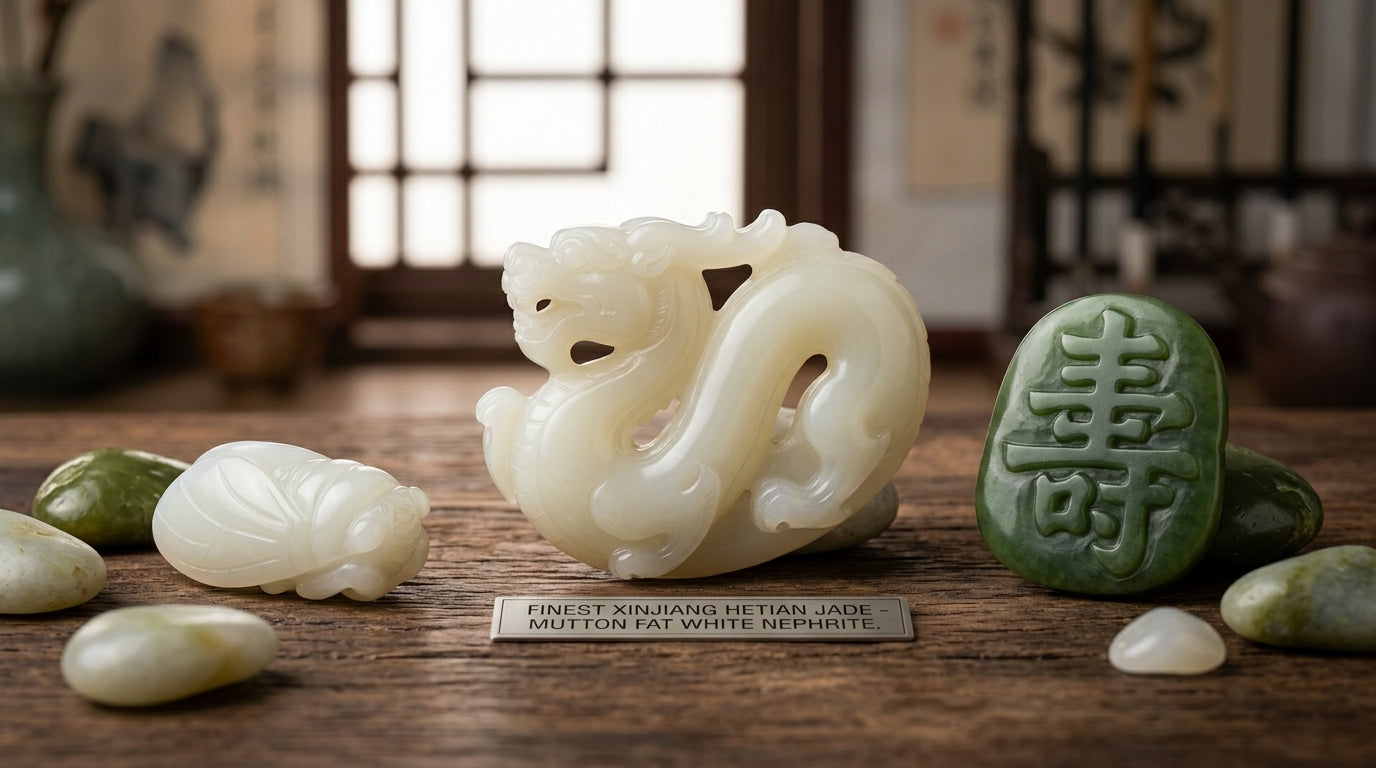
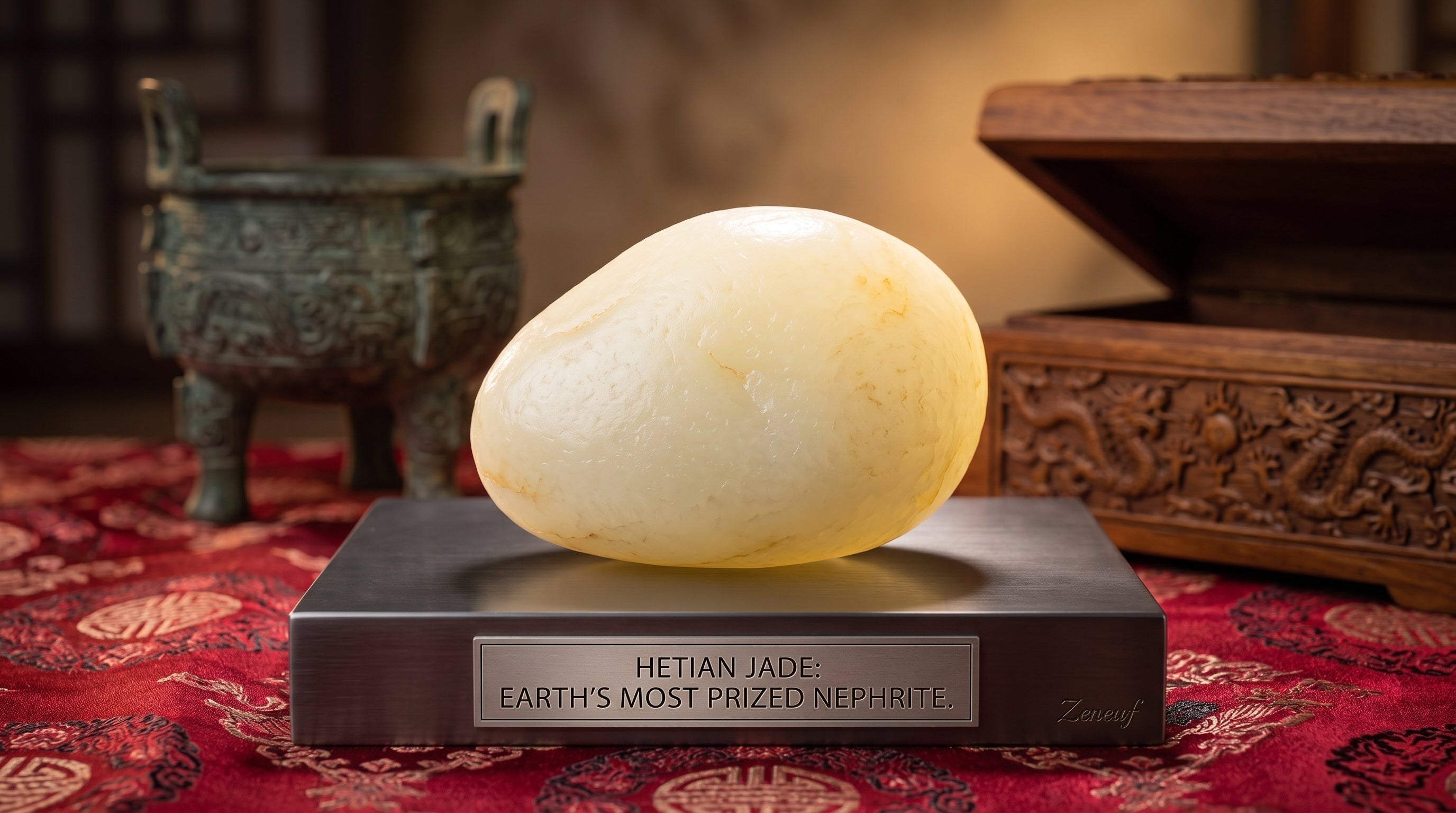
The most famous and highly prized variety of xinjiang hetian jade is 'mutton fat' white. It possesses a flawlessly pure, creamy white optical appearance, often with a subtle translucency that gives it a warm, inviting glow. This specific material lacks common geological impurities and exhibits an exceptionally oily luster. I recall a particular auction where a piece of mutton fat hetian jade, weighing just under 50 grams, sold for over $1 million USD due to its unparalleled quality and rarity. This rare grade commands the highest auction prices worldwide.
Green and Black Hetian Jade
While the creamy white 'mutton fat' variety is most famous, hetian jade also occurs in a spectrum of beautiful greens, from pale spinach to deep forest hues. You can even find highly dramatic, pure black varieties occasionally. These darker stones typically contain trace iron or microscopic graphite inclusions, which give them their rich color. While they offer a beautiful, bold contrast for jewelry designs, they generally hold significantly less investment value than the pristine white grades. Green hetian jade, especially with good translucency and even color, can still be very valuable, but typically trades at a fraction of the price of top-tier white 'mutton fat' jade.

Market Value of Hetian Jade
Securing authentic hetian jade of xinjiang china demands high financial literacy and a keen eye for quality. We analyze current global gemological pricing metrics carefully. You must protect your personal luxury portfolio effectively by understanding the market dynamics.
Investment Status of Jade Hetian
Top-tier jade hetian remains a phenomenal financial wealth preserver globally. The natural geological supply in Xinjiang is finite and depleting. According to industry reports, the most accessible and high-quality deposits have been significantly mined out over the past few decades. This extreme scarcity drives luxury market prices upward consistently. Savvy international investors often hoard pure white river seed stones, creating immense demand against a strictly limited natural supply. This makes it a highly sought-after asset class.
Modern Jewelry and Hetian Jade Stone
Artisans traditionally carve the hetian jade stone into magnificent sculptures and intricate ornaments. However, modern high-end fine jewelry often demands different aesthetic qualities. While nephrite is prized for its tactile feel and subtle beauty, elite buyers sometimes prefer Grade A jadeite for daily wear due to its superior hardness and higher translucency, which allows for a brilliant, glass-like polish that nephrite cannot achieve. It's important for collectors to understand that 'jade' is a market term encompassing both nephrite and jadeite, each with its own unique properties and value. Hetian jade refers specifically to nephrite from the Hetian region. Discerning collectors often appreciate and invest in both types of jade, recognizing their distinct merits.
Identifying Authentic Hetian Jade
Verifying the authenticity of hetian jade is paramount. Here are some practical steps:
-
Color and Luster: Look for the characteristic creamy white, green, or black hues with a subtle, oily luster. Avoid overly vibrant or uniform colors, which can indicate dyeing.
-
Texture: Genuine hetian jade feels smooth and slightly greasy or waxy to the touch due to its fibrous structure.
-
Hardness: Nephrite jade has a Mohs hardness of 6.0-6.5. It should not be easily scratched by a steel knife. Performing a scratch test is a common field method, but should be done discreetly on an inconspicuous area if at all.
-
Sound: When gently tapped with another piece of jade (or a similar hard object), high-quality jade often produces a clear, resonant sound. Avoid pieces that sound dull or flat.
-
Professional Appraisal: For significant investments, always seek certification from a reputable gemological laboratory. They use advanced techniques like spectroscopy to confirm mineral composition and origin.
Caring for Your Hetian Jade
Proper care ensures the longevity and beauty of your hetian jade stone:
-
Cleaning: Gently clean with lukewarm water and a soft, damp cloth. Avoid harsh detergents, ultrasonic cleaners, or abrasive materials, as these can damage the surface or alter the luster.
-
Storage: Store your jade separately from harder gemstones like diamonds to prevent scratches. Soft velvet pouches or lined jewelry boxes are ideal.
-
Avoid Chemicals: Keep your jade away from perfumes, hairsprays, and household chemicals, which can potentially affect the stone's surface over time.
-
Temperature Fluctuations: Avoid extreme and sudden temperature changes, which can cause stress fractures in the stone.
Conclusion
You now possess expert knowledge regarding this legendary imperial mineral. Do not let confusing market terminology or imitations compromise your luxury investments. Your high-end jewelry collection deserves scientifically verified authenticity and enduring beauty. We invite you to experience true gemological excellence. Explore our curated collection of ethically sourced, untreated Grade A hetian jade at the Zeneuf online boutique. Secure your premium gemstone heirloom today and elevate your personal style with the ultimate symbol of luxury and cultural heritage.
Frequently Asked Questions
How do I clean my premium jade jewelry safely?
Use lukewarm water, very mild soap, and a soft cloth. Never use harsh ultrasonic cleaners or abrasive materials on your natural gemstones.
Why does authentic nephrite feel greasy to the touch?
The internal microscopic fibrous structure diffuses light uniquely, creating a tactile sensation resembling a polished wax or oily surface.
Is river seed jade always better than mountain mined jade?
Generally, yes. The river naturally tumbles and polishes the stone over millennia, leaving only the absolute densest, highest-quality mineral core intact. River jade often exhibits a smoother surface and superior luster.
Can a steel knife scratch my natural nephrite piece?
No, genuine nephrite possesses a Mohs hardness of 6.0 to 6.5. Standard steel tools (Mohs hardness ~5.5) will not easily scratch an authentic piece, though prolonged or forceful scraping could leave a mark.
Why is white nephrite more expensive than the green varieties?
Flawless white 'mutton fat' nephrite is exceptionally rare as it lacks internal chemical impurities like iron completely. This extreme geological purity and rarity make it highly desirable and valuable compared to most green varieties.
Does wearing my jade jewelry daily improve its surface luster?
Yes, untreated nephrite jade can slowly absorb natural human skin oils over time with regular wear. This interaction can gradually deepen its luster and enhance its beautiful, glowing surface appearance.
How can I verify the exact origin of my gemstone?
While visual inspection and basic tests can help, only a certified laboratory gemologist can definitively verify mineral structures and geological origins using advanced spectroscopic analysis.
Should I store my jade separated from my diamond rings?
Absolutely. Diamonds (Mohs hardness 10) are significantly harder than nephrite (Mohs 6-6.5) and will easily scratch jade. Always store your premium jade in dedicated soft velvet pouches or compartments within a jewelry box.
Read more
Understanding exactly what is nephrite jade is essential for luxury collectors. This guide answers if is nephrite jade authentic, explains the nephrite vs jade debate, and analyzes nephrite jade va...
Mastering the gemology of mutton fat jade is essential for luxury collectors. This guide explores the scientific density behind its unique greasy luster. Learn the crucial differences between raw a...