
Different Types of Jade Stones: Complete Guide
Table des matières
Summary
The ultimate reference manual for navigating the complex world of jade. From color classification to purity and treatment grades, this guide provides you with all the keys to understand, identify, and securely collect the many varieties of this fascinating gem.

Core Mineralogy of Different Types of Jade
Science defines exactly what constitutes real jade. You must learn these fundamental geological differences. These facts separate premium pieces from cheap imitations. Only two distinct minerals qualify as true jade. Gemological institutes worldwide recognize this strict scientific classification. Let us examine the exact chemical compositions carefully.
Nephrite as Common Types of Jade Stones
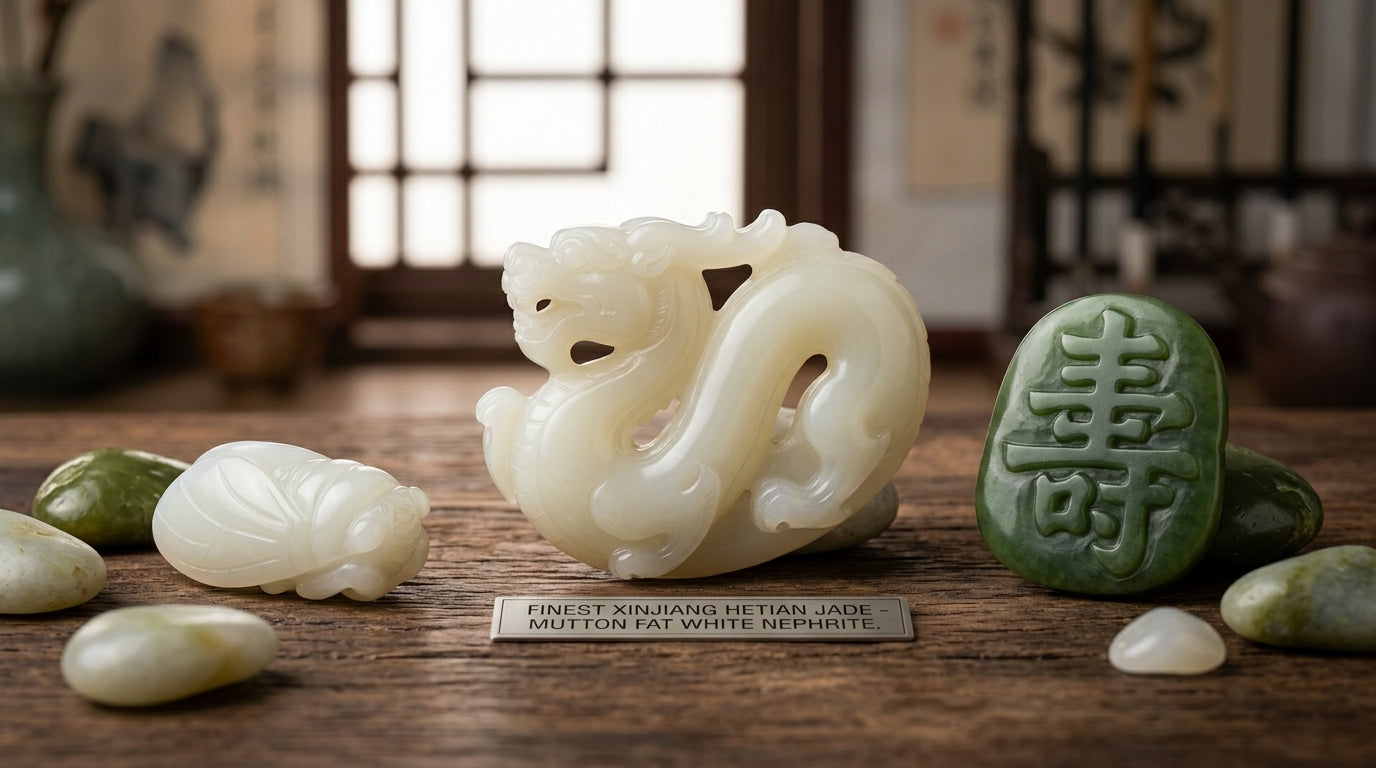
Nephrite is a calcium magnesium silicate mineral. It forms with tightly interlocking fibrous crystals. This unique structure provides extreme physical toughness. Ancient civilizations used it for carving durable weapons. Today, it remains highly popular globally for carvings. It appears mostly in deep olive green shades. You can also find white mutton fat varieties. Nephrite generally costs less than fine jewelry jadeite. It represents beautiful entry-level types of jade stone. It boasts a smooth, slightly oily surface luster. True collectors appreciate its rich historical significance deeply.
Jadeite Among Different Types of Jade Stone
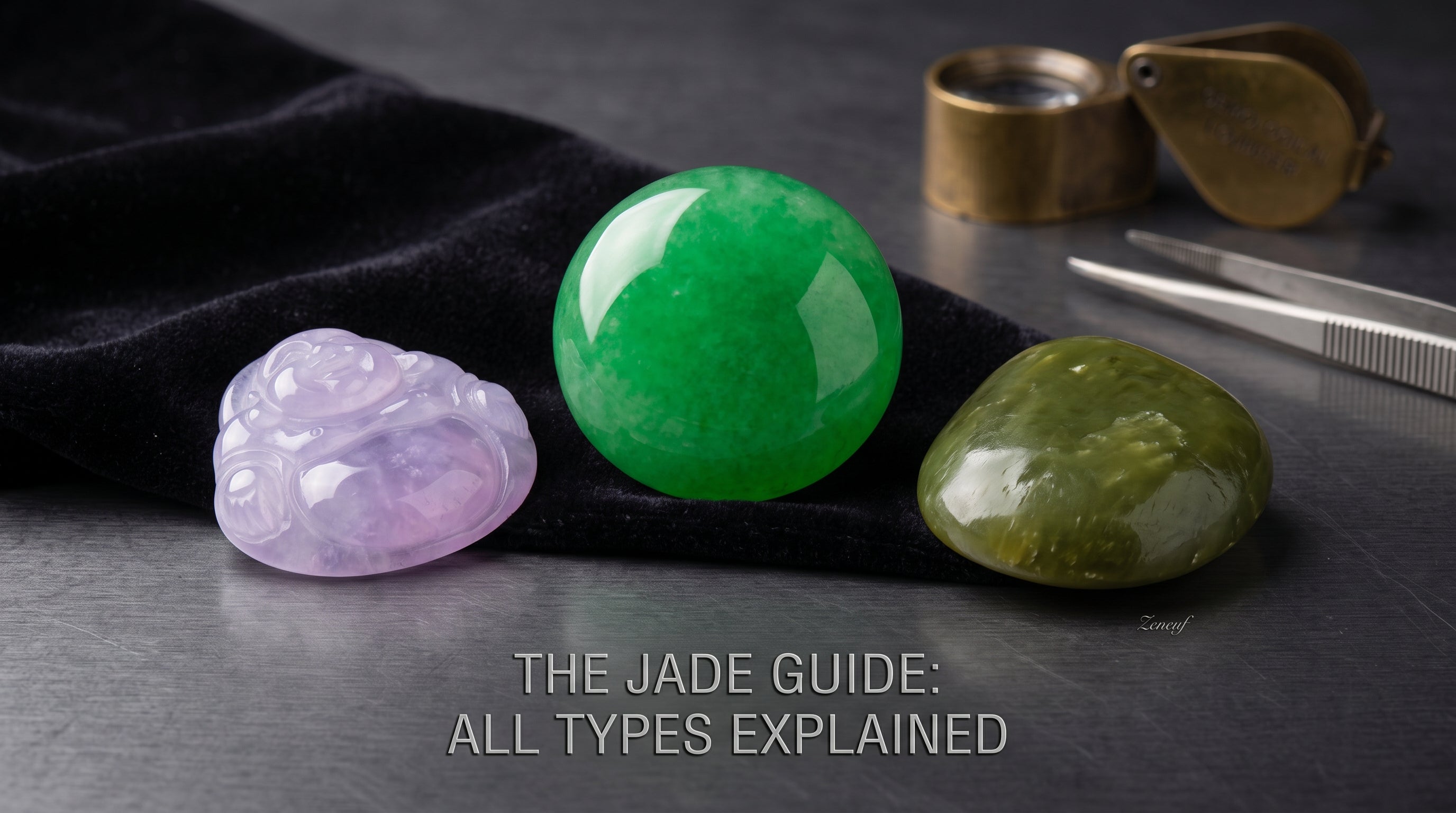
Jadeite is a rare sodium aluminum silicate. It features a granular interlocking crystal structure. This creates a stunning glass-like visual translucency. Gemologists consider it the most valuable variety universally. High-quality jadeite is exceptionally rare in nature today. It takes a magnificent, glowing surface polish effortlessly. Only elite boutiques like Zeneuf offer this quality. True collectors seek these specific different types of jade. Its hardness reaches seven on the Mohs scale. This makes it perfect for daily wear jewelry. It shines brilliantly in rings and elegant pendants.
False Names for Types of Jade Stones
Unethical sellers often invent highly misleading trade names. They market common serpentine as "new jade" frequently. Aventurine is sometimes falsely sold as Indian jade. These alternative stones lack proper gemological density entirely. They scratch easily and lose their polish quickly. True types of jade stones remain pristine forever. Always demand authentic mineralogical verification before any purchase. A trusted jeweler will always provide transparent documentation. Never trust confusing marketing terms masking cheap minerals.
Grading Systems for Types of Jade Stone
The jewelry market uses a strict grading system. This evaluates all types of jade stone accurately. Knowing this prevents costly and disappointing purchasing mistakes. You must understand the chemical treatment levels involved.
Grade A Authentic Types of Jade Stones
Grade A refers to completely natural, untreated stones. They receive no harsh chemical treatments whatsoever. Artisans only cut and polish these precious gems. Traditional plum juice or beeswax finishes are acceptable. These remain the most coveted different types of jade. Their original crystalline structure remains perfectly intact. They retain their financial value across many generations. We highly recommend exclusively investing in Grade A. It provides unmatched natural beauty and supreme durability. Your jewelry collection deserves this pristine, historical authenticity.
Chemically Treated Types of Jade Stone
Grade B jade undergoes harsh acid bleaching processes. This removes unwanted brown or black natural impurities. Manufacturers then inject artificial polymer resins inside. This temporarily enhances optical clarity and structural stability. However, the injected resin degrades over time inevitably. Grade C pieces are artificially dyed with chemicals. The vibrant colors eventually fade in direct sunlight. You should strictly avoid these types of jade stone. They possess virtually no long-term resale value. They are not suitable for fine luxury jewelry.

Exploring Colors in Different Types of Jade
Color severely impacts the final market value. Authentic types of jade stones display incredible variety. We will analyze the most important luxury hues. The exact chemical trace elements determine these colors.
Imperial Green Types of Jade Stone
Imperial green is the absolute most expensive color. Chromium trace elements create this intensely vibrant hue. It strongly resembles the color of a fine emerald. It must possess exceptionally high optical translucency. These rare pieces command astronomical international auction prices. True imperial different types of jade stone are scarce. They symbolize ultimate luxury, power, and deep prosperity. Collectors wait years to acquire a perfect piece. It is the pinnacle of gemological perfection.
Lavender and Ice Types of Jade Stones
Lavender jade contains subtle traces of elemental manganese. It offers a delicate, highly romantic visual aesthetic. High translucency in lavender is extremely unusual naturally. Ice jade lacks color pigment entirely by contrast. It resembles perfectly clear, frozen mountain spring water. Ice varieties are highly prized in Asian markets. They reflect pure modern elegance effortlessly and beautifully. These are spectacular different types of jade to own. They match perfectly with contemporary platinum or gold.
Black and Earthy Types of Jade Stone
Black jade contains incredibly dense microscopic graphite inclusions. It absorbs light and looks highly dramatic visually. Yellow and red geological variations also exist naturally. Iron oxidation creates these warm, beautiful earthy tones. Artisans use them for intricate relief carving work. You can find amazing types of jade stone here. They offer unique styling options for bold wardrobes. Each color tells a different geological creation story.
Conclusion
You now understand the profound gemological differences clearly. Investing in premium jewelry requires exact scientific knowledge. Never settle for chemically treated or fake alternatives. Your personal collection deserves authentic, untreated heirloom quality. Experience the unmatched brilliance of Grade A jadeite. Visit the Zeneuf online boutique today to shop. Discover our exclusive, scientifically verified premium jewelry collections. Elevate your personal style with true historical luxury.
Frequently Asked Questions
How do I clean my jade jewelry?
Use mild soapy water and a soft microfiber cloth. Never use ultrasonic cleaners or harsh cleaning chemicals.
Can I wear my jade ring daily?
Yes, real jade is incredibly tough and durable. However, avoid hitting it against hard metal surfaces.
Why does my genuine jade feel cold?
Authentic jade has high thermal inertia by nature. It will always feel cold to the touch initially.
How can I test my jade's authenticity?
A certified gemologist uses a professional refractometer device. Specific gravity tests also confirm true mineral density.
Does real jade scratch easily?
No, it has a Mohs hardness of 6.5 to 7. Standard steel knives should not scratch authentic jadeite.
Should I expose my jade to sunlight?
Avoid prolonged direct sunlight for chemically dyed stones. Natural Grade A jade is perfectly safe outdoors.
What is the best way to store jade?
Keep it safely in a soft fabric pouch. Separate it from diamonds to prevent surface scratching.
Does jade change its color over time?
Untreated jade absorbs natural body oils during wear. This can slightly enhance its glowing luster over decades.
Read more
The modern high-end jewelry market often overlooks the quiet elegance of dark, earthy minerals. This guide explores the physical properties and micro-crystalline structures behind highly durable ne...
Wondering about jadeite vs jade? This expert guide reveals the exact difference between jade and jadeite. We explain why nephrite jade vs jadeite matters for your jewelry investments. Learn scienti...