
What Is Real Jade? A Buyer's Definition
Table des matières
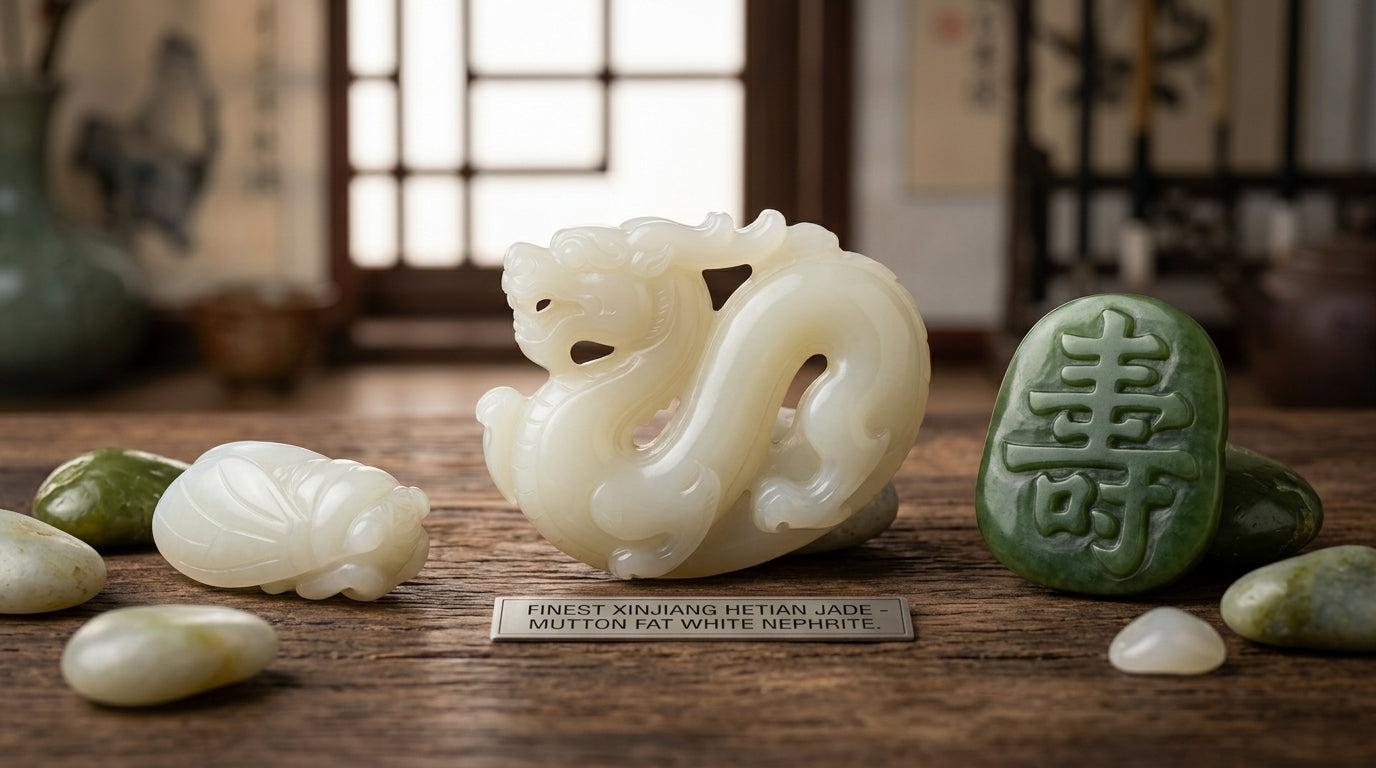
"Jade" is a cultural term for two different minerals — jadeite and nephrite. Both are natural silicates valued for color, translucency, and toughness rather than for the word "jade" itself, which on its own guarantees nothing about quality or origin.
Introduction
Confirming that a piece is genuinely jadeite or nephrite is only half the picture — our guides to testing a piece at home and comparing real and fake side by side cover that. This guide answers a different question: once you know a piece is real, what actually makes it good — its color, its origin, and how buyers are meant to judge it.

The Two Minerals Behind the Word
"Jade" isn't a mineral name — it's an umbrella term for two chemically distinct stones that happen to share a similar look and history.
What Is Nephrite?
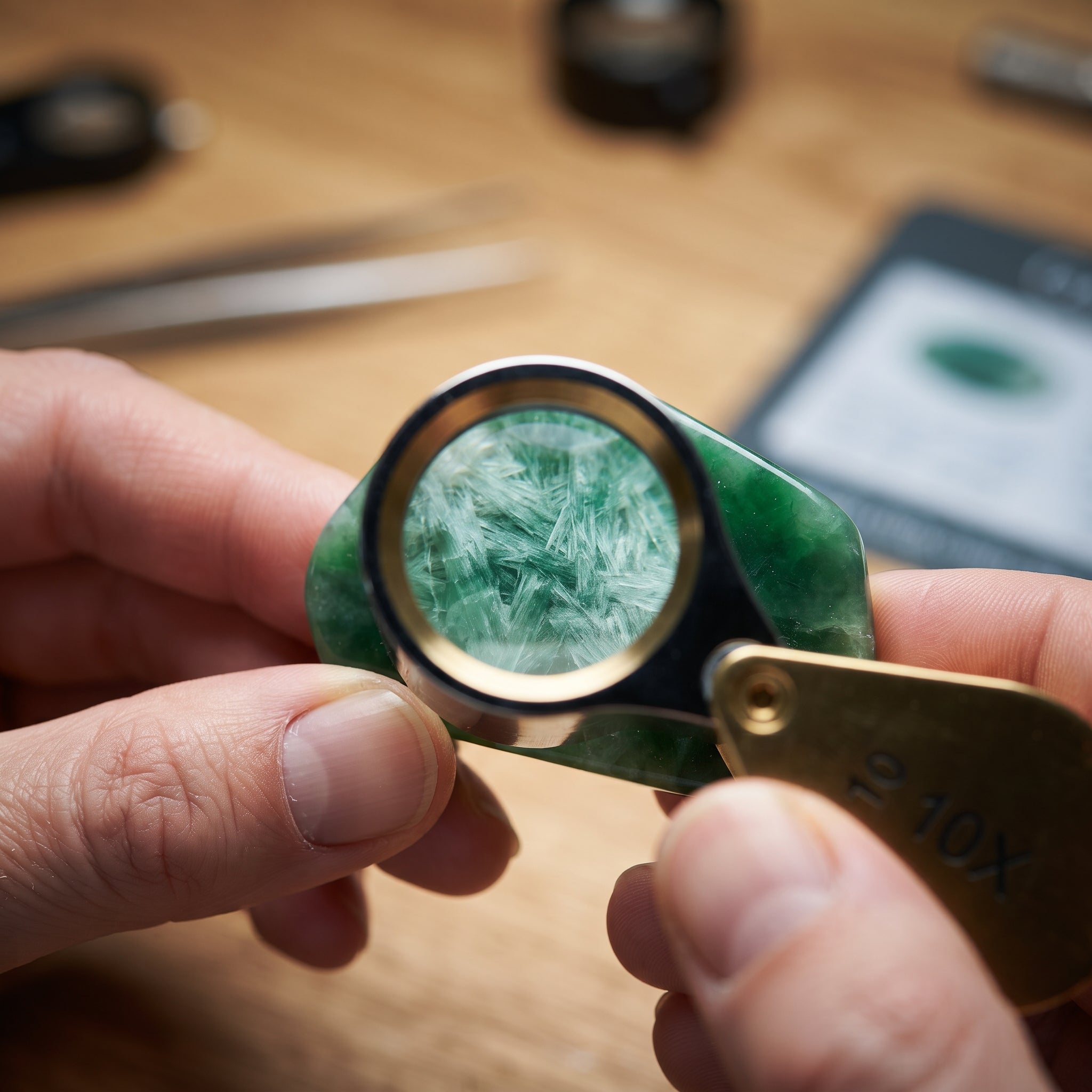
Nephrite is a calcium-magnesium silicate from the amphibole group. Mindat.org describes it as a rock made of massive, felted microcrystalline amphibole fibers, which is why nephrite resists cracking even though it isn't the harder of the two minerals. It typically has a smoother, oilier luster and a more subdued, earthy color range than jadeite.
What Is Jadeite?
Jadeite is a sodium-aluminum silicate from the pyroxene group. Mindat.org classifies it as jadeitite when it forms the ornamental rock used in jewelry, built from tightly interlocked granular crystals rather than fibers. It's the harder and generally denser of the two, and it's the one capable of the vivid, saturated green — "Imperial" jade — that the word "jade" most often brings to mind, though it also occurs in lavender, white, yellow, and black.
What Determines a Jade's Color
Color in jade isn't decorative accident — it comes down to which trace element sits inside the crystal structure, and that same chemistry explains why some colors are rarer than others.
What Causes Each Color?
Why Does "Imperial" Green Command the Highest Prices?
GIA notes that jadeite's most valuable color is an intense, evenly saturated green historically called "Imperial" — the chromium that produces it is comparatively rare in gem-quality jadeite, and evenness of color matters as much as intensity: mottling or patchy distribution lowers value even in an otherwise fine stone.
Where Real Jade Comes From
Where a piece was mined has almost nothing to do with whether it's genuine, but it has a lot to do with availability, price, and — for jadeite specifically — import rules.
Where Does Jadeite Come From?
Gem-quality jadeite comes overwhelmingly from a single region: the Hpakant area of Kachin State, Myanmar (formerly Burma). GIA notes that current U.S. legislation bans importing jadeite mined in Myanmar, regardless of where it was later cut or sold — a detail worth knowing if you're buying jadeite intended to enter the United States. Smaller jadeite deposits also exist in Guatemala.
Where Does Nephrite Come From?
Nephrite is more widely distributed: Mindat.org lists notable deposits in British Columbia (Canada), Siberia (Russia), Xinjiang (China), Taiwan, and New Zealand, where nephrite ("pounamu") holds particular cultural significance for Māori carving traditions. This wider distribution is part of why nephrite is generally more available and less expensive than jadeite.
How Buyers Should Evaluate a Piece
Once authenticity and treatment are settled, jadeite is judged on the same handful of factors GIA uses for any colored gemstone.
What Makes Color "Fine" in Jadeite?
Beyond hue, GIA identifies color evenness and saturation as the main value drivers for jadeite — a piece with spotting, veining, or dull patches is worth less than one of even color, all else being equal.
Why Does Transparency Matter as Much as Color?
The best jadeite is semi-transparent — GIA describes this as being able to read blurred text through a thin section of the stone. Opaque material or stone with cloudy patches sits lower in quality regardless of how good the color looks on the surface. Texture (fine, medium, or coarse crystal grain) and the symmetry of the cut are the other two factors buyers are typically shown alongside color and transparency.

Treatment and Terminology, Briefly
This is covered in depth elsewhere on the blog, so here's the short version for reference.
What Do Type A, B, and C Mean?
Jadeite is classified by treatment, not by "grade" — there's no official Grade A/AA/AAA scale, even though some listings use that label informally. Type A means untreated (traditional surface wax only); Type B means acid-bleached and resin-impregnated; Type C means artificially dyed. For the full breakdown and how to check for each at home, see our guide to testing jade authenticity.
Why Isn't "Grade A" an Official Term?
A GIA report identifies the material and flags treatment; it doesn't issue a letter grade itself. "Grade A" as used by some sellers usually just means Type A — but since it isn't standardized, it's worth asking a seller directly which treatment type they mean.
What This Means When You're Shopping Online
A confident, specific listing tells you more than any single test can. Look for a description that names the mineral, states color origin, and discloses treatment — vague marketing language is the real warning sign, not the price alone.
What Should a Genuine Listing Tell You?
It should name jadeite or nephrite specifically (not just "jade"), state the treatment type (A, B, or C), and ideally mention origin. Phrases like "natural-looking" or "premium quality" without naming the mineral or treatment are worth questioning directly.
Where Do You Verify What a Listing Claims?
Once you've confirmed what a listing says it's selling, our guides to testing a piece at home and comparing real and fake side by side walk through the physical checks — weight, temperature, sound, and light — that confirm or challenge those claims.
Conclusion
Real jade means genuine jadeite or nephrite, but the word alone doesn't say much: color chemistry, provenance, transparency, and treatment type are what actually separate a fine piece from an ordinary one.
FAQ
Is jade one mineral or two?
"Jade" is a cultural umbrella term for two different minerals, jadeite and nephrite — they have different chemical compositions and slightly different physical properties.
Why is Imperial green jadeite so much more expensive than other colors?
Its color comes from chromium, which is comparatively rare in gem-quality jadeite, and buyers also pay a premium for how evenly that green is distributed through the stone.
Where does most fine jadeite come from?
The great majority of gem-quality jadeite comes from the Hpakant area of Myanmar; smaller deposits also exist in Guatemala.
Is nephrite less valuable than jadeite?
Generally yes, largely because nephrite is far more widely distributed geographically, which makes it more available and typically less expensive — though fine nephrite carvings can still be significant pieces.
Does knowing the color chemistry help me spot a fake?
Not directly — dye can mimic almost any of these colors. Color chemistry tells you what a genuine stone's color should look like (even, naturally varied); the physical tests in our other guides tell you whether a piece is genuine at all.
Read more
A side-by-side comparison table of real and fake jade, covering weight, temperature, light, sound, and color — with links to the full step-by-step tests.
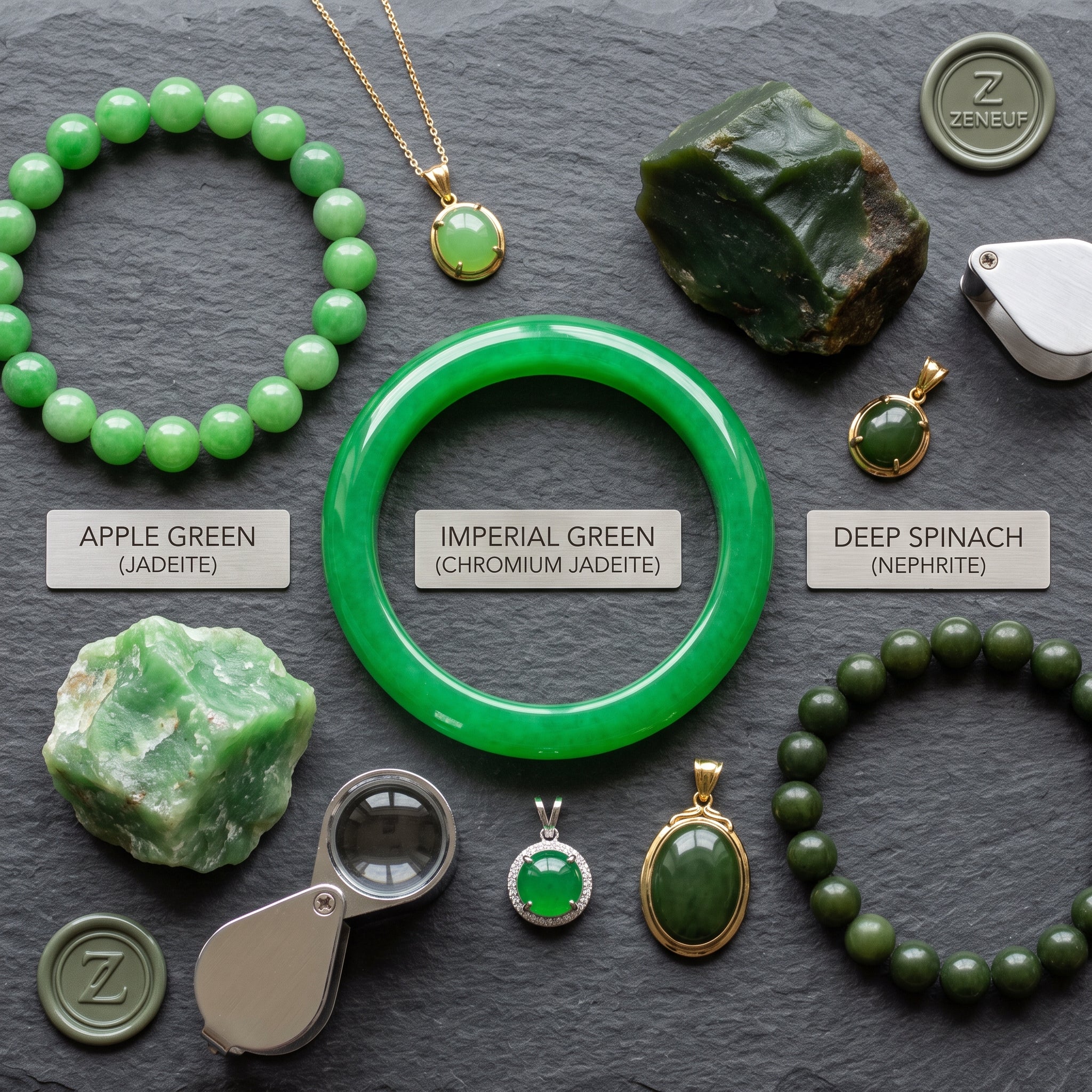
Explore the magnificent spectrum of natural green jade. Our gemological guide decodes everything from vibrant apple hues to rich spinach tones. Understand the intricate science of natural coloratio...