
Real Jade Necklace and Pendant: How to Spot Genuine Jade
Table des matières
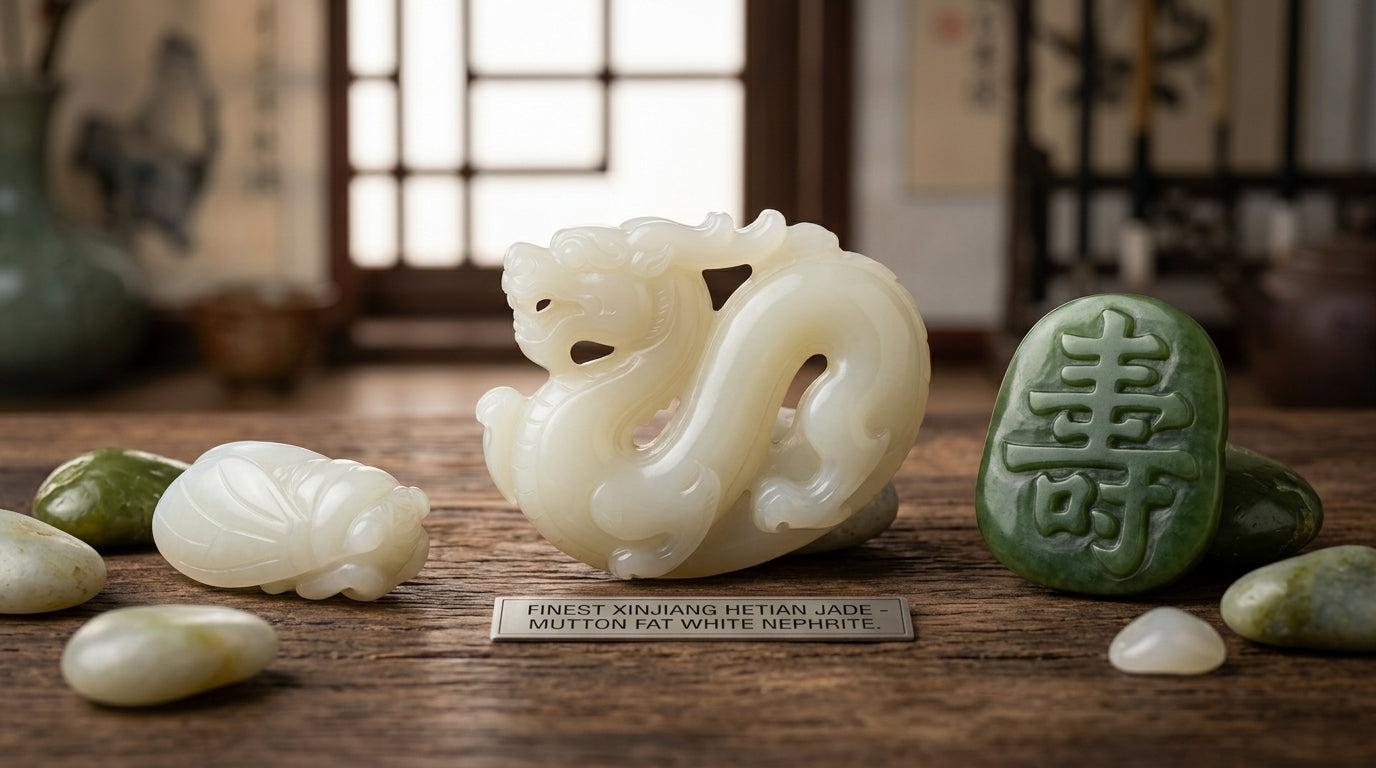
A carved jade pendant gives away more than a bead or bangle does, because thin carved edges transmit light far more clearly than a solid rounded shape, and hand-carving leaves tool marks a mold can't replicate. The metal bail where a pendant attaches to its chain is also worth its own look, since it's a common place to hide a poor join or a mismatched piece.
Introduction
A jade pendant is a carved, often irregular piece of stone, not a uniform bead or a closed loop — and a strand of beads on a necklace still differs from a bangle in how a buyer should look at it. This guide covers what's specific to necklaces and pendants: the translucency and tool marks a carving reveals, what the bail attachment can conceal, and questions worth asking that don't apply to a bangle or a simple bead bracelet.

Why a Carved Pendant Reveals More Than a Bead
A carving's shape works in your favor: thin sections and undercuts let you see straight through jade that would stay opaque as a round bead.
Where Should You Look for Translucency?
Hold the thinnest part of the carving — an edge, a petal, a strand of a dragon's mane, the rim of a disc — up to a light source rather than the thick center of the piece. GIA notes that jadeite and nephrite's interlocked crystal structure produces an uneven, slightly cloudy glow rather than a sharp, uniform one; on a carved piece, that difference shows up far more clearly at a thin edge than it would on a rounded bead, where the material is thicker in every direction.
What Do Tool Marks Tell You?
Genuine hand-carving leaves small asymmetries: petals or details that are close but not identical to one another, slightly uneven depth in recessed areas, fine tool striations visible under a phone macro camera. Cast or molded imitations — resin, glass, or pressed composite — tend to show the opposite: perfectly repeated details, a seam line where a mold closed, or a uniform surface texture with no individual tool marks at all.
What the Bail and Setting Can Hide
The point where metal meets stone is worth its own inspection, separate from the carving itself.
What Should the Stone-to-Metal Joint Look Like?
Look closely at where the bail (the metal loop a chain passes through) meets the stone. A well-made piece has a clean, snug fit with no visible adhesive; a bead of dried glue, epoxy residue, or a gap filled with resin at the joint is worth asking about; it doesn't automatically mean the stone is fake, but it does mean the piece has been repaired or modified at some point.
Does a Metal-Wrapped Edge Change What You Can See?
Some pendants have a metal band wrapped around part of the stone's edge, often decoratively — but a wrapped edge also covers up exactly the kind of thin section that would otherwise show translucency clearly. If most of a pendant's edges are covered in metal and only the flat face is visible, that's not necessarily suspicious, but it does mean the translucency check above won't tell you much, and the physical checks covered elsewhere — weight and temperature — matter more for that particular piece.
Sources: GIA, Jade Quality Factors; Mindat.org, Jadeite Jade.
What Carving Style and Symbolism Can (and Can't) Confirm
A traditional motif says something about the design, not about the material underneath it.
Does a Traditional Motif Guarantee Authenticity?
A carved Guanyin, a Pi disc, a dragon, or a peach doesn't confirm the material is genuine jadeite or nephrite — the same motifs are carved just as readily into glass, resin, and dyed quartzite, since the symbolism is a design choice rather than a material one. Treat the motif as a style preference, and rely on the translucency and tool-mark checks above for the material question.
What's Different About Machine-Carved Reproductions?
Mass-produced reproductions — often cast from a mold rather than carved by hand — tend to have soft, rounded detail with less depth than a hand-carved piece, since fine undercuts are harder to reproduce by casting. If a design looks slightly blurred or shallow compared to photos of hand-carved examples of the same motif, that's worth factoring in alongside the other checks, though it points to manufacturing method more than material.

Necklace-Specific Buying Questions
A couple of questions matter for a necklace or pendant that wouldn't come up for a bangle.
What Should You Ask About the Carving?
Ask directly whether the piece is hand-carved or machine-made — both can be genuine jadeite or nephrite, but hand-carving generally costs more, so the answer should match the price. Ask, too, whether the pendant has ever been repaired, particularly around the bail.
What Should You Ask About the Chain or Cord?
The chain or cord is a separate material claim from the pendant itself — ask specifically what it's made of (gold vermeil, sterling silver, silk cord) rather than assuming it matches the quality of the stone. A seller who's precise about the pendant but vague about the chain is worth a follow-up question.
Conclusion
A carved pendant tells you more than a bead ever could, if you know where to look: translucency at its thinnest edges, tool marks from hand-carving, and the condition of the joint where it meets its bail.
FAQ
Does the carved design tell me anything about whether the jade is real?
No — traditional motifs like a Guanyin or a Pi disc are carved into glass, resin, and dyed quartzite just as often as genuine jadeite or nephrite, since the symbolism is a design choice, not a material one.
Why does a pendant show translucency better than a bead does?
A carving's thin edges and undercuts let light pass through a much shorter distance than the thicker cross-section of a rounded bead, making the internal texture easier to see.
Is glue around the bail always a sign of a fake?
Not necessarily — it can just mean the piece was repaired at some point. It's worth asking about, but it doesn't by itself prove the stone is an imitation.
Are hand-carved pendants always more valuable than machine-made ones?
Generally yes, since hand-carving takes considerably more skill and time, but both methods can be applied to genuine jadeite or nephrite — carving method and material authenticity are separate questions.
Should I ask about the chain separately from the pendant?
Yes — the chain or cord is a different material entirely, and a seller should be able to describe it as precisely as they describe the stone.
Read more
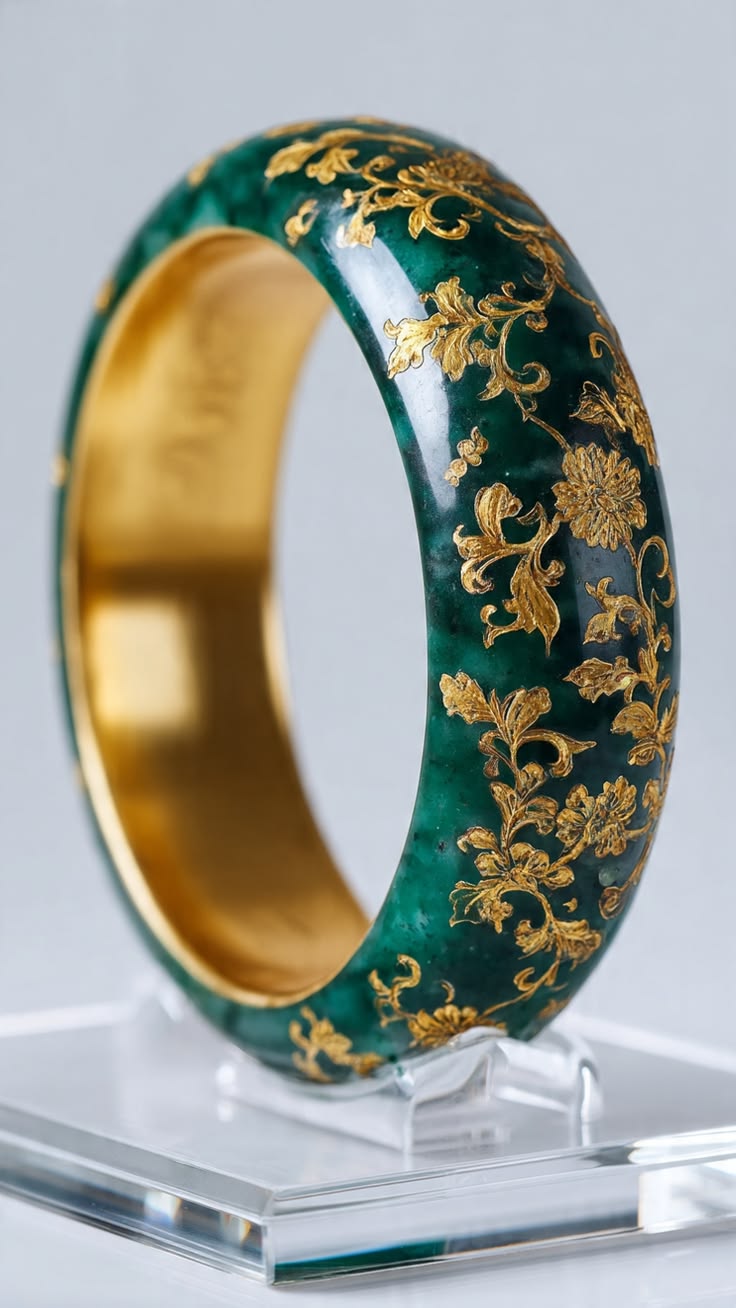
Bangles and bead bracelets test differently because of their shape — here's what to check on each, how they wear over time, and why bangles specifically sometimes crack.
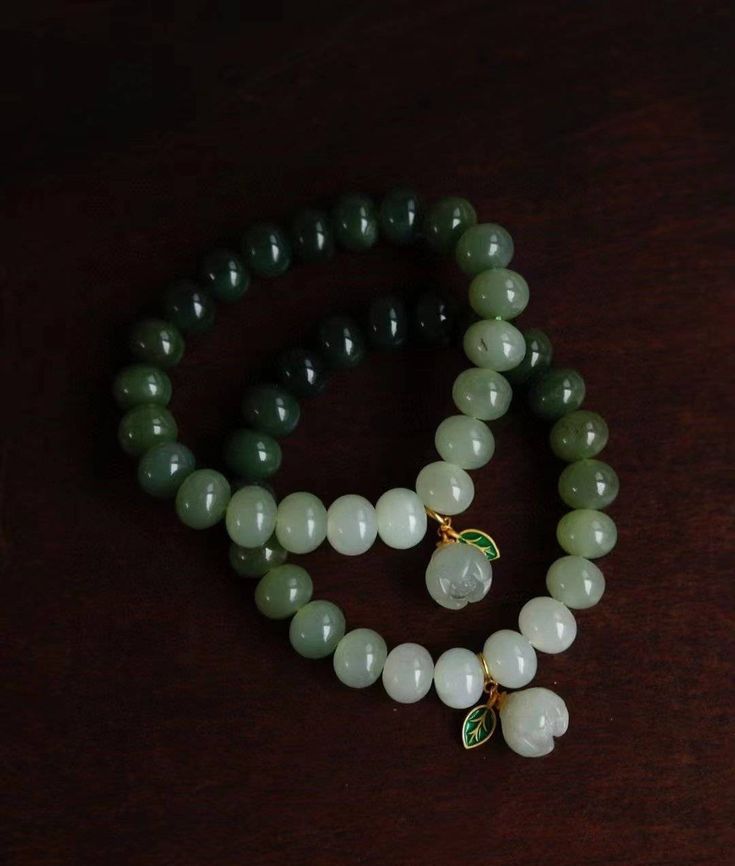
Bangle, beaded, chain, or tennis-style — you can't weigh or tap a bracelet you haven't received yet. Here's what pre-purchase authentication actually looks like, whatever the form.