
How to Tell If a Jade Bracelet Is Real
Table des matières
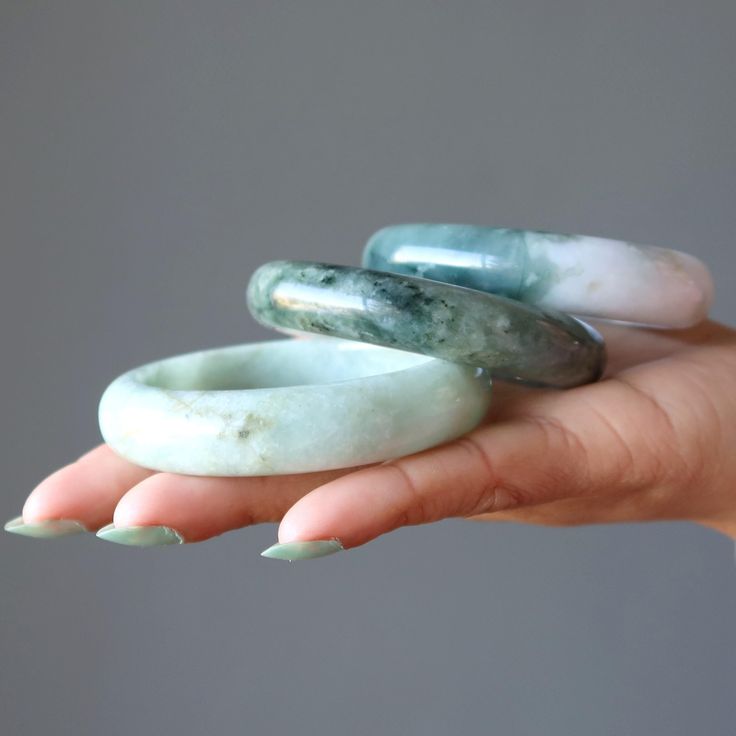
Jade bracelets come in two very different forms — solid bangles and strung bead bracelets — and each tests a little differently. A bangle's closed loop gives an unusually reliable ring when tapped and an easy weight check; a bead bracelet lets you test and compare individual beads, but each crack or mismatch is easier to spot across a strand. Both share the same underlying stone, just different risks and tells.
Introduction
A jade bracelet is either a solid bangle — a continuous, thin ring worn against a moving wrist all day — or a strand of individual beads on a cord. That shape difference changes how you can test it and what can go wrong with it over time. This guide covers both forms rather than repeating the generic physical checks that apply to any piece.

Why a Bangle's Shape Changes How You Test It
A closed loop behaves differently from an irregular pendant or a loose bead, and two of the more informative checks lean directly on that shape.
Why Does Sound Matter More on a Bangle Than a Pendant?
Suspend the bangle loosely on a finger and tap it gently with another piece of jade or a small metal object. Because a bangle is a continuous, even ring, GIA notes that jadeite and nephrite's interlocked crystal structure produces a clear, ringing tone — and a bangle's uniform shape carries that tone more consistently than an oddly shaped pendant would. A dull, flat sound points to resin-impregnated (Type B) material or plastic.
What Does an Unbroken Loop Tell You About Weight?
Hold the bangle and compare its weight to what its diameter suggests. Jadeite's density (3.30–3.38 g/cm³) and nephrite's (2.90–3.03 g/cm³) are both well above glass (≈2.5 g/cm³) or resin — and because a bangle is one continuous piece rather than several linked segments, there's no clasp or setting hardware to add deceptive extra weight, so what you feel is the stone itself.
Sources: GIA, Jade Quality Factors; Mindat.org, Jadeite Jade.
What's Different About Bead Bracelets?
A strand of beads gives you something a solid bangle doesn't: the ability to check and compare several individual pieces of stone rather than just one.
Why Does Checking Each Bead Matter?
Run the same weight, temperature, and sound checks on a handful of beads across the strand rather than just one — with genuine jadeite or nephrite, each bead should behave consistently, since they're the same mineral throughout. A strand where some beads feel warm or light while others feel cool and heavy often means the beads were sourced from mixed material, including possible imitations mixed in with genuine ones.
What Does the Cord and Bead Fit Tell You?
The stringing material itself — elastic cord, silk thread, or wire — doesn't indicate authenticity one way or the other, but how the beads sit against it can be a clue: drilled holes in genuine jadeite or nephrite are clean and uniform, while soft imitation materials (resin, dyed howlite) tend to show slightly ragged or chipped drill holes under a loupe, since they're softer and more prone to fraying at the edges during drilling.
Why Bangles Crack — and What That Means for Buying
Cracking is a risk specific to the closed, solid shape of a bangle in a way it isn't for beads — a cracked bead can simply be pulled off and replaced on the strand, while a cracked bangle usually means the whole piece is compromised. It's worth understanding both the folklore around bangle cracking and the physical reality.
Is a Cracked Jade Bangle Really Bad Luck?
In Chinese tradition, a jade bangle cracking is often described as the stone absorbing an impact "on behalf of" the wearer — a protective role, not a bad omen. That's a cultural belief rather than a physical claim this guide can verify, but it's worth knowing if you're buying a bangle as a gift, since a crack isn't necessarily read as a flaw by someone familiar with the tradition.
What Actually Causes a Bangle to Crack?
Physically, toughness (resistance to cracking) and hardness are different properties — jadeite and nephrite are only moderately hard but exceptionally tough, tougher in fact than much harder materials, because toughness comes from the interlocked crystal structure rather than raw hardness. A bangle's thin, ring-shaped cross-section still concentrates stress at a single impact point, which is why even genuine jade can crack against a hard edge like a table corner. Type B (resin-impregnated) material is generally more brittle than untreated Type A, since acid bleaching removes some of the structure that gives natural jade its toughness in the first place.
What to Ask Before Buying a Bangle or Bead Bracelet
A few questions matter more for bracelets than for other jade jewelry, simply because of how they're worn and how they're sized.
What Should You Ask About Sizing?
A bangle has to pass over your hand at its widest point and then sit comfortably on your wrist — too tight risks cracking it on the way on or off, too loose risks it slipping and striking a hard surface. A bead bracelet is more forgiving on fit, but ask about the cord's stretch and whether it's easily restrung, since that's the part most likely to wear out first. Ask the seller for the bangle's inner diameter rather than relying on a generic "small/medium/large" label, since sizing conventions vary between sellers.

What Should You Check About Bead Uniformity?
For a bead bracelet specifically, ask whether the beads are matched from a single piece of rough stone or sourced as a mixed batch. Matched strands cost more because they require more raw material to get consistent color and translucency across every bead — a strand with visibly different shades or clarity levels from bead to bead is either a lower grade by design or, less charitably, mixed material.
What Should a Certificate Confirm?
Ask for documentation naming the specific mineral (jadeite or nephrite, not just "jade") and the treatment type (A, B, or C) — from a gemologist, whether that's an in-house expert at the boutique or an independent gemological lab it works with. For a bangle specifically, it's also worth asking whether the piece has any prior repairs or fills, since a hairline crack can sometimes be disguised with resin along the join.
Conclusion
A bangle's closed, even shape makes sound and weight two of the more reliable checks you can do at home, while a bead bracelet lets you cross-check consistency across several individual stones — but each form carries its own specific risk: a hard impact can crack even a genuine bangle, and a mismatched strand usually means mixed material rather than a matched set. Getting the sizing, uniformity, and documentation right before buying matters as much as any single test.
FAQ
Does tapping a bangle for sound work better than tapping a pendant?
Generally yes — a bangle's continuous, uniform ring shape carries a clear tone more consistently than an irregularly shaped pendant, making the sound test especially useful for this particular form.
Is a cracked jade bangle worth less?
Financially, usually yes, since the piece is now damaged — but culturally, a crack is sometimes viewed as the stone having absorbed an impact on the wearer's behalf rather than as a simple flaw.
Why did my bangle crack even though jade is supposed to be tough?
Toughness resists cracking better than a brittle material would, but it isn't infinite — a sharp impact concentrated on a bangle's thin cross-section, especially against a hard edge, can still crack even genuine jadeite or nephrite.
How do I know what bangle size to order online?
Ask the seller for the inner diameter in millimeters rather than a generic size label, and measure your hand at its widest point (across the knuckles) to compare against it.
Are Type B bangles more likely to crack than Type A?
Generally yes — the acid bleaching used in Type B treatment weakens the stone's natural structure, making it more brittle than untreated Type A material.
Why do some beads on my bracelet look slightly different from the others?
Some natural variation is normal even within a matched strand, but noticeably different color, clarity, or weight from bead to bead often means the strand was assembled from mixed material rather than a single matched batch.
Read more
A material-by-material look at what's actually sold as fake jade, and the traits — weight, hardness, price — that tell each imitation apart from the real thing.
A carved pendant isn't a bead — its thin edges, tool marks, and metal bail reveal things a round bead or a bangle never can. Here's what to actually look for.